
Rainforest cacti

January 18th, 2008
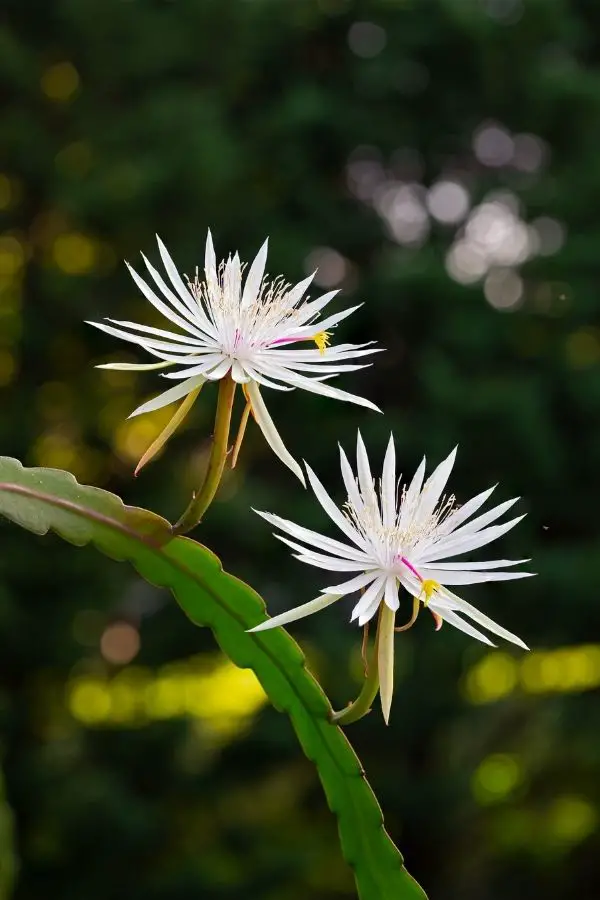
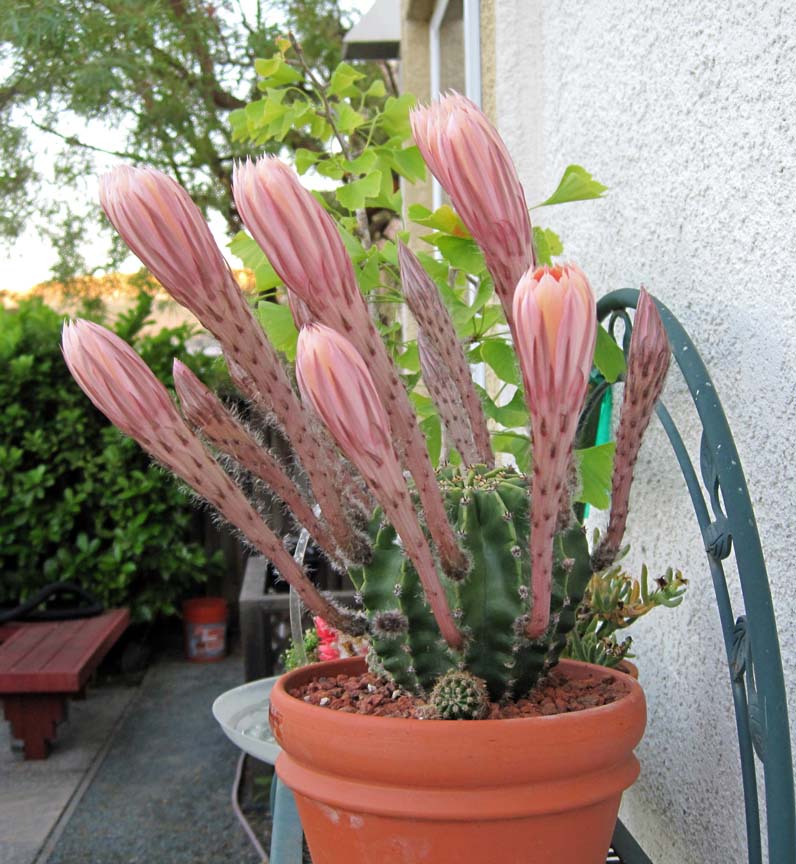
Types of cactus: EpiphyllumHave you ever heard about such cactus types as epiphyllum, rhipsalis or schlumbergera? Certainly, you did. These epiphytic cacti of rainforests grow in moist and sultry woods on forks of branches, in hollows and on stubs. They settle on leaf humus, so their roots are short, but very branchy and clutch at any crack or a ledge on a tree bark. These cactus plants grow all year long, because there are no seasons of droughts and colds in the rainforests.

Thick leaves always cover these types of cactus from the sun, causing shading, that’s why they don’t need to have such means of protection against overheat of the stalk like a thick skin, a wax bloom or fuzz.

Epiphytic cactus types grow in damp atmosphere and they have no need at all to save water. They absorb it from the moist air around thanks to a bulk of stomae on their wide stalks. You can always recognize these cactus types: their stalks consist of many thin sprouts, and they look like dendritic leaf-shaped plates. They are bare and unprotected and need warmth and moisture the whole year round. Following the advice of many cactus specialists I’ve placed my schlumbergera bridgesii (Christmas cactus) in the aquarium covered by glass.

Tags: , , , , , , , , ,

Arranging greenhouse at home: cactuses and succulents

January 4th, 2008

Hanging cactus typesEvery year different types of cactus plants and succulents become more and more popular as house-plants. And it can be easily understood: the variety of extraordinary forms of these plants, their slow growth, their unpretentiousness and relative resistance to insects and disease have contributed to their popularity in flats and houses.

Well, I’ve already pointed it out in What’s Cactus? that all these different cactus types are succulents, but not all succulents are cactuses, and we should keep that in mind. A succulent is any plant that can keep water either in its roots, leaf or stem.

Most types of cactus and succulents can be raised on a window-sill. As a matter of fact, succulent plants need bright light and should be exposed to sun at least 4-5 hours a day. It is advisable to turn the plant and change its place every few days. But remember, the so called tropic cactus types, such as Thanksgiving, Easter, or Christmas cactus, should only be raised in filtered light. For such succulents as Gasterias, Aloes and Haworthias direct sun is also nit recommended.

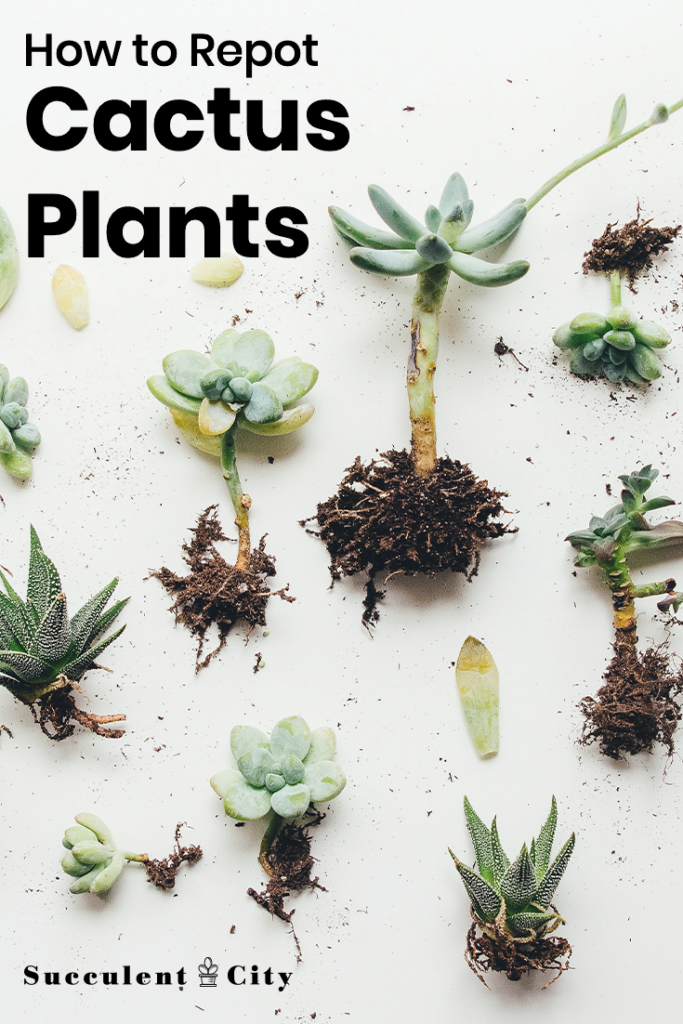
One more important tip to remember - never let succulents and cactuses stand in water. They should be watered only if soil is dry. The planting pots should have good drainage with good soil and sand. Never fertilize soil in winter, when the plant rests. Soil should be fertilized only in late March to October. Different types of cactus plants should be repotted once a year. New post should be clean and contain new potting soil. Nevertheless, cactus and succulent plants can be planted in the same pot, but be careful to take plants with the same light and water demands. You can look more ”fast tips” in ABC of Cactus Care.

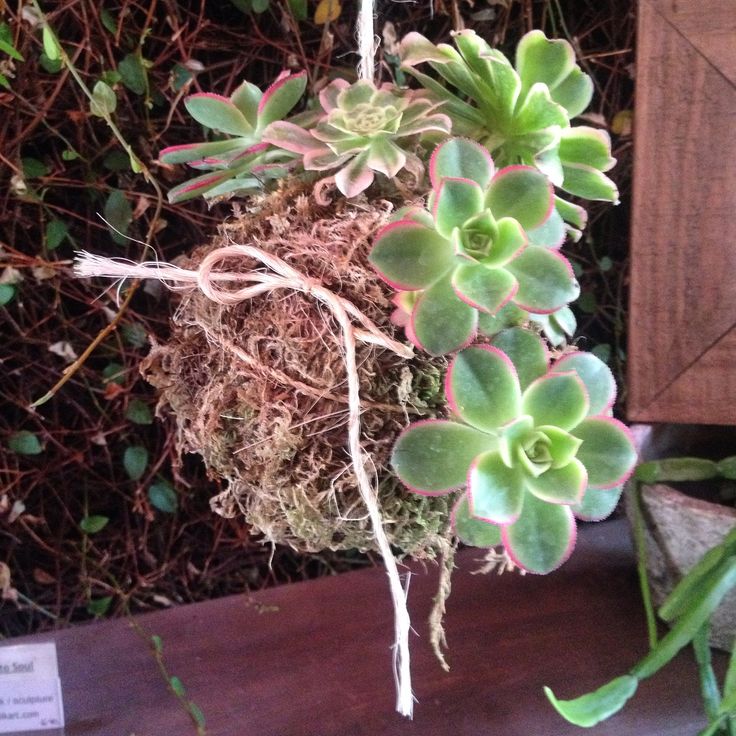
Tropic cactus types as well and many other succulents look marvelous in hanging baskets. These cacti usually flower in the short days of fall and winter. Holiday cacti (Christmas, Easter and Thanksgiving cactus) planted that way will be the best decoration of your house especially if there’s not sufficient amount of space. Look around. It often happens that there’s an empty corner or window-sill in your living room, bedroom or sitting room that needs “something.” Cactus and succulent plants are undoubtedly that “something” that you might need!

Tags: , , , , , , , , ,

Watering different types of cactus plants

October 6th, 2007

It goes without saying that every type of cactus needs an individual approach. So in order to water your cactuses properly, you should take into account a number of factors. But all in all, the following cactuses require more watering:

1. Hygrophilous cactuses
2. Growing cactuses
3. Cactuses with big roots
4. Cactuses in earthenware pots
5. Cactuses in sandy soil
6. Cactuses kept in high temperature and dry air

And, on the contrary, you should be careful with watering of these cactuses:

1. Xerophilous cactuses
2. Cactuses that are at rest
3. Cactuses with small roots
4. Cactuses that are grown in plastic pots
5. Cactuses clay soil
6. Cactuses kept in low temperature and humid air

In summer I water my cacti just like the other houseplants – just when the soil gets dry, except cool rainy days. In autumn watering should be reduced gradually, and in winter it should be stopped at all – to make dry and cold wintering for your prickly friends.

It’s better to use rainwater, but you can use tap water settled for a day or two. It must be warm - about 30-40 C°. If you put a hand in water with such temperature, you will feel neither warmth nor cold. I seldom use water of room temperature, especially when it’s cool outside. The fact is that cactus roots can’t absorb water, which temperature is lower than 10-12 C°. If it’s about 20 C° in the room, the soil in the pot is colder. The temperature of the water you poured out on this soil slumps. And a cold, moist soil is extremely dangerous for cactus roots.

The best time for watering is in the evening in summer and in the morning in winter. The water should not get on the stalk of the cactus plant, watch it carefully. And remember that every cactus can bear lack of water, but its excess could be baneful.

On the other hand, a lot of cacti suffer just from water shortage in hot summer days: many collectors don’t know that cactus absorbs only a few percents of water together with nutrients dissolved in it. The rest of water is used for the cooling of the stalk through evaporation to protect it from overheating. Water shortage in hot summer period is very harmful.

Hot days and cool dewy nights are typical for the most regions of America where cacti grow. Dew and fog can be replaced by spraying, that has an excellent effect, if you meet some simple conditions. For my collection I stick to these rules:

1. Never spray cactus, if the weather is cool and damp – the stalk may begin to rot.
2. Use a small sprayer that pulverizes water to fog, but not to big drops.
3. Use only boiled and hot water, because its temperature stumps during spraying.
4. Hygrophilous cacti that have leaves, for example Christmas cactus, like not only sprinkling, but also warm shower. It’s undesirable to spray your cactus late at night because of a quick temperature drop.

Tags: , , , , , , , , , ,

Potting cactus in proper soil

August 31st, 2007
Potting different types of cactus in proper soilDifferent types of cactus plants are quite exacting to the container they grows in. The size of the pot must correspond to the rootage of the plant. If roots are long and have a main spur, then you should choose a deep and narrow pot. If the roots are developed better in the topping and they are not very long, the pot must be wide and shallow. Growth peculiarities should be taken into account as well. For example, mammillaria generates a lot of bulbils in one pot, so you should choose a wide and rather shallow pot.It’s a matter of taste to choose what the pot is made of. I grow my cacti in square plastic pots standing on the trail. The soil in such pots dries up less quickly than in the earthenware. The drain ports and a drainage layer are indispensable conditions for all the sorts of containers where you grow cacti: they can’t bear water stagnation near their roots. Another advantage of plastic pots is that they warm up slightly in the sun, but retain the warmth after sunset for a long time. Besides, thanks to their square form they take half place on the windowpane.

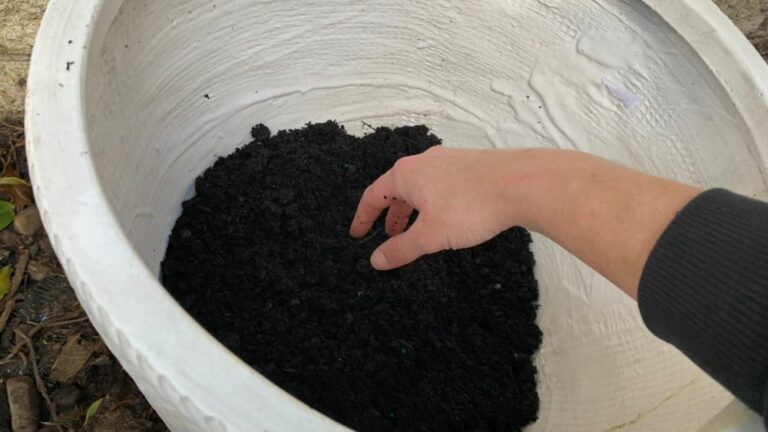
While preparing the soil mixture for your cacti you should keep in mind one rule: soil must be coarse-grained and loose, spongy and absorbent, but it must not contain any organic fertilizer like manure, droppings or sawdust.

Organic fertilizers are rich in nitrogen, and cactus need in nitrogen is very scanty because of their physical nature. Even a little excess of nitrogen can lead to fatal consequences: the stalk grows rapidly, gets friable and watery. Fuzz and thorns grow weak and many sprouts and bulbils don’t develop to healthy plants. The skin bursts and it leaves ugly scars. These surfeited cactus plants die easily of any infection.

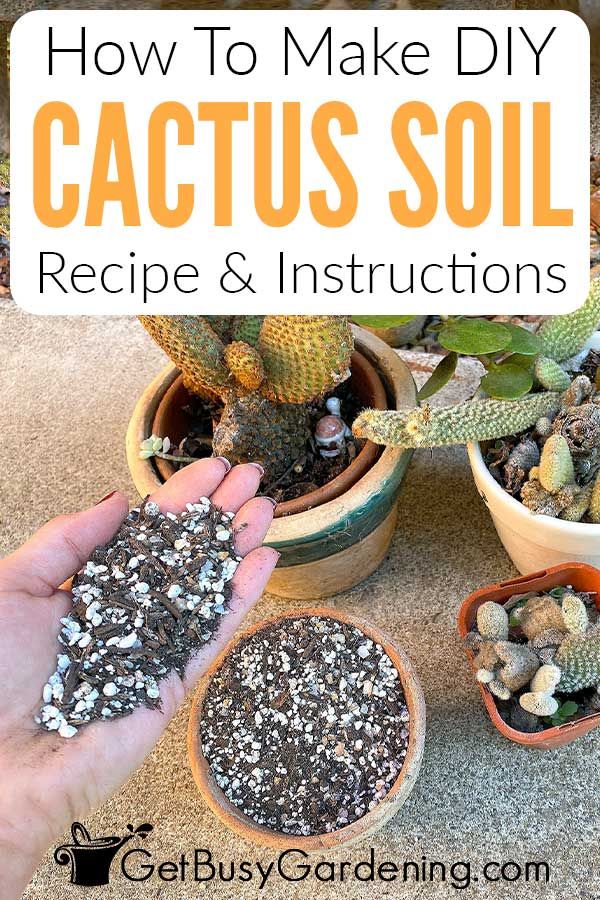
Making soil for cactusFor my collection I prepare the following mixture: leaf mold, clay soil, coarse sand, charcoal and broken brick (2:2:2:1) mixed with one teaspoon of slack lime and superphosphate. Leaf mold is rich in nutrients that are necessary for succulents. Moreover it’s friable and light and absorbs water well. It dries up quickly and prevents water stagnation in the pot. Clay soil (or garden loam) retains water and dissolved nutritive salts perfectly. Its tenacity and thickness plays a large role by planting of high and big cacti. Coarse sand makes the soil loose and porous. It’s an obligatory component of the soil for all cactus plants. Charcoal has an antiputrefactive action. Broken brick is of double importance. First, it’s pieces make the soil porous. Second, it’s very hygroscopic and absorbs superfluous water. Slack lime is necessary for the right metabolism and normal assimilation of nutrients. Superphosphate acidifies the soil, which is very useful for cacti.

Hope my tips will be of use for you and your prickly cactus friends. I’ll write about how to water different types of cactus next time.

See you soon here!

Tags: , , , , ,

How to place different types of cactus plants

June 29th, 2007
There’s no other houseplant like cactus that needs such a sharp distinction between winter and summer placing. In summer your cacti have to grow intensively, but in winter it happens quite on the contrary, and you need to stop their growth to avoid deformed winter increase and exhaustion.

In their homeland different types of cactus plants have a natural period of rest during summer draughts and with the first rains they start growing again. But we have to establish simulated conditions of rest in wintertime and in late autumn, when cactus plants are short of light for their normal growth. First of all, it’s necessary to reduce watering gradually, just to prevent drying up and withering of roots. Second of all, you should lower temperature on windowsills to 5-10 C.The second condition is a must, because if you keep cactus dry by usual room temperature, its stalk will go on evaporating water, the plant will fade without watering and won’t rest. Low temperature slows down its breathing and metabolism process. If you organize wintering for cactus properly, your prickly friend won’t get dry. It will grow stout and ripen.

The easiest way to low down temperature on the windowsill is to set a light glass frame on its edge. It will protect your cactus from the heating battery. Thermometer is essential to control temperature during all winter. If it shows 5 C, it’s better not to risk and to warm your window-frames with a woolen blanket, but not on any account you should remove the glass frame until central heating is cut off.

The same placing is suitable for spring and autumn, but without a frame. Cacti can hardly stand abrupt changes of watering and placing. That’s why the general rule in cactus care is a graduality in condition changing.

In summer cactuses need maximum of fresh air and sun. Fresh air comes first for a reason: only those collectors achieve proper growth, good fuzzing and flowering of their prickly friends, who keep their cacti in the open air twenty four hours a day during the whole summer. If you have no balcony, you can keep your cactus types on weatherboards of your windows or in boxes strongly fixed on the outer end. But in that case you will have to protect your cactus plants from the rain, dust and wind. I’ve made a polyethylene film cap, letting ultra-violet rays pass through. So now my cacti have beautiful big thorns, which they would have never developed under a glass cover. I also advice you to keep and carry all your cactus pots on a tray. It is safe and convenient.

Tags: , , , , ,