
Short Answer
In the vast, silent expanse of the cosmos, where stars are born and galaxies dance in eternal waltzes, there exists a quiet rebellion—a defiance of Earth’s gravity, a whisper of life persisting where none should dare. The cactus, that stoic sentinel of arid landscapes, has long been a symbol of resilience, a botanical warrior that thrives where others wither. But what if this tenacious plant could transcend its terrestrial roots? What if, against all odds, it could unfurl its spiny arms in the alien soils of other worlds? The question isn’t just whimsical; it’s a testament to the indomitable spirit of life itself. Could cacti, those desert-dwelling mavericks, become the first interplanetary pioneers?
The Cosmic Gardener’s Dilemma: Can Cacti Survive Beyond Earth?
The first hurdle is, of course, the most obvious: space is not a garden. It’s a vacuum, a realm where temperatures swing from scorching to frigid in the span of a heartbeat, where radiation carves its signature into DNA, and where gravity—if it exists at all—is a fickle, distant memory. Yet, cacti are no strangers to extremity. Their succulent bodies are built for drought, their waxy skins for insulation, their spines for defense and, perhaps, for cosmic camouflage. But can they adapt to a world where the sun is a distant ember, where the soil is not soil at all but regolith—sharp, sterile, and utterly foreign?
Consider the Opuntia, the prickly pear, a cactus so adaptable it’s found its way into backyards from the Americas to the Mediterranean. Its pads, those flattened, fleshy miracles, store water with the efficiency of a camel’s hump. Could these pads, when shielded from the void’s bite, unfurl in the dim light of Mars? Experiments on the International Space Station have shown that some plants can grow in microgravity, their roots reaching not downward but in all directions, as if confused by the absence of up. Cacti, with their modular growth, might just be the perfect candidates—each segment a self-contained life raft in the sea of space.
The Alchemy of Alien Soil: Regolith as a Cactus’s New Home
Mars, our nearest neighbor in the cosmic cul-de-sac, is a tantalizing prospect. Its soil, or regolith, is a cocktail of basaltic dust and iron oxide, giving it that infamous rusty hue. To a cactus, this is not soil—it’s a challenge. But challenges are the cactus’s love language. On Earth, these plants have conquered alkaline flats, saline marshes, and even the skeletal remains of ancient forests turned to stone. Regolith, with its poor nutrient profile and razor-edged particles, would be a cactus’s Everest—a mountain to be scaled with patience and precision.
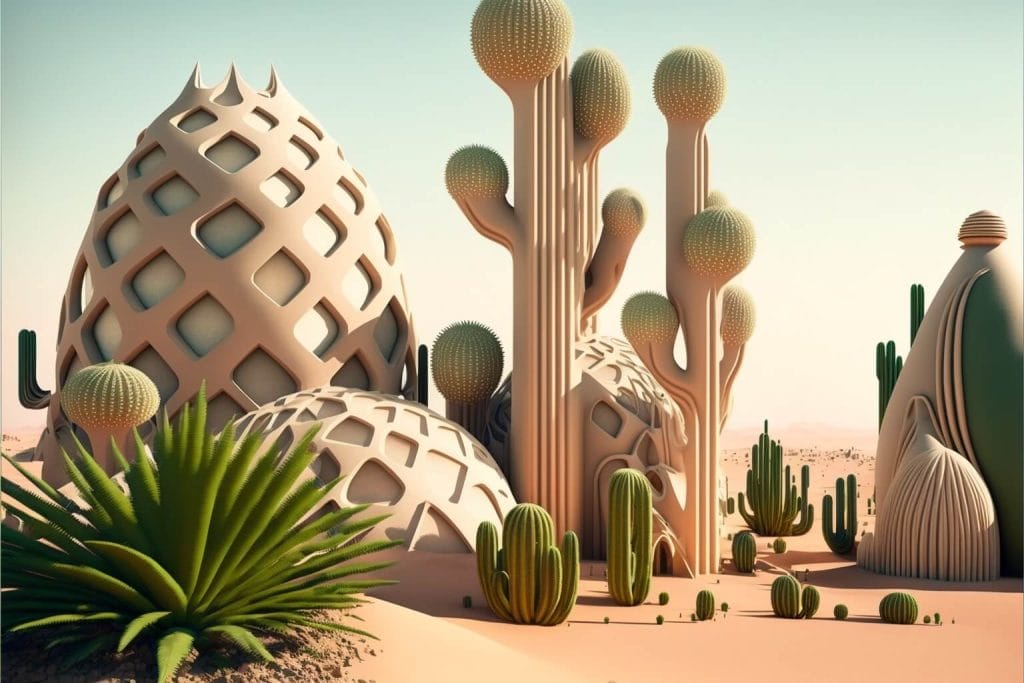
Here’s where the metaphor blooms: the cactus doesn’t just grow in regolith; it transforms it. Its roots, those tenacious tendrils, would seek out pockets of moisture, breaking down the dust into something richer, something almost soil-like. In doing so, it would become a pioneer not just for itself, but for other life forms. A cactus on Mars wouldn’t just be a plant; it would be an ecosystem architect, a tiny green architect reshaping a barren world one spine at a time.
The Sun’s Whisper: Light in the Void
Light is the currency of photosynthesis, and in the outer solar system, the sun’s generosity dwindles to a pittance. Mars receives less than half the sunlight Earth does, and beyond the asteroid belt, the sun is a mere pinprick. Yet, cacti are survivors of the shade, too. Some species, like the Mammillaria, thrive in the understory of desert shrubs, basking in dappled light. Could they adapt to the feeble glow of a Martian dawn? Or would they need artificial suns—LED arrays in pressurized domes—to coax them into growth?
The answer may lie in their spines. Those iconic needles aren’t just for show; they’re light diffusers. In the harsh glare of Earth’s deserts, they cast shadows that protect the cactus’s skin from scorching. In the dim light of another world, they might act as tiny solar concentrators, funneling what little light exists to the plant’s core. It’s a poetic twist: the very features that make cacti unmistakable on Earth could be their salvation in the dark.
The Gravity Gambit: When Up is Optional
Gravity is the invisible hand that shapes life on Earth. It pulls water downward, it orients roots toward the soil, it dictates the posture of every living thing. In microgravity, or on a world with a fraction of Earth’s pull, these rules dissolve. A cactus’s spines, which on Earth grow in a downward arc to shield the plant from the sun’s zenith, might spiral outward in all directions, a chaotic halo of defiance. Its roots, no longer compelled to dig, could sprawl like the tentacles of an octopus, searching for purchase in the alien dirt.
This is where the cactus’s modularity becomes its greatest asset. Unlike trees, which rely on rigid trunks to stand tall, cacti are built in segments—each one a self-sufficient unit. In low gravity, these segments could detach and root elsewhere, creating a living, spreading network. It’s a form of botanical cloning, a way to colonize a planet not one plant at a time, but one pad at a time. The cactus, in essence, becomes its own diaspora.
The Psychological Frontier: Why We Need Cacti in Space
But this isn’t just about survival. It’s about meaning. Humans have always projected their hopes onto the natural world, seeing in plants and animals reflections of their own struggles and triumphs. A cactus on Mars would be more than a scientific experiment; it would be a symbol. It would say: life is stubborn. Life is adaptable. Life will find a way, even when the odds are stacked against it.
There’s also the matter of aesthetics. A cactus in a Martian greenhouse wouldn’t just be a utilitarian experiment—it would be a piece of Earth in the void, a reminder of home. Its spines would catch the artificial light like a constellation, its pads unfurling in slow motion, a ballet of resilience. It would be the first true xenophyte—a plant that belongs not just to one world, but to the cosmos itself.
The Future: A Garden Among the Stars
So, can cacti grow on other planets? The answer is a resounding maybe—but a maybe that hums with possibility. The challenges are monumental, the environment hostile, the risks high. Yet, if there’s one plant that embodies the spirit of exploration, it’s the cactus. It doesn’t ask for fertile soil or gentle climates. It asks only for a chance to prove itself.
And if it succeeds? Then the cosmos will no longer be a place of silence and sterility. It will be a garden. A prickly, spiny, utterly unexpected garden, where life clings to the edges of the unknown and whispers, against all reason, that it belongs there.
FAQ
Can cacti survive in outer space environments?
Cacti have adaptations to survive extreme conditions on Earth, such as drought and temperature fluctuations, which suggest potential for survival in space environments with proper protection against radiation and microgravity effects.
What challenges do cacti face when growing on planets like Mars?
Challenges include extreme temperature swings, high radiation, low gravity, and the harsh, nutrient-poor Martian regolith soil that lacks organic matter.
Have any experiments been conducted to grow cacti or similar plants in space?
While direct experiments with cacti in space are limited, studies on the International Space Station show plants can grow in microgravity, indicating potential for cacti given their modular growth.
Why are cacti considered good candidates for extraterrestrial plant growth?
Their resilience to drought, modular growth allowing propagation from segments, and ability to modify poor soil environments make them promising candidates for growth beyond Earth.
What symbolic role would cacti play in space exploration?
Cacti could symbolize human resilience and the persistence of life, serving as a reminder of Earth and hope in alien environments.



Leave a Reply