
Short Answer
In the vast, sun-drenched landscapes of high-altitude Andean regions, a tiny botanical marvel unfolds its secrets one petal at a time. Rebutia cacti, those diminutive yet dazzling spheres of spiny splendor, are nature’s unsung artists, painting the arid earth with bursts of color that defy the harshest of climates. Their blooms—vibrant, ephemeral, and hypnotically intricate—are a testament to resilience, beauty, and the quiet tenacity of life in the most unforgiving terrains. For photographers, these cacti are not merely subjects; they are muses, challenging the lens to capture their fleeting grandeur before the sun’s relentless gaze fades their brilliance. Welcome to the world of Rebutia photography, where every click is an ode to the extraordinary hidden in the ordinary.
The Art of Macro: Unveiling the Microscopic Universe of Rebutia Blooms
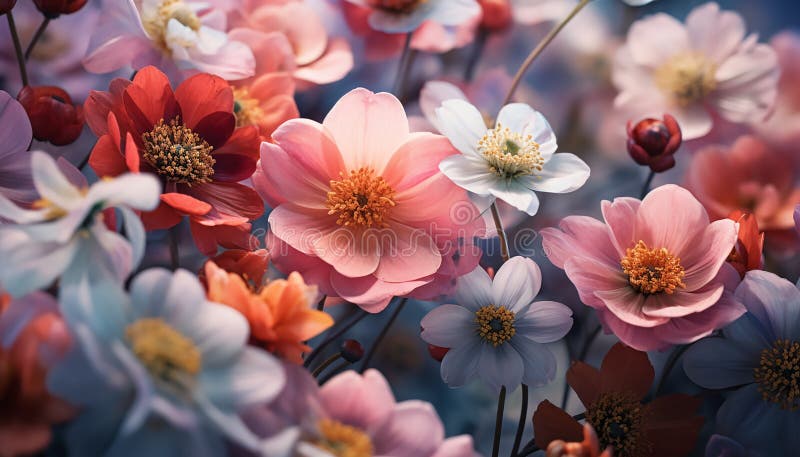
To photograph Rebutia is to embark on a journey into the microscopic universe that thrives within each compact rosette. These cacti, often no larger than a golf ball, cradle blossoms that resemble miniature fireworks—petals unfurling in spirals of crimson, magenta, lemon, and coral. The macro lens becomes a portal, revealing textures that defy expectation: the velvety sheen of a petal’s surface, the delicate translucency of its edges, the way stamen and stigma stand like sentinels at the heart of the bloom. It’s not just photography; it’s a form of botanical archaeology, excavating the hidden intricacies of a plant that has evolved to thrive where others wither.
For the macro enthusiast, Rebutia offers a playground of challenges and rewards. The shallow depth of field demands precision—focus on the stigma, and the outer petals blur into a dreamlike haze. Adjust the aperture, and suddenly, the entire flower snaps into crystalline clarity, each filament of stamen a thread of gold against a backdrop of fuchsia. The play of light is equally critical; the harsh midday sun can bleach out hues, while the golden hour bathes the blooms in a warm, ethereal glow. Mastering this dance between light and lens is what transforms a snapshot into a masterpiece.

Seasonal Chronicles: Tracking the Ephemeral Dance of Rebutia Blooms
Rebutia’s blooming season is a fleeting spectacle, a brief but breathtaking performance that unfolds with the precision of a Swiss watch. Depending on the species—whether it’s the early-blooming *Rebutia heliosa* or the late-spring starburst of *Rebutia marsoneri*—the timing varies, but the urgency remains the same. Photographers must become seasonal detectives, tracking weather patterns, soil moisture, and temperature shifts to predict the moment when these cacti will burst forth in color. It’s a race against time; a single day’s delay can mean missing the peak of their radiance.
Each season brings its own narrative. Spring heralds the first tentative buds, their petals tightly furled like secrets waiting to be told. Summer is the crescendo—full, unapologetic blooms that command attention, their colors so vivid they seem to emit their own light. By autumn, the petals begin to wilt, their edges curling into parchment-thin lace, a poignant reminder of nature’s cyclical impermanence. Winter, meanwhile, offers a different kind of beauty: the stark silhouette of a dried bloom against a frosted landscape, a study in contrasts between life’s vibrancy and the stillness of dormancy. To document this cycle is to capture the heartbeat of the Andean highlands, where every season writes its own chapter in the story of survival.
Compositional Mastery: Framing the Unframable in Rebutia Photography
The compact form of Rebutia cacti presents a unique compositional puzzle. How does one frame a subject that is both intimate and expansive, a single flower and a universe of detail? The answer lies in embracing negative space. By isolating a single bloom against a blurred backdrop of soil or distant mountains, the photographer elevates the subject from mere plant to a symbol of tenacity. Alternatively, a tight cluster of Rebutia rosettes, their spines interlacing like the threads of a tapestry, creates a sense of community—a visual metaphor for resilience in numbers.
Symmetry and asymmetry both play crucial roles. The radial symmetry of a Rebutia bloom lends itself to centered compositions, where the petals radiate outward like the spokes of a wheel, drawing the viewer’s eye to the heart of the flower. Yet, breaking this symmetry—perhaps by angling the camera to capture a bloom in profile, its petals cascading like a waterfall of color—adds dynamism and intrigue. The rule of thirds can also be a powerful tool; placing the bloom off-center, with the spines or neighboring cacti anchoring the frame, creates a sense of movement and narrative.
Color theory further enriches the composition. The juxtaposition of a neon-pink Rebutia against the muted greens and browns of its natural habitat creates a visual jolt, a burst of energy that commands attention. For a more subdued palette, pairing a soft lavender bloom with the silvery sheen of its spines can evoke a sense of elegance and understated sophistication. The key is to experiment, to let the colors guide the composition rather than dictate it.
Light and Shadow: The Alchemy of Illumination in Rebutia Photography
Light is the sculptor of Rebutia’s beauty, carving depth into petals and casting shadows that reveal texture. The harsh midday sun, while challenging, can be harnessed to create high-contrast images where the bloom’s edges glow like embers against a dark background. Backlighting, in particular, transforms the petals into translucent veils, their veins and subtle gradients of color rendered in exquisite detail. This technique requires patience and timing, as the sun must be positioned just right to backlight the subject without washing it out.
Diffused light, on the other hand, softens the harshness of the environment, allowing the colors to sing without the distraction of glare. Overcast days or the dappled shade of a greenhouse provide ideal conditions for capturing the true hues of Rebutia blooms, their pigments rendered with a fidelity that direct sunlight often obscures. For those shooting in the wild, a portable diffuser or a simple white sheet can work wonders, scattering the light to create a gentle, even glow.
The interplay of light and shadow also tells a story. A bloom half in shadow, its petals emerging from darkness like a secret revealed, speaks to the resilience of life in the face of adversity. Conversely, a fully illuminated flower, bathed in golden light, feels like a celebration—a fleeting moment of joy in an otherwise austere landscape. Mastering this alchemy is what separates a good photograph from a great one; it’s the difference between documenting a subject and evoking an emotion.
Beyond the Bloom: Exploring the Textural Tapestry of Rebutia
While the blooms of Rebutia are undeniably the stars of the show, the cactus itself is a study in contrasts and textures. The spines, ranging from delicate and hair-like to thick and hooked, add a tactile dimension to the photograph. A close-up of these spines—whether arranged in a radial pattern or spiraling like a fingerprint—reveals a world of micro-architecture, each spine a tiny work of evolutionary art. The areoles, from which the spines and blooms emerge, are equally fascinating; their woolly or bristly textures provide a counterpoint to the smoothness of the petals.
The body of the cactus, often overlooked in favor of its flowers, is a canvas of subtle hues and patterns. Some species boast ribbed or tuberculate surfaces, their geometric lines creating a mesmerizing interplay of light and shadow. Others are smooth and glossy, their surfaces reflecting the sky like a mirror. Even the soil in which they grow tells a story—whether it’s the cracked, parched earth of a drought-stricken region or the rich, loamy soil of a cultivated garden. These textures invite the photographer to explore beyond the obvious, to find beauty in the details that most would overlook.
Black-and-white photography offers a unique opportunity to emphasize these textures, stripping away the distraction of color to reveal the raw, sculptural beauty of the cactus. The interplay of light and shadow on a spine or the intricate patterns of an areole takes on a new dimension in monochrome, transforming the subject into a study of form and structure. It’s a reminder that Rebutia is more than just a pretty face; it’s a masterpiece of evolutionary design.
The Ethical Lens: Responsible Photography in Rebutia Habitats
As photographers, we are temporary visitors in the world of Rebutia, and with that privilege comes responsibility. These cacti, though resilient, are often found in fragile ecosystems where human interference can have lasting consequences. Treading lightly—both literally and figuratively—is essential. Avoid trampling surrounding vegetation, and never disturb the soil around the roots. If shooting in the wild, use a telephoto lens to capture close-ups without encroaching on the plant’s space, preserving its natural state for future photographers and, more importantly, for the ecosystem itself.
Ethical considerations extend beyond the physical act of photography. When sharing images, resist the urge to geotag specific locations, especially for rare or endangered species. The popularity of social media has led to an influx of visitors to sensitive areas, often with unintended consequences. Instead, share general locations or descriptions that protect the habitat while still inspiring others to appreciate these plants from afar. Consider supporting conservation efforts or organizations dedicated to preserving high-altitude ecosystems, ensuring that the beauty of Rebutia can be enjoyed by generations to come.
Finally, remember that these cacti are living beings, not props. Avoid staging scenes or manipulating the environment to create a more “aesthetic” shot. Let the natural beauty of Rebutia shine through, and let your photographs serve as a testament to its resilience and grace. In doing so, you honor not just the subject, but the delicate balance of the ecosystem that sustains it.
FAQ
What is Rebutia photography?
Rebutia photography involves capturing the stunning blooms of Rebutia cacti using macro techniques to highlight their intricate details and vibrant colors.
When do Rebutia cacti bloom?
The blooming season for Rebutia cacti varies depending on the species, with some blooming early in the spring and others later in the season.
What are some tips for photographing Rebutia?
Use macro lenses for close-ups, experiment with light conditions, and consider composition techniques like negative space and color theory to enhance your images.


Leave a Reply