
Short Answer
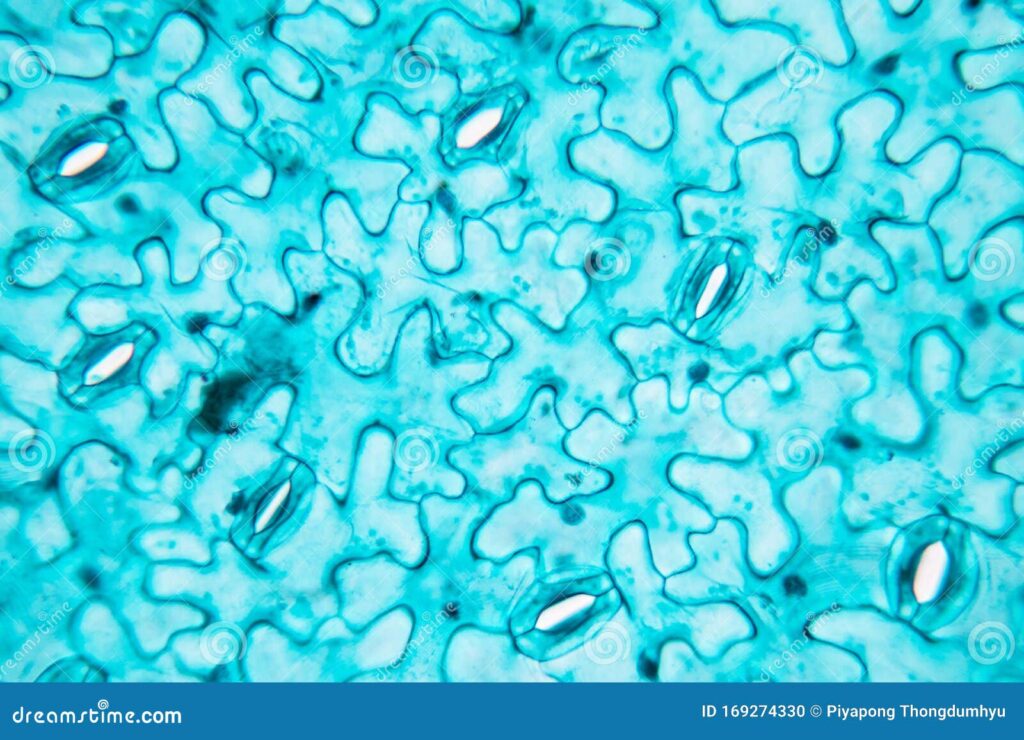
Have you ever gazed at a succulent leaf and wondered about the mysteries concealed within its green facade? What if I told you that beneath its surface lies a bustling microcosm, rich with life and discovery? Under a microscope, leaf stomata, the minute pores found in the epidermis of leaves, reveal their hidden wonders. This microscopic terrain invites us not only to ponder the complexities of plant life but also to grapple with the challenges of understanding their function and significance. Let us embark on this exploratory venture into the world of leaf stomata!
The Fascinating Structure of Stomata
Stomata are the microscopic openings on the epidermal layer of leaves that play a crucial role in photosynthesis and respiration. Each stoma is bordered by two specialized cells known as guard cells, which regulate the opening and closing of the pore. This regulation is pivotal for gas exchange, allowing carbon dioxide to enter while facilitating the exit of oxygen and water vapor. The morphology of stomata can vary significantly across different plant species, adapting to their environments and physiological needs.
Upon close examination, stomata can either appear as bean-shaped or dumbbell-shaped structures, with their shapes and sizes reflecting the plant’s evolutionary adaptations. In arid or drought-prone environments, for instance, stomata are often less numerous or are situated in deeper depressions to minimize water loss. This physiological phenomenon attracts attention for its significance in the context of climate change and environmental adaptability, evoking questions about how plants might continue to thrive in an ever-changing world.
The Role of Stomata in Photosynthesis
To fully appreciate the intricacies of stomata, one must delve into the process of photosynthesis, wherein plants convert light energy into chemical energy. Stomata facilitate the entry of carbon dioxide, an indispensable reactant in this process. The photosynthetic machinery within the chloroplasts utilizes this carbon dioxide along with sunlight to produce glucose and oxygen. Notably, the timing of stomatal opening is highly regulated; they often open during daylight to maximize photosynthesis while closing during the heat of the day to conserve water.
This duality presents an interesting challenge: how do plants maintain an optimal balance between gas exchange and water retention? Adaptations such as crassulacean acid metabolism (CAM), utilized by certain succulents, demonstrate how some plants have evolved specialized pathways to conserve water while still engaging in photosynthesis. The exploration of stomatal function sheds light on these extraordinary adaptations and teaches us about the evolutionary pressures that shape plant physiology.
The Intricacies of Stomatal Regulation
The precise control of stomatal behaviour is governed by a complex interplay of environmental cues, hormonal signals, and cellular processes. Factors such as light intensity, humidity, and carbon dioxide concentration all influence the opening and closing of stomata. For instance, when light is abundant and carbon dioxide levels are high, guard cells fill with water, becoming turgid and causing the stomata to open. Conversely, during periods of drought or high temperatures, abscisic acid—an important plant hormone—triggers the closure of stomata to reduce transpiration.
This dynamic regulation is not without its challenges. As the climate continues to change, the stressors that plants face intensify. Research is focusing on how this regulatory system might adapt to combat factors such as increased temperature, varying precipitation patterns, and elevated levels of atmospheric CO2. Understanding these processes not only allows us a glimpse into the resilience of plant life but also underscores the urgency of conserving our planet’s biodiversity.
The Gem of Microscopy: Visualizing Stomata
To truly appreciate the marvel of stomata, microscopy offers an enchanting window into this hidden world. Using high-resolution microscopes, researchers can magnify leaf surfaces, unveiling the breathtaking intricacies of stomatal structures and their distributions. For educators and students alike, this visualization serves as a profound tool for understanding plant physiology. It demystifies concepts that may seem abstract in traditional learning settings, offering a tangible connection to the wonders of the natural world.
However, accessing quality microscopy can present its own challenges. Many educational institutions may lack the necessary resources, potentially hampering the exploration of these fascinating structures. Fortunately, advancements in technology are facilitating the development of more accessible imaging techniques, paving the way for broader engagement with plant sciences. As we refine our technological capabilities, we can unlock new avenues of inquiry that were previously unattainable.
A World Yet to Explore
As we reconsider the role of stomata within the grand scheme of life, the journey does not end here. Research continues to uncover the myriad ways stomata impact not just individual plants, but entire ecosystems. Their contribution to the global carbon cycle and their influence on microclimates reveal just how interconnected life is. What challenges arise if stomatal function is disrupted on a larger scale? The answers could inform conservation strategies, agricultural practices, and our approach to climate adaptation.
As we ponder the minutiae of leaves under the microscope, we are reminded of the infinite wonders that the natural world holds. From the regulation of respiration to the intricate adaptations for survival, stomata encapsulate the essence of life’s resilience. Looking through a microscope provides us not just with enhanced visibility of these tiny wonders, but also with a renewed sense of obligation to understand and protect our planet’s intricate ecosystems.
FAQ
What are stomata?
Stomata are tiny pores on the surface of leaves that allow for gas exchange, enabling plants to take in carbon dioxide and release oxygen and water vapor.
How do stomata regulate water loss?
Guard cells surrounding each stoma control its opening and closing, helping plants balance water retention with gas exchange.
Why is stomatal regulation important for plants?
It allows plants to optimize photosynthesis while minimizing water loss, particularly in challenging environmental conditions.
What role does microscopy play in studying stomata?
Microscopy allows detailed visualization of stomatal structures and distribution, enhancing understanding of plant physiology.
How do environmental factors affect stomata?
Light, humidity, carbon dioxide levels, and plant hormones influence stomatal opening and closing, adapting plant response to changing conditions.




Leave a Reply