

Cacti, members of the family Cactaceae, are fascinating plants known for their unique adaptations to arid environments. Their scientific names often reflect their diverse characteristics and geographical origins. However, the pronunciation of these names can sometimes pose a challenge. This article serves as a comprehensive guide to help you navigate the intricate world of cactus scientific name pronunciation.
Understanding Scientific Nomenclature
The scientific naming system, known as binomial nomenclature, assigns each species a two-part name in Latin. The first part of the name identifies the genus, while the second specifies the species. This system, developed by Carl Linnaeus in the 18th century, allows for a standardized method of identifying and classifying organisms worldwide. Although Latin may not be everyone’s first language, familiarizing oneself with the phonetics and structures of these names can greatly enhance one’s appreciation of cacti.
Cactus scientific names are primarily derived from Latin or Greek roots, often indicating specific morphological traits, historical significance, or the habitats where these plants thrive. Take, for example, Echinocactus grusonii, commonly known as the Golden Barrel Cactus. Here, “Echinocactus” derives from the Greek word ‘echinos,’ meaning hedgehog, reflecting the plant’s spiny appearance. Understanding the etymology can make pronunciation far less daunting.
Key Pronunciation Principles
To effectively pronounce scientific names, it is crucial to grasp some basic Latin pronunciation principles. These guidelines can be instrumental for enthusiasts and botanists alike. Here are some foundational rules:
- Vowels: In Latin, vowels are generally pronounced with consistent sounds. ‘A’ as in ‘father’, ‘E’ as in ‘met’, ‘I’ as in ‘machine’, ‘O’ as in ‘for’, and ‘U’ as in ‘rule’.
- Consonants: Most consonants in Latin are pronounced as they are in English, with a few exceptions. For example, ‘C’ has a hard sound before ‘A’, ‘O’, and ‘U’, but a soft sound before ‘E’ and ‘I’.
- Accentuation: Latin names carry a specific accentuation, which is usually placed on the penultimate syllable if it is long, and on the antepenultimate syllable if it is short.
Now that the basic rules are established, let us examine a few specific examples of cactus scientific names to elucidate the application of these principles.
Examples of Cactus Scientific Names
1. Opuntia ficus-indica: Commonly referred to as the Prickly Pear Cactus, the genus name ‘Opuntia’ can be pronounced as “oh-PUN-tee-ah.” The species name, ‘ficus-indica,’ is articulated as “FEE-kus in-DI-kah.” Together, they signify a plant well-known for its edible pads and fruits.
2. Carnegiea gigantea: Known as the Saguaro Cactus, this name might initially seem intimidating. However, breaking it down into its components makes it simpler. Pronounce ‘Carnegiea’ as “kar-nay-GEE-ah,” and ‘gigantea’ as “ji-GAN-tee-ah.” This majestic cactus is iconic to the American Southwest, with its towering stature reaching up to 40 feet tall.
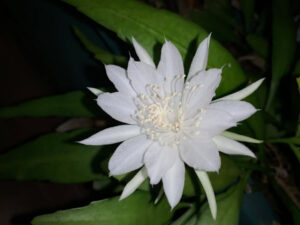
3. Acanthocereus tetragonus: Commonly called the Night-Blooming Cereus, this name can be pronounced as “a-KAN-tho-KER-ee-us tet-ra-GO-nus.” The genus name references its spiny structure (‘acanthos’ means thorn), while ‘tetragonus’ indicates its four-sided stems.
Each name tells a story, revealing insights into the physical characteristics and natural history of these remarkable plants.
Practical Tips for Mastery
To further enhance your mastery of cactus scientific names, consider these practical tips:
- Practice Aloud: Reading the names out loud can significantly improve your comfort level with pronunciation. Use online resources and phonetic guides to hear the correct articulation.
- Engage with Other Enthusiasts: Joining clubs or online forums can provide opportunities to practice pronunciation and share insights with others passionate about cacti.
- Use Mnemonics: Create memory aids that link the pronunciation to features of the plant or its common name. This technique can make it easier to recall how to say the scientific name correctly.
Knowledgeable discussions about cacti often revolve around their common names. However, understanding the scientific names adds a layer of depth to the conversation. Knowing how to pronounce these names correctly showcases your dedication and accolades to the botanical world.
Conclusion
Mastering the pronunciation of cactus scientific names is not merely an academic exercise but rather an enriching journey into the diversity of plant life. With an understanding of the structural principles, practical examples, and helpful tips, anyone can say these names with confidence. By delving deeper into the nomenclature of cacti, you may find yourself cultivating not only plants but also a profound respect for nature’s intricate language.




Leave a Comment