
Short Answer
There’s something quietly rebellious about a cactus—its defiance of thirst, its unapologetic spines, its stubborn flourishing in the harshest of landscapes. Artists have long been captivated by this paradox: a plant that thrives where others wither, a symbol of resilience that refuses to be tamed. Painting cacti isn’t just about capturing their spiky silhouette or the vivid hues of a desert sunset; it’s about translating the essence of endurance into strokes of color and light. Whether rendered in bold acrylics or delicate watercolors, the cactus becomes a canvas for deeper narratives—of survival, of beauty in adversity, and of the quiet strength often overlooked in the natural world.
The Allure of the Cactus: Why Artists Can’t Resist Its Thorns
At first glance, the cactus seems simple—a geometric marvel of angles and curves, a study in minimalism. But delve deeper, and its complexity unfolds. The spines, often mistaken for mere decoration, are actually modified leaves, evolved to conserve water and deter predators. Their stark, angular forms contrast with the soft, undulating shapes of petals or leaves in other flora, creating a visual tension that artists find irresistible. The cactus doesn’t just occupy space; it commands it, its silhouette slicing through the composition like a declaration of independence from conventional beauty.
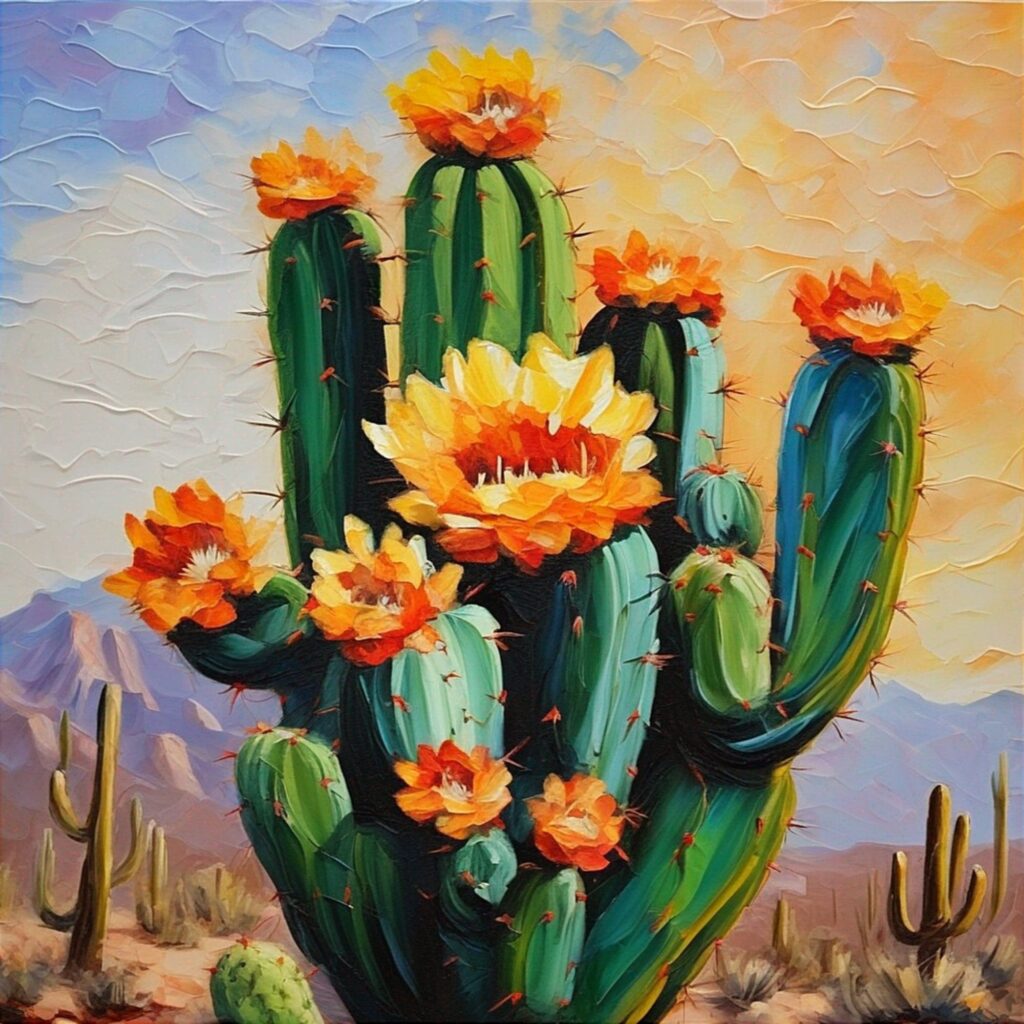
Then there’s the color. A cactus in full bloom is a riot of pinks, purples, and yellows, a stark contrast to the muted browns and greens of its arid home. This chromatic audacity makes it a favorite for artists seeking to inject vibrancy into their work. But it’s not just the colors that fascinate—it’s the way light plays off the waxy surfaces, creating highlights that seem to glow from within. Painting a cactus is less about replication and more about capturing this interplay of light and texture, a dance between the organic and the sculptural.
Mastering the Basics: Shape, Shadow, and the Illusion of Texture
Before an artist can convey the cactus’s spirit, they must first understand its structure. Start with the silhouette. Cacti come in a dizzying array of shapes—globular, columnar, paddle-like—each offering a unique challenge. A saguaro, with its towering arms, demands a sense of scale and grandeur, while a prickly pear’s flat pads require precision in layering to avoid a flat, two-dimensional look. Begin with a light pencil sketch, focusing on the overall form rather than the spines. Spines, after all, are secondary to the cactus’s core identity.
Shadow is where the magic happens. The desert sun casts sharp, defined shadows, creating a stark contrast between light and dark. Use this to your advantage. A well-placed shadow can make a cactus appear three-dimensional, its ridges and grooves popping off the page. For watercolorists, this means embracing the medium’s transparency—layering washes to build depth, letting the white of the paper peek through to suggest highlights. For acrylics or oils, glazing techniques can achieve a similar luminosity, with thin, translucent layers of paint adding richness without obscuring the underlying form.
Texture is the final frontier. The spines of a cactus aren’t just prickly—they’re architectural, arranged in spirals or clusters that follow mathematical precision. Some artists use fine liners or stippling to mimic this detail, while others opt for a looser, more impressionistic approach, suggesting spines with quick, confident strokes. The key is consistency. If you’re depicting a specific species, study its spine pattern closely. A barrel cactus’s dense, hair-like spines will require a different technique than the sparse, needle-like spines of a cholla. Don’t overdo it; a few well-placed spines can imply the rest.
Color Theory in the Desert: From Earthy Tones to Electric Blooms
The cactus’s palette is a masterclass in contrast. The body of the plant often boasts muted, earthy tones—olive greens, dusty browns, slate grays—colors that whisper of resilience. But when it blooms, the cactus transforms. Suddenly, it’s a burst of magenta, a splash of canary yellow, a delicate blush of coral. This duality is what makes cactus paintings so compelling. The challenge lies in balancing these extremes without letting one overpower the other.
For a harmonious composition, start with a limited palette. Earth tones like burnt sienna, raw umber, and Payne’s gray can ground the painting, while brighter hues—cobalt teal, cadmium red, or quinacridone violet—can be used sparingly for accents. Consider the mood you want to evoke. A monochromatic palette, with variations in tone and saturation, can convey a sense of quiet strength, while a full-spectrum approach might celebrate the cactus’s exuberant vitality. Don’t shy away from unexpected pairings—think terracotta spines against a turquoise background, or a golden cactus against a violet sky. The desert is a place of extremes, and your color choices should reflect that.
Lighting plays a crucial role in color perception. Under the harsh midday sun, shadows become almost black, and highlights take on a blinding intensity. In softer, golden-hour light, the cactus’s colors mellow, the spines appearing almost translucent. Experiment with different lighting scenarios to see how they affect your palette. A backlit cactus, with light filtering through its spines, can create a halo effect, while side lighting emphasizes its rugged texture. The desert doesn’t just provide a backdrop—it’s an active participant in the painting’s narrative.
Medium Matters: Watercolor, Acrylic, Oil, and Digital Approaches
Each medium brings its own strengths to the depiction of a cactus. Watercolor, with its fluidity and transparency, is perfect for capturing the delicate translucency of a cactus’s skin. The challenge lies in preserving the white of the paper for highlights, a technique known as “resist” where masking fluid is used to protect areas before painting. Layering is key—build up washes gradually, allowing each layer to dry before adding the next to avoid muddiness. The result? A luminous, almost ethereal quality that makes the cactus appear to glow from within.
Acrylics offer versatility and speed. Their quick drying time allows for bold, confident strokes, while their opacity makes it easy to correct mistakes. Glazing is a powerful technique here—thin, transparent layers of paint can create depth and luminosity, mimicking the way light interacts with the cactus’s surface. Acrylics also excel in texture. Impasto techniques, where paint is applied thickly, can mimic the rough, craggy surface of an old saguaro, while smooth, blended areas can suggest the sleekness of a young barrel cactus.
Oils, with their slow drying time and rich pigmentation, are ideal for capturing the subtle gradations of light and shadow. The ability to work wet-into-wet allows for seamless blending, perfect for rendering the soft edges of a cactus’s bloom or the gradual shift from light to shadow on its ribs. The medium’s depth of color can also convey the cactus’s vibrancy, especially when layered with glazes of transparent colors. For artists who love detail, oils provide the control needed to render spines with precision, while their buttery texture invites a more expressive, gestural approach.
Digital art opens up a world of possibilities. Tools like Photoshop or Procreate allow for infinite experimentation—adjusting colors with a click, refining details without fear of permanent mistakes, or even creating surreal, otherworldly interpretations of the cactus. Digital brushes can mimic traditional media, from watercolor bleeds to oil impasto, while layers offer a non-destructive way to build up complexity. The cactus, in digital form, can be stripped down to its essence or exaggerated into a fantastical form, limited only by the artist’s imagination.
Beyond the Basics: Symbolism and Narrative in Cactus Art
A cactus isn’t just a plant—it’s a story. In many cultures, it symbolizes endurance, adaptability, and even protection. The Native American concept of the “Three Sisters” (corn, beans, and squash) often includes the cactus as a fourth, representing resilience in harsh conditions. In Mexican art, the cactus is a recurring motif, a nod to the land’s harsh beauty and the people’s unyielding spirit. For artists, this symbolism offers a rich vein to mine. A painting of a cactus isn’t just a study of form; it’s a meditation on survival, a celebration of the unconquerable.
Consider the context. Is your cactus alone in a barren landscape, a solitary survivor against the odds? Or is it part of a thriving ecosystem, its spines sheltering smaller plants or insects? The narrative you weave can shift the painting’s meaning entirely. A cactus in a pot, for example, might evoke themes of domestication and control, while a wild cactus in a storm suggests defiance in the face of chaos. Even the absence of a cactus can be telling—a blank canvas might represent the fragility of life in the desert, or the potential for renewal after destruction.
Don’t be afraid to push boundaries. Some of the most striking cactus art plays with scale, juxtaposing the plant against impossible backdrops—a cactus floating in space, or towering over a cityscape. Others reimagine the cactus as something otherworldly, its spines morphing into antennae or its blooms into alien flora. The cactus’s adaptability makes it a perfect vehicle for exploring themes of transformation, both in nature and in the human experience. What does resilience look like to you? Let the cactus be your guide.
Common Pitfalls and How to Avoid Them
Even the most experienced artists can stumble when painting cacti. One of the most common mistakes is over-rendering the spines. While they’re a defining feature, too many can clutter the composition, making the cactus appear more like a porcupine than a plant. Instead, suggest spines with a few well-placed strokes or clusters, allowing the viewer’s imagination to fill in the rest. Another pitfall is neglecting the background. A cactus doesn’t exist in a vacuum—it’s part of a larger ecosystem. Even if the background is minimal, consider how it interacts with the cactus. A stark white void can make the cactus feel isolated, while a textured, earthy backdrop grounds it in its natural habitat.
Color accuracy is another challenge. The desert’s light can distort perceptions—what looks like a vibrant green in person might appear dull under artificial lighting. Always reference your subject in the same lighting conditions you plan to paint it in. If working from a photo, adjust the colors to match your memory of the scene, not the flat, desaturated tones of a poorly lit image. And don’t forget the importance of negative space. The areas around the cactus are just as important as the cactus itself. Use them to create balance, to draw the eye, or to evoke a sense of vastness.
Finally, avoid the temptation to make the cactus “perfect.” Nature is messy, and the cactus is no exception. Scars, cracks, or uneven growth can add character, telling a story of survival and adaptation. Embrace imperfections—they’re what make your painting feel alive.
Inspiration and Further Exploration
If you’re looking to deepen your understanding of cactus painting, study the masters. Georgia O’Keeffe’s iconic depictions of desert flora capture the cactus’s essence with a minimalist, almost abstract approach. Her work reminds us that the cactus isn’t just a subject—it’s a muse, a symbol of the American Southwest’s rugged beauty. Closer to contemporary art, artists like Yoko Honda blend traditional techniques with modern sensibilities, creating cactus paintings that feel both timeless and fresh. Explore galleries, both physical and digital, to see how other artists interpret this fascinating plant.
For hands-on inspiration, venture into the desert if you can. Sketching from life offers a depth of understanding that photos simply can’t match. Pay attention to the way light changes throughout the day, how shadows stretch and shrink, how the cactus’s colors shift with the angle of the sun. If a desert isn’t accessible, bring the desert to you—a potted cactus on a sunny windowsill can be just as inspiring. The key is to observe, to really *see* the cactus, not just as a subject, but as a living, breathing entity with its own story to tell.
The cactus is more than a plant. It’s a testament to the power of adaptation, a symbol of beauty in adversity, a challenge to the artist’s skill and imagination. Whether you’re a beginner dipping your brush into watercolor for the first time or a seasoned painter pushing the boundaries of digital art, the cactus offers endless possibilities. So pick up your tools, embrace the spines, and let the desert’s quiet rebel guide your hand. The canvas awaits.
FAQ
What are the best techniques for painting cacti?
Focus on understanding the cactus’s structure, use shadows for depth, and experiment with color contrasts.
Which mediums are best for painting cacti?
Watercolor, acrylic, oil, and digital approaches each offer unique advantages for capturing cacti’s essence.
What colors should I use when painting cacti?
Use earthy tones for the cactus body and vibrant colors for blooms to create a balanced composition.




Leave a Reply