
Short Answer
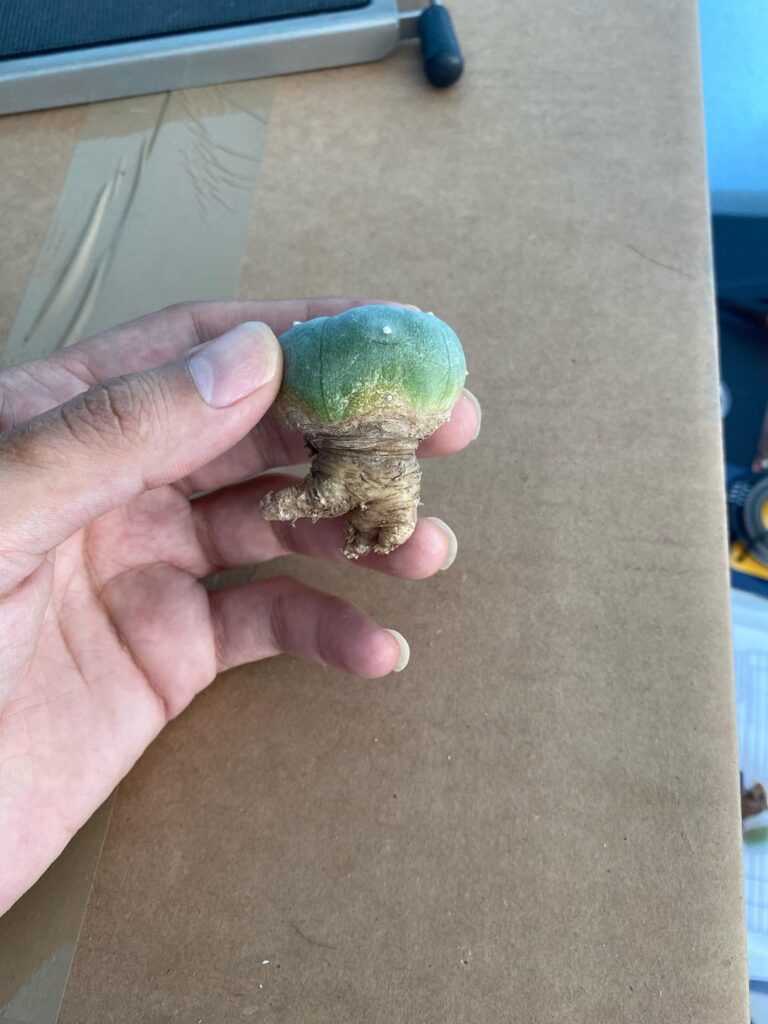
In the shadowed crevices of the Sonoran Desert, where the sun bleeds into the horizon in molten hues, a silent war rages—not for oil, not for gold, but for something far more fragile: the sacred peyote, or Lophophora, a cactus so unassuming in its spineless, button-like form that it belies the centuries of reverence and exploitation it has endured. This is not merely a tale of flora; it is a chronicle of cultural erasure, ecological devastation, and the insatiable hunger of human desire. What begins as a curiosity for collectors often spirals into a labyrinth of ethical dilemmas, legal ambiguities, and ecological collapse. The illegal trade of Lophophora is not just a black market—it is a mirror held up to our collective conscience, reflecting the darker impulses of consumption, commodification, and colonial extraction.
The Sacred and the Profane: A Cactus Divided
To the Huichol people of Mexico, Lophophora williamsii is not a plant—it is a deity, a living sacrament known as hikuri or xículi. For millennia, its ingestion has been a bridge to the divine, a tool for vision quests, healing, and communion with the spirit world. Yet, in the hands of Western collectors, it is reduced to a trophy, a specimen to be hoarded, traded, or displayed like a macabre trophy. The sacred has been divorced from its cultural context, repackaged as a curiosity for the privileged few who can afford to indulge in its mystique without bearing its spiritual weight.
The irony is stark: a cactus that thrives in the harshest of environments, surviving on minimal water and scorching heat, is now threatened by the very hands that seek to possess it. Its slow growth—taking up to 30 years to mature—makes it an easy target for poachers who strip the desert bare, leaving behind barren patches where once there was life. The illegal trade does not merely deplete the species; it erodes the cultural fabric that has sustained it for generations.
The Black Market’s Blooming Trade: A Global Epidemic
The black market for Lophophora is a hydra-headed beast, its tendrils snaking through online forums, encrypted messaging apps, and even the dark web. Prices fluctuate like desert winds—sometimes a single button sells for a few hundred dollars, other times, the cost spirals into the thousands for rare or particularly well-formed specimens. The demand is fueled by a cocktail of misinformation, romanticized idealism, and a fetishization of indigenous traditions without the accompanying respect for their origins.
Collectors often justify their purchases with the flimsiest of pretenses: “I’m preserving the species,” they claim, as they pluck another cactus from its natural habitat. Others argue that they are “keeping the tradition alive,” oblivious to the fact that their actions are accelerating the tradition’s demise. The truth is far uglier. The black market thrives on scarcity, and by driving up demand, it ensures that the cycle of exploitation continues unabated. Meanwhile, the indigenous communities who have safeguarded this plant for centuries are sidelined, their knowledge dismissed as “primitive” or “irrelevant” in the face of modern consumerism.
Ecological Carnage: The Desert’s Silent Scream
Lophophora does not grow in the wild like a weed; it is a relic of a bygone era, a survivor of an ecosystem that has long since vanished. Its habitat is a fragile balance of soil, climate, and time. When poachers uproot these cacti, they do more than steal a plant—they disrupt an entire microcosm. The soil, already parched and unforgiving, is further degraded, and the slow regeneration of the species becomes an even more distant dream.
Worse still, the illegal trade often involves destructive harvesting methods. Instead of carefully extracting the cactus to allow for regrowth, poachers use brute force, leaving behind a trail of destruction. Some even resort to poisoning the soil with chemicals to kill competing plants, ensuring that the Lophophora they harvest is the only one left. The result? A desert that is not just depleted but poisoned, a wasteland where life once flourished.
Conservationists warn that if current trends continue, Lophophora could face extinction within decades. Yet, the response from authorities is often tepid, drowned out by the cacophony of a market that thrives on disregard for the natural world. The irony is almost poetic: a plant that has survived for millennia is being driven to the brink by a species that cannot seem to survive without exploiting it.
The Legal Labyrinth: A System That Fails the Sacred
The legal status of Lophophora is a patchwork quilt of contradictions. In the United States, it is classified as a Schedule I controlled substance, alongside heroin and LSD, due to its psychoactive properties. Yet, in Mexico, it is a protected species under the Norma Oficial Mexicana, with strict regulations on its harvest and trade. This legal dichotomy creates a gray market where the plant is bought and sold under the guise of “legal” cultivation—often in countries far removed from its natural habitat, where the ecological and cultural contexts are entirely absent.
The enforcement of these laws is inconsistent at best. Border patrols seize shipments, but the demand is insatiable, and the penalties for trafficking are often laughably light compared to the profits reaped. Meanwhile, indigenous communities, who have the most to lose, are rarely consulted in the drafting of these laws. Their traditional knowledge, which has sustained the plant for generations, is treated as secondary to the whims of bureaucrats and law enforcement.
What emerges is a system that criminalizes the very people who have safeguarded Lophophora, while doing little to curb the illegal trade. The laws, in their current form, are not a solution—they are a bandage on a gaping wound, a performative gesture that does nothing to address the root of the problem.
Cultural Appropriation: The Theft of Spirit
Perhaps the most insidious aspect of the Lophophora trade is the way it strips the plant of its cultural significance, reducing it to a mere commodity. Indigenous traditions are not costumes to be worn lightly; they are living, breathing practices that demand respect, understanding, and reciprocity. Yet, in the hands of non-indigenous collectors, the sacred becomes profane. The rituals, the prayers, the deep spiritual connection—all of it is erased in favor of a transactional relationship with the plant.
This is not just a matter of semantics. It is a form of cultural erasure, a continuation of the colonial project that has sought to erase indigenous ways of knowing for centuries. The irony is that many collectors who purchase Lophophora claim to be “spiritual seekers,” yet they show little regard for the spiritual traditions that have sustained the plant for generations. They consume it in isolation, divorced from the communal and sacred contexts that give it meaning.
The result is a hollowed-out version of a tradition, one that serves the ego of the collector rather than the well-being of the community. It is a form of spiritual materialism, where the sacred is reduced to a product to be consumed, and the indigenous voices that gave it life are silenced.
A Call to Action: Reclaiming the Sacred
The illegal trade of Lophophora is not just a problem for conservationists or law enforcement—it is a problem for all of us. It is a symptom of a larger disease: the commodification of the natural world, the erasure of indigenous knowledge, and the relentless pursuit of profit at the expense of everything else. But there is hope. Change begins with awareness, with a willingness to confront the uncomfortable truths that lie beneath the surface of our desires.
For those who feel a genuine connection to Lophophora, the path forward is clear: education, respect, and advocacy. Support indigenous-led conservation efforts. Advocate for stronger protections for the plant and its habitat. Challenge the narratives that reduce the sacred to the profane. And above all, recognize that true reverence for Lophophora is not found in a collection of buttons on a shelf, but in the living traditions that have sustained it for millennia.
The desert does not give its gifts lightly. It demands reciprocity, respect, and patience. The illegal trade of Lophophora is a betrayal of that reciprocity—a betrayal that we can no longer afford to ignore. The time has come to shift our perspective, to see the sacred not as a commodity, but as a living, breathing entity deserving of our deepest reverence. The future of Lophophora—and the cultures that depend on it—lies in our hands. Will we choose exploitation, or will we choose life?
FAQ
What is Lophophora?
Lophophora, commonly known as peyote, is a small cactus known for its psychoactive properties and cultural significance.
Why is the illegal trade of Lophophora a concern?
The illegal trade poses ecological threats, undermines indigenous cultural practices, and risks extinction of the species.
What are the legal implications of Lophophora trade?
Lophophora is classified as a Schedule I controlled substance in the US, complicating its legal status and trade.


Leave a Reply