
Short Answer
Deep within the sun-scorched plateaus of Brazil’s Espinhaço Range, a botanical enigma thrives in silence—a genus so rare, so exquisitely adapted, that its very existence whispers warnings of ecological unraveling. Uebelmannia, a cactus genus named in honor of Swiss succulent enthusiast Werner Uebelmann, is not just another plant in the arid tapestry of the Cerrado and Caatinga biomes. It is a living paradox: a survivor sculpted by millennia of isolation, yet teetering on the precipice of oblivion. With fewer than ten recognized species—each confined to a handful of rocky outcrops—this genus embodies the fragility of endemism in a world rapidly rewriting the rules of survival. What makes Uebelmannia so extraordinary isn’t merely its rarity, but the story it tells about the hidden fragility of Brazil’s most overlooked ecosystems. This is the tale of a genus that could vanish before science fully comprehends its secrets—and why its extinction would be more than a loss of flora; it would be a rupture in the evolutionary narrative of the Americas.
The Enigma of the Espinhaço: Where Rock and Rain Create a Paradox
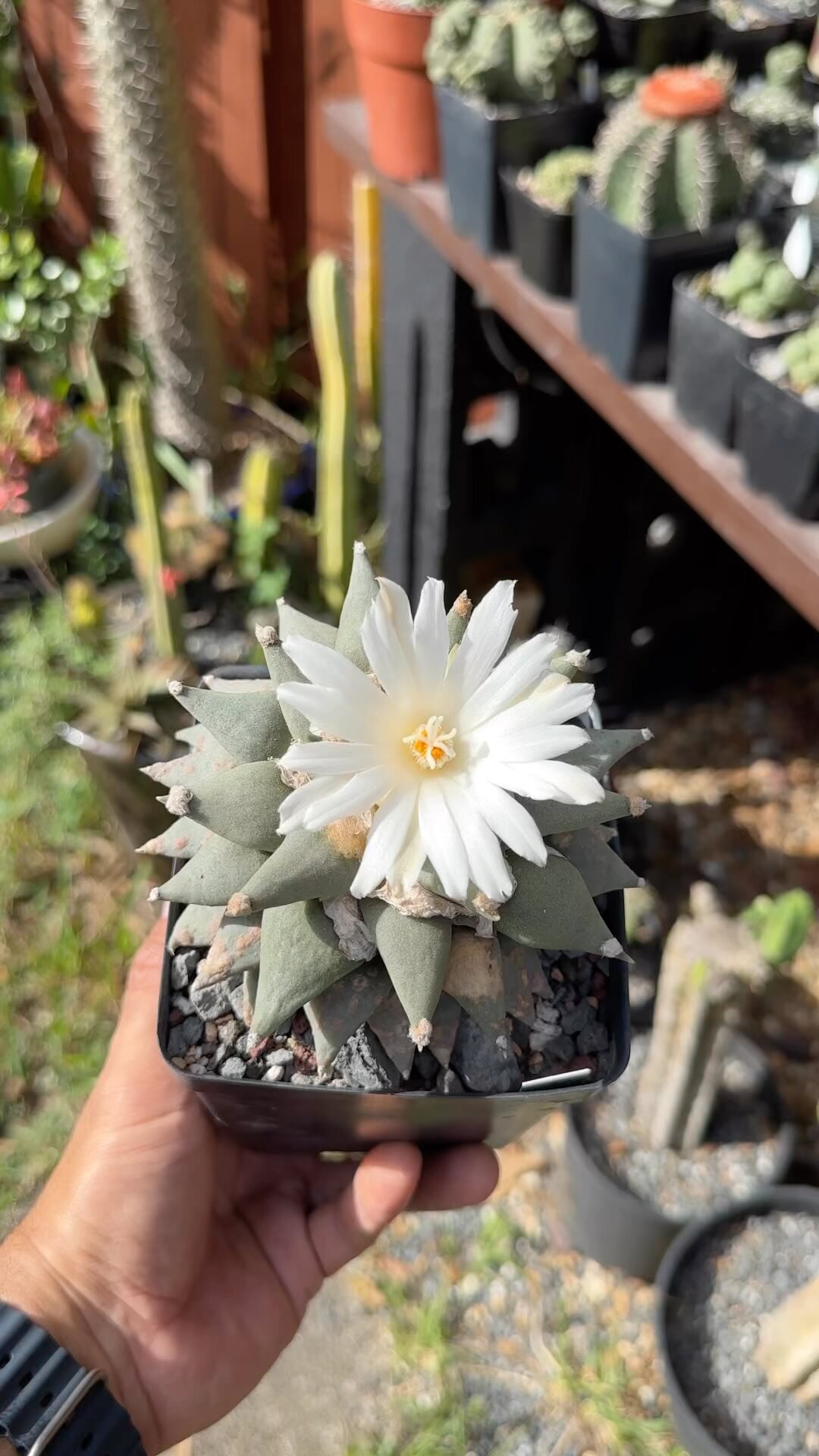
The Espinhaço Range, a jagged spine of quartzite and sandstone stretching across Minas Gerais and Bahia, is a geological marvel—a landscape where erosion has carved cathedrals of stone, and where rainfall is as unpredictable as it is scarce. Here, Uebelmannia species have evolved in microcosms of extreme conditions, their globular, ribbed bodies cloaked in a waxy epidermis that reflects the sun’s wrath. These cacti are not the towering sentinels of the Sonoran Desert; they are diminutive, often no larger than a clenched fist, their spines arranged in intricate spirals that defy the harshness of their environment. Yet, their diminutive stature belies their resilience. They thrive where few plants dare—on sheer rock faces, in crevices where soil is a luxury, and where temperatures swing from scorching days to near-freezing nights. This is not mere survival; it is a masterclass in evolutionary alchemy, where scarcity breeds specialization. But specialization is a double-edged sword. When the microclimate shifts—whether through climate change, mining, or unchecked tourism—the entire genus could collapse like a house of cards.
The Vanishing Act: Why Uebelmannia Is Slipping Through Our Fingers
To understand the precariousness of Uebelmannia, one must first grasp the concept of ultra-endemism—a term describing species confined to a single, often minuscule, geographic area. Take Uebelmannia pectinifera, for instance, which clings to life on a single quartzite ridge in northern Minas Gerais. Its entire global population could fit within a few city blocks. Such confinement is a death sentence in an era of relentless environmental change. The primary threats are manifold: illegal collecting by succulent enthusiasts, habitat destruction from quarrying for dimension stone, and the creeping shadow of climate change, which is altering rainfall patterns and intensifying droughts. But the most insidious danger is the one we rarely see—the slow erosion of genetic diversity. With so few individuals left, each species becomes a genetic bottleneck, where inbreeding and random mutations could doom populations before we even document them. It’s a silent crisis, unfolding in plain sight, where the loss of a single ridge could erase a lineage older than humanity itself.
The Cactus Paradox: Beauty That Invites Destruction
There is a cruel irony in the allure of Uebelmannia. Their compact, jewel-like forms—some sporting vibrant reds, others muted greens striped with silver—have made them prized trophies in the global succulent trade. The genus’s namesake, Werner Uebelmann, was a pioneer in cultivating and documenting these plants, but his legacy has also fueled a black market where rare specimens fetch thousands of dollars. This paradox is not unique to Uebelmannia; it plagues countless endemic species. The more beautiful and rare a plant is, the more desirable it becomes to collectors, creating a feedback loop of exploitation. Yet, unlike charismatic megafauna, cacti lack the public sympathy that might drive conservation efforts. They do not have fur, nor do they evoke the same emotional response as a panda or a tiger. They are, in the eyes of many, mere “rocks that grow.” This devaluation is dangerous, for it allows their destruction to proceed unchecked, cloaked in the guise of horticultural passion.
Evolution’s Laboratory: What Uebelmannia Teaches Us About Survival
To study Uebelmannia is to witness evolution in its most raw and unfiltered form. These cacti are living experiments in adaptation, their ribbed bodies and dense spines serving as both armor and water storage. Some species, like Uebelmannia buiningii, have evolved a nearly spherical shape, minimizing surface area to reduce water loss—a trait that also makes them irresistibly collectible. Others, such as Uebelmannia gummifera, produce a sticky, resinous sap that may deter herbivores or even pathogens. These adaptations are not just quirks of nature; they are blueprints for resilience. Scientists are increasingly turning to such extremophiles for insights into drought tolerance, a trait that could prove invaluable in the face of climate change. Yet, as these plants vanish, so too do the secrets they hold. Each extinction is a closed chapter in Earth’s evolutionary story, one we may never be able to reopen. The loss of Uebelmannia would not only impoverish Brazil’s biodiversity but also deprive humanity of a living laboratory of survival strategies.
The Invisible Guardians: Who Is Fighting for Uebelmannia?
Amid the gloom, a cadre of botanists, conservationists, and local communities are sounding the alarm. Projects like the Cactaceae Conservation Initiative are working to map and protect critical habitats, while botanical gardens are cultivating ex-situ populations to safeguard genetic material. In Brazil, organizations such as the Instituto Chico Mendes de Conservação da Biodiversidade (ICMBio) have designated protected areas within the Espinhaço Range, though enforcement remains a challenge. Yet, the battle is uphill. Conservation efforts are often hamstrung by limited funding, bureaucratic inertia, and the sheer scale of the task. Local communities, too, play a crucial role. In some regions, traditional knowledge about these cacti persists, passed down through generations of farmers and herders who have coexisted with the Espinhaço’s flora for centuries. Their insights could be the key to unlocking sustainable coexistence—but only if their voices are heard before the last Uebelmannia is plucked from the wild.
A Call to Action: Why Uebelmannia Matters More Than You Think
The fate of Uebelmannia is not just a story about plants. It is a mirror held up to humanity’s relationship with the natural world—a reflection of our priorities, our greed, and our capacity for indifference. These cacti are sentinels of a larger crisis: the erosion of global biodiversity, where the loss of a single genus can ripple through ecosystems in ways we are only beginning to understand. Their extinction would not merely be a tragedy for taxonomists; it would be a signal that we have failed to recognize the intrinsic value of life in all its forms. Brazil’s Cerrado and Caatinga are already among the most threatened biomes on Earth, yet they receive a fraction of the conservation attention lavished upon the Amazon. To save Uebelmannia is to acknowledge that every species, no matter how small or unassuming, has a role to play in the grand tapestry of life. It is a call to shift our perspective from one of extraction to one of reverence—a reminder that the Earth’s wonders are not ours to plunder, but to protect.
The Final Bloom: Can We Rewrite the Ending?
The story of Uebelmannia is not yet written. It is a narrative hanging in the balance, where the next chapter could be one of loss or redemption. The tools to save this genus exist: stricter enforcement of conservation laws, sustainable cultivation practices, and global awareness campaigns that elevate these cacti from obscurity to icons of resilience. But tools alone are not enough. What is required is a fundamental shift in how we perceive rarity—a recognition that the rarest species are not trophies to be hoarded, but treasures to be cherished. The Espinhaço Range’s quartzite ridges may seem barren to the untrained eye, but they are, in truth, cathedrals of life, where each Uebelmannia is a prayer whispered against the encroaching tide of extinction. The question is not whether we can save them, but whether we will choose to listen.
FAQ
What is Uebelmannia?
Uebelmannia is a rare genus of cacti native to Brazil, known for its unique adaptations to extreme environments.
Why is Uebelmannia at risk of extinction?
It faces threats from habitat destruction, climate change, and illegal collection by succulent enthusiasts.
What are the conservation efforts for Uebelmannia?
Conservationists are working to protect its habitats and cultivate ex-situ populations to safeguard genetic diversity.



Leave a Reply