

Short Answer
Europe, a continent famed for its lush meadows, ancient forests, and verdant vineyards, may not be the first place that springs to mind when dreaming of desert landscapes. Yet, hidden within its sun-drenched corners, there exist pockets of arid beauty—places where the resilient spirit of the cactus thrives, defying expectations. These cactus gardens, scattered from the Mediterranean to the Canary Islands, are not merely botanical curiosities; they are vibrant ecosystems, living museums of adaptation, and havens of tranquility that invite visitors to reimagine the boundaries of nature’s palette.
The Allure of Arid Elegance: Why Cactus Gardens Captivate the Imagination
There is something profoundly poetic about a cactus garden. These landscapes, often dismissed as barren or inhospitable, pulse with life in the most unexpected ways. The cactus, with its spiny armor and fleshy resilience, embodies the paradox of strength and fragility—a metaphor for endurance in the face of adversity. In Europe, where the climate is typically temperate, these desert-dwelling plants find a home in microclimates that mimic their native habitats: the volcanic soils of the Canary Islands, the sunbaked terraces of southern Spain, or the sheltered courtyards of Mediterranean villas.
What makes these gardens so enchanting is their ability to transport visitors. One moment, you’re strolling through a sunlit grove of towering saguaros, their arms reaching skyward like ancient sentinels. The next, you’re dwarfed by a sea of prickly pear, their pads glowing in hues of emerald and gold. The sensory experience is immersive—rustling fronds, the sharp tang of resin in the air, the occasional hum of a bee navigating the blooms. These gardens are not just collections of plants; they are living artworks, each species a brushstroke in a masterpiece of survival.
Mediterranean Marvels: Cactus Gardens of Southern Europe
The Mediterranean basin, with its hot, dry summers and mild winters, is a natural haven for cacti. Spain, in particular, boasts some of the most spectacular collections, where Moorish influences and modern horticulture blend seamlessly. The Jardín Botánico El Albardinal in Almería, for instance, is a sprawling sanctuary where columnar cacti stand like silent sentinels, their vertical forms creating a rhythmic symmetry against the backdrop of the Sierra de Gádor mountains. Here, the Euphorbia canariensis and Opuntia ficus-indica thrive, their succulent stems storing water like liquid treasure.
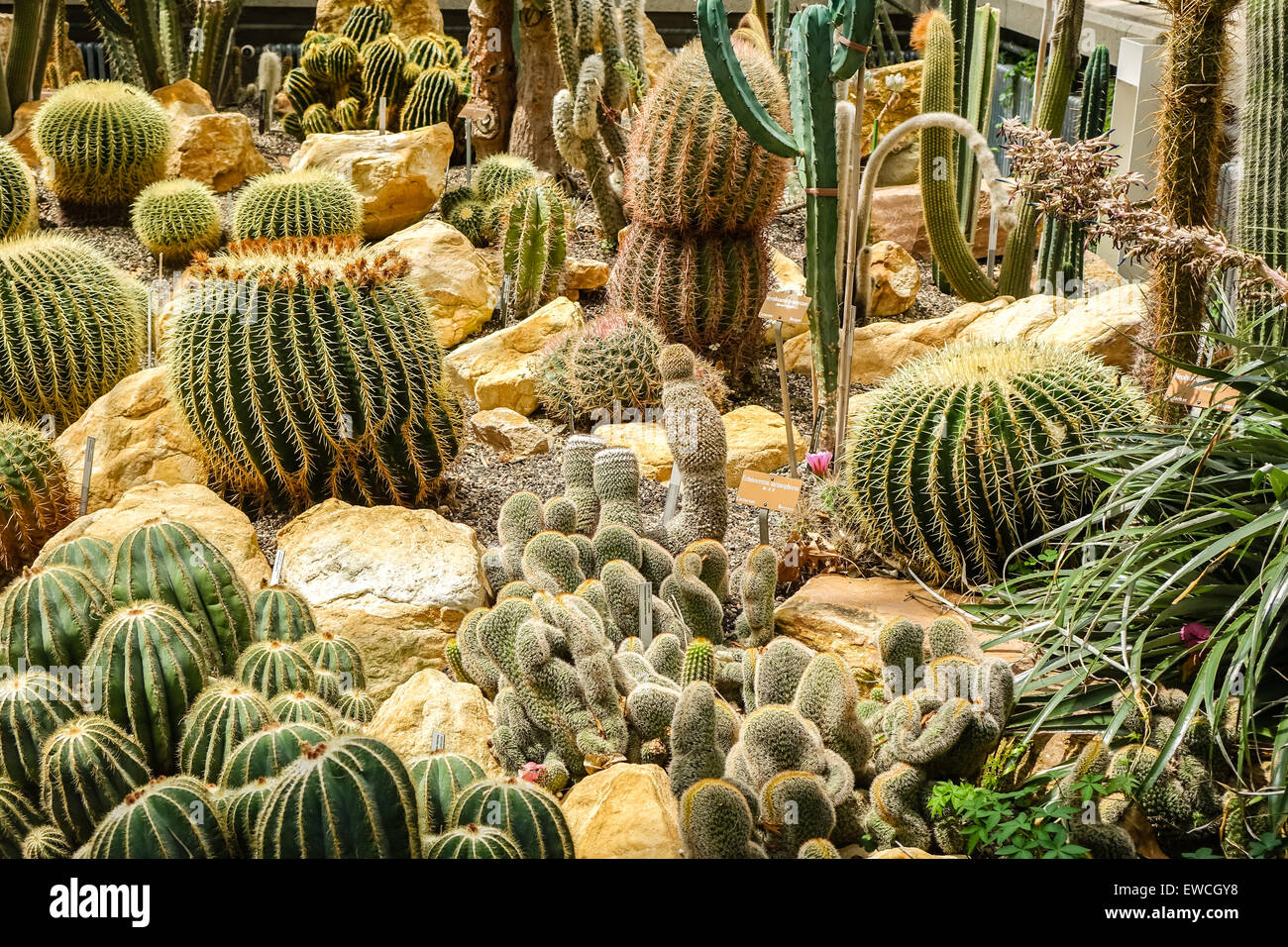
Further east, in the sun-drenched hills of Mallorca, the Jardí Botànic de Sóller offers a more intimate encounter with these desert dwellers. Nestled within a valley of orange groves and olive trees, the garden’s cactus collection is a study in contrast—soft, velvety textures juxtaposed against the harshness of spines. The Cereus peruvianus, with its ribbed columns, casts dramatic shadows at dusk, while the Echinocactus grusonii, or golden barrel cactus, glows like a miniature sun. These gardens are not just places to observe; they are spaces to reflect, where the stark beauty of the arid world invites contemplation.
Island Escapes: Cactus Gardens in the Atlantic
The Canary Islands, a volcanic archipelago off the coast of Africa, are a cactus lover’s paradise. The islands’ unique climate—warm, dry, and perpetually bathed in sunlight—has given rise to a cactus flora that is both diverse and endemic. The Jardin Botánico Viera y Clavijo in Gran Canaria is a living encyclopedia of these spiny wonders. Here, the Euphorbia balsamifera, a native species with a gnarled, bonsai-like form, shares space with the towering Dracaena draco, a dragon tree whose sap was once prized by ancient mariners. The garden’s pathways wind through lava fields, where cacti emerge from the blackened rock like survivors of a primordial landscape.
On the island of Tenerife, the Jardin Botánico del Puerto de la Cruz is another jewel in the Atlantic’s crown. Its cactus collection is a riot of color and form, from the delicate pink blooms of the Mammillaria to the formidable spines of the Ferocactus. The garden’s design plays with elevation, allowing visitors to ascend through layers of vegetation, each step revealing a new facet of these desert plants. At sunset, the golden light transforms the spines into a constellation of stars, a celestial display that feels both otherworldly and deeply rooted in the earth.
Urban Oases: Cactus Gardens in Cityscapes
Not all cactus gardens are nestled in remote valleys or island retreats. In Europe’s bustling cities, pockets of arid beauty thrive, proving that even in the most urban environments, nature finds a way. Barcelona’s Jardins de Mossèn Costa i Llobera is a prime example—a terraced garden clinging to the side of Montjuïc hill, where over 800 species of cacti and succulents create a vertical desert. The garden’s design is a masterclass in contrast: the rigid geometry of the pathways against the organic chaos of the plants, the cool shade of the pergolas offset by the blistering sun on the terraces.
In Lisbon, the Jardim Botânico da Ajuda houses a remarkable collection of cacti, including the rare Pachypodium, a succulent with a bulbous trunk and star-like flowers. The garden’s terraces offer sweeping views of the city, where the cacti stand as silent reminders of the wild landscapes beyond the urban sprawl. These city gardens are more than just decorative—they are acts of rebellion, green spaces that challenge the notion that nature belongs only in the countryside.
Beyond the Garden: Cactus-Inspired Art and Culture
The influence of cactus gardens extends far beyond their physical boundaries. In Europe, these arid landscapes have inspired artists, writers, and designers, becoming symbols of resilience and beauty. The Opuntia, or prickly pear, for instance, has been a muse for painters like Henri Rousseau, whose jungle scenes often featured these spiny intruders. In modern times, cactus motifs appear in everything from textiles to architecture, their geometric forms lending a touch of the exotic to contemporary design.
Even literature has been touched by the allure of the cactus. In the works of authors like Albert Camus, the cactus serves as a metaphor for the human condition—hardy, adaptable, yet fragile beneath its thorns. These gardens, then, are not just collections of plants; they are cultural artifacts, windows into the ways humans have sought to tame and celebrate the wild.
Practical Tips for Visiting Cactus Gardens in Europe
For those eager to explore these desert oases, timing is key. The best visits occur in late spring or early summer, when the cacti are in bloom and the gardens are alive with color. Early morning or late afternoon visits are ideal, as the soft light enhances the textures of the plants and the heat is more bearable. Many gardens offer guided tours, which provide insights into the ecological significance of these plants and their role in local ecosystems.
When photographing cactus gardens, consider the interplay of light and shadow. The spines of a cactus can create dramatic patterns when backlit, while the flowers—often fleeting and ephemeral—offer moments of fleeting beauty. And don’t forget to look beyond the cacti themselves; many gardens feature complementary plants like agaves, yuccas, and aloes, each contributing to the overall tapestry of arid life.
For the truly adventurous, consider creating a cactus garden of your own. With the right conditions—a sunny spot, well-draining soil, and protection from frost—even a small collection can thrive. Start with hardy species like Echinocactus grusonii or Opuntia humifusa, and watch as your own desert oasis takes shape.
A Final Reflection: The Desert’s Gift to Europe
Cactus gardens in Europe are more than just botanical oddities; they are testaments to the adaptability of life and the human desire to find beauty in the unexpected. In a world where climate change threatens to reshape landscapes, these gardens offer a glimpse into a future where resilience is paramount. They remind us that even in the harshest conditions, life finds a way—and that sometimes, the most breathtaking vistas are those we least expect.
So the next time you find yourself in a European city or coastal retreat, seek out these hidden desert oases. Wander their paths, marvel at their spines, and let their quiet strength inspire you. For in these gardens, the desert whispers its secrets—and Europe, in all its diversity, answers back.
FAQ
What are the best times to visit cactus gardens in Europe?
Late spring or early summer is ideal for viewing blooming cacti.
Where are notable cactus gardens located in Europe?
Notable locations include the Canary Islands, southern Spain, and urban gardens in Barcelona and Lisbon.
What types of cacti can be found in European gardens?
Various species including Euphorbia, Opuntia, and Mammillaria are commonly featured.


Leave a Reply