
Short Answer
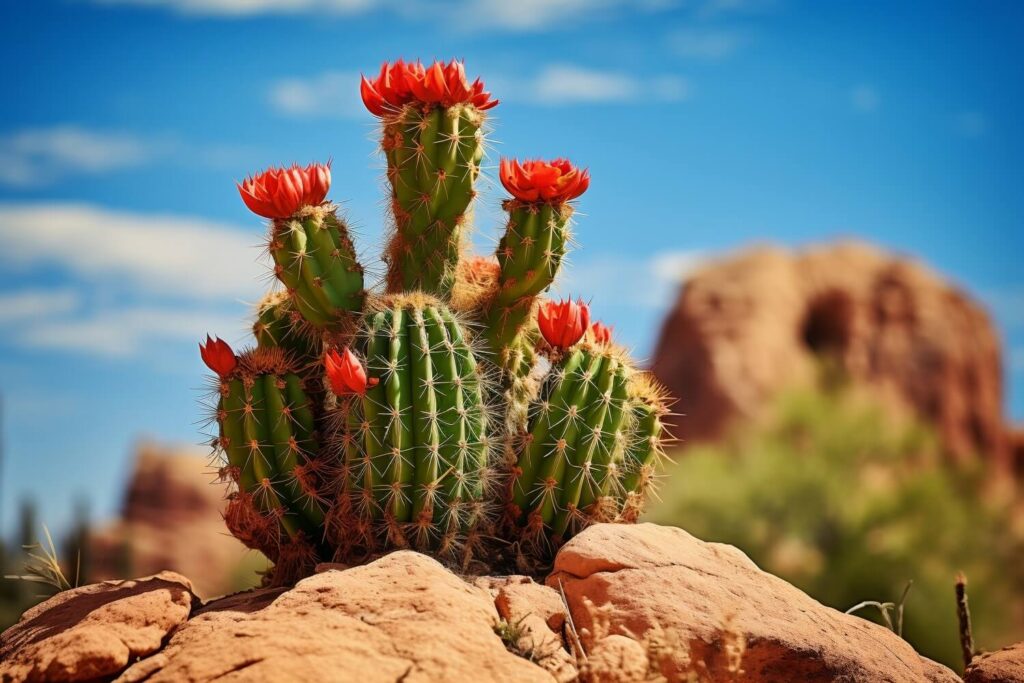
In the vast, sun-scorched landscapes where the earth meets the sky, the cactus stands as a sentinel of resilience—a plant that thrives where others wither, blooms where others fade, and endures where others surrender. To the uninitiated, it may appear as a mere spiky curiosity, a botanical oddity relegated to deserts and neglect. Yet, within the sacred tapestry of Hinduism, the cactus is far more than a survivor; it is a symbol of divine paradox, a vessel of spiritual potency, and a silent participant in rituals that bridge the mundane and the mystical. This unassuming plant, with its jagged exterior and delicate blossoms, holds a mirror to the Hindu worldview—where suffering and enlightenment, scarcity and abundance, pain and healing are not opposites but threads of the same cosmic loom.
The Cactus as a Metaphor of Divine Paradox
Hinduism, with its penchant for embracing contradictions, finds a kindred spirit in the cactus. Here, the plant embodies the concept of *duality*—the idea that opposites are not in conflict but in conversation. The cactus’s spines, sharp and defensive, shield its tender core, a metaphor for the soul’s journey through life’s trials. The Hindu pantheon is replete with deities who dance between destruction and creation, such as Shiva’s cosmic dance of *Tandava*, where annihilation births renewal. The cactus, too, is a harbinger of this cyclical truth: its barbs repel, yet its flowers enchant; its flesh stores life-giving water, yet its form is desiccated. In this way, the cactus becomes a living sutra, a plant-based koan that whispers of the unity underlying all apparent opposites.
Consider the *Nagapushpa*, the cactus flower, which blooms only under the cover of night, its ephemeral beauty revealed to the moon’s gentle gaze. This nocturnal bloom is not mere happenstance but a deliberate design—echoing the Hindu reverence for the unseen, the subtle, the *adrishta* (the unmanifest). The cactus teaches that what appears barren by day may be teeming with life by night, a lesson in patience and faith that resonates deeply in Hindu spiritual practices, where the divine is often sought in the quietude of meditation rather than the clamor of the material world.

Sacred Spines: The Cactus in Ritual and Worship
The cactus’s role in Hindu rituals is as layered as the petals of a lotus unfolding at dawn. In certain traditions, the plant is invoked during *vrata* (vows) and *puja* (worship) as a symbol of unwavering devotion. Its spines, when used in ritual implements like *rudraksha* malas or as offerings to deities, are believed to carry the energy of *tapas* (austerity) and *sadhana* (spiritual practice). The act of touching or arranging cactus stems in sacred spaces is thought to purify the environment, much like the *havan* (fire ritual) cleanses the atmosphere of negative vibrations.
In the folk traditions of rural India, the cactus is sometimes planted around homes as a protective barrier, its thorns warding off malevolent forces—a practice rooted in the belief that the plant’s *tejas* (radiant energy) repels negativity. Yet, paradoxically, the same plant is also offered to deities like Lord Ganesha during *Ganesh Chaturthi*, where its presence is said to invite the remover of obstacles into the home. This duality—protector and devotee—highlights the cactus’s unique position as a bridge between the earthly and the divine, a plant that both guards and serves.
The Cactus in Ayurveda and Healing Traditions
Beyond its symbolic significance, the cactus holds a revered place in Ayurveda, where its medicinal properties are harnessed to heal ailments of the body and mind. The *nagphani* (prickly pear cactus), for instance, is used to treat diabetes, inflammation, and digestive disorders, its cooling properties balancing the fiery *pitta* dosha. In Ayurvedic texts, the cactus is described as a *rasayana*—a rejuvenative herb that slows aging and enhances vitality. Its ability to thrive in arid conditions mirrors its therapeutic role: just as the plant conserves water to survive, Ayurveda teaches that the body, too, must conserve *ojas* (vital essence) to maintain health.
Yet, the cactus’s healing extends beyond the physical. In tantric practices, the plant is associated with the *Kundalini Shakti*, the dormant spiritual energy coiled at the base of the spine. The cactus’s upward growth, its resilience against gravity, is seen as a metaphor for the awakening of this latent power. Practitioners visualize the cactus’s spines as the *nadis* (energy channels) that must be purified for *Kundalini* to rise, a visual meditation that transforms a simple plant into a sacred tool for inner transformation.
The Cactus in Myth and Folklore
The cactus’s presence in Hindu mythology is subtle but profound. In some regional folktales, the plant is linked to the *yakshas* and *rakshasas*—supernatural beings who dwell in the liminal spaces between the human and divine realms. The cactus, with its ability to thrive in wastelands, is said to be their favored abode, a place where the veil between worlds grows thin. These stories often depict the cactus as a witness to ancient pacts, its spines pricking the fingers of those who dare to trespass into sacred groves, a reminder that some knowledge is not meant to be plucked lightly.
Another intriguing myth ties the cactus to the goddess *Renuka*, whose legend is celebrated in the festival of *Renuka Jayanti*. In some versions of her story, Renuka’s severed head is said to have transformed into a cactus, symbolizing the cyclical nature of life, death, and rebirth. The plant’s ability to regenerate from a single cutting mirrors the goddess’s own resurrection, a testament to the Hindu belief in the indestructibility of the soul. Here, the cactus is not just a plant but a living relic, a fragment of the divine that continues to grow and thrive long after its original form has vanished.
Modern Reverence: The Cactus in Contemporary Spiritual Practices
In today’s fast-paced world, where digital distractions and material pursuits often overshadow spiritual quests, the cactus offers a quiet rebellion—a call to slow down, to observe, to endure. Modern Hindu practitioners, particularly those drawn to *bhakti* (devotion) and *jñana* (knowledge) yoga, are rediscovering the cactus as a symbol of minimalism and intentional living. Its ability to thrive on scant resources serves as a metaphor for the modern seeker’s journey: to find abundance not in excess, but in sufficiency.
Urban dwellers, too, are embracing the cactus as a home altar plant, placing it in *puja* spaces to invoke resilience and adaptability. Its low-maintenance nature aligns with the *grihastha* (householder) ideal of balancing spiritual and worldly duties without burnout. The cactus, in this context, becomes a silent teacher, its presence a daily reminder that growth is possible even in the most inhospitable conditions.
A Final Blossom: The Cactus as a Teacher of Timeless Wisdom
The cactus, in all its prickly glory, is far more than a desert dweller. It is a teacher, a healer, a protector, and a symbol of the Hindu worldview’s most profound truths. Its story is one of paradox and unity, of scarcity and abundance, of pain and beauty. To understand the cactus is to glimpse the heart of Hinduism itself—a tradition that sees the divine in the most unexpected of places, from the lotus in the mud to the cactus in the sand.
So the next time you encounter a cactus, pause. Look beyond its spines. See the flower that blooms under the moon’s glow. Feel the resilience in its flesh. And remember: in the grand tapestry of existence, even the most unassuming plants are woven with threads of the sacred.
FAQ
What does the cactus symbolize in Hinduism?
In Hinduism, the cactus symbolizes divine paradox, resilience, and the unity of opposites, reflecting the spiritual journey of enlightenment.
How is the cactus used in Hindu rituals?
The cactus is used in rituals as a symbol of devotion and protection, often employed in pujas and as offerings to deities.
What medicinal properties does the cactus have in Ayurveda?
In Ayurveda, the cactus is recognized for its medicinal properties, such as treating diabetes and inflammation, and is considered a rejuvenative herb.




Leave a Reply