
Short Answer
Imagine a world where the desert doesn’t just whisper tales of survival but roars with the tenacity of a warrior. This is the realm of the Ferocactus, a genus of cacti so resilient, so visually arresting, that they redefine what it means to thrive in the harshest of environments. For collectors and enthusiasts, these spiky sentinels aren’t just plants—they’re living sculptures, each species a masterpiece of evolutionary artistry. Whether you’re a seasoned horticulturist or a curious newcomer, the allure of Ferocactus is undeniable. But where do you begin? Which species deserve a place in your collection? Let’s embark on a journey through the most popular Ferocactus species, where every spine tells a story, and every bloom is a triumph of nature’s ingenuity.
The Ferocactus: A Masterclass in Desert Adaptation
The Ferocactus genus, native to the arid landscapes of North and Central America, is a testament to nature’s ability to sculpt life from adversity. These cacti have evolved an arsenal of adaptations to conquer their sun-scorched habitats. Their ribbed, globular forms aren’t merely aesthetic—they’re a clever strategy to maximize water storage while minimizing surface area exposed to the scorching sun. The thick, waxy epidermis of many species acts as a natural sunscreen, reflecting harmful UV rays and reducing water loss through transpiration. But perhaps their most striking feature is their formidable armament of spines. Far from mere decoration, these spines serve multiple purposes: they deter herbivores, create a microclimate of shade around the plant, and even channel precious dew toward the roots. To grow a Ferocactus is to witness evolution in action—a living paradox of fragility and ferocity.
Ferocactus latispinus: The Devil’s Tongue Unleashed
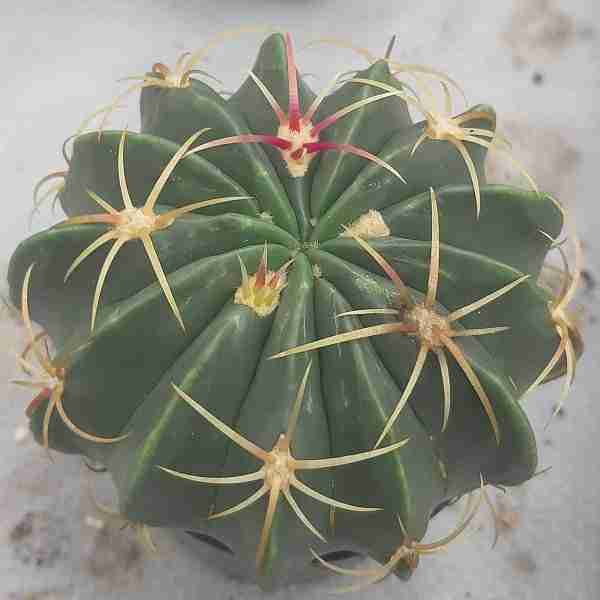
Few cacti command attention quite like Ferocactus latispinus, affectionately (or perhaps fearfully) dubbed the “Devil’s Tongue” for its broad, flattened spines that resemble nothing so much as a menacing blade. Native to Mexico, this species is a favorite among collectors for its dramatic appearance and relatively manageable size, typically reaching just 12-18 inches in height. What sets it apart is its spine coloration—vibrant hues of red, pink, or yellow that intensify in full sun, creating a visual spectacle that seems plucked from a fantasy realm. The Devil’s Tongue is also a prolific bloomer, producing rings of fiery orange or yellow flowers in late summer, a stark contrast to its spiny exterior. For those seeking a cactus with personality, this species delivers in spades. Just be warned: its spines are as sharp as its reputation.
Ferocactus wislizenii: The Giant of the Chihuahuan Desert
If you’ve ever stood beneath the vast, open skies of the Chihuahuan Desert, you may have encountered the towering presence of Ferocactus wislizenii, commonly known as the Fishhook Barrel Cactus. This species is a true titan among Ferocacti, often reaching heights of 3-6 feet and widths of up to 2 feet. Its name derives from the hooked spines that adorn its ribs, a feature that serves as a clever adaptation to snag the fur of passing animals, aiding in seed dispersal. The Fishhook Barrel is a slow grower, but its longevity—some specimens live for over a century—makes it a prized addition to any collection. Its flowers, a delicate shade of yellow or red, emerge in a crown atop the plant, a fleeting but breathtaking display. Cultivating this species is a lesson in patience, but the reward is a living monument to the resilience of desert life.
Ferocactus glaucescens: The Blue Jewel of the Desert
For those who prefer their cacti with a touch of elegance, Ferocactus glaucescens is a revelation. Native to central Mexico, this species is distinguished by its powdery blue-green epidermis, a coloration that gives it an almost otherworldly glow. Often referred to as the “Blue Barrel Cactus,” it’s a favorite among collectors for its striking appearance and compact size, typically staying under 2 feet tall. The spines of this species are a soft, golden hue, providing a beautiful contrast to the cool tones of the body. Ferocactus glaucescens is also a prolific bloomer, producing clusters of bright yellow flowers that seem to radiate joy. Its ease of cultivation—it thrives in well-draining soil and requires minimal water—makes it an ideal choice for beginners. To grow this species is to invite a slice of the desert’s serene beauty into your home.
Ferocactus emoryi: The Coveted Emory’s Barrel
Few Ferocactus species are as coveted as Ferocactus emoryi, a striking cactus native to the Sonoran Desert. Known for its robust, ribbed structure and formidable spines—some of which can reach up to 4 inches in length—this species is a true showstopper. The spines are often a deep red or brown, creating a dramatic contrast against the plant’s green body. Emory’s Barrel is also a heavy bloomer, producing vibrant red or orange flowers that emerge in a ring around the top of the plant. This species is a slow grower, but its eventual size—up to 5 feet tall and 2 feet wide—makes it a statement piece in any collection. Cultivating Ferocactus emoryi is a labor of love, but the result is a cactus that commands awe and admiration.
Cultivation Secrets: How to Coax a Ferocactus to Flourish
Growing a Ferocactus is less about pampering and more about understanding its language. These plants thrive in conditions that mimic their native habitats: intense sunlight, well-draining soil, and minimal water. The key to success lies in replicating the desert’s extremes. Start with a gritty, mineral-rich soil mix—think a blend of cactus soil, perlite, and coarse sand—to ensure proper drainage and prevent root rot. When watering, adopt a “soak and dry” approach: water deeply, then allow the soil to dry out completely before watering again. Overwatering is the fastest way to send a Ferocactus to an early grave. During the growing season, place your cactus in a spot where it can bask in full sun for at least 6-8 hours a day. In winter, reduce watering and provide a period of dormancy to encourage future blooms. With the right care, your Ferocactus will reward you with decades of growth and beauty.
Beyond the Spines: The Ecological Role of Ferocactus
While Ferocactus species are undeniably stunning, their importance extends far beyond their aesthetic appeal. In their native habitats, these cacti play a crucial role in supporting desert ecosystems. Their flowers provide nectar for pollinators like bees and hummingbirds, while their fruits are a vital food source for birds and mammals. The spines of Ferocactus also create microhabitats, offering shelter for insects and small reptiles. By cultivating these cacti, you’re not just adding a decorative element to your space—you’re participating in the preservation of a delicate ecological balance. In a world where deserts are increasingly threatened by climate change and urbanization, growing Ferocactus is a small but meaningful act of conservation.
The Collector’s Mindset: Why Ferocactus Species Captivate Us
There’s a certain magic in collecting Ferocactus species—a blend of horticultural passion and intellectual curiosity. Each plant is a puzzle, a living entity with its own story to tell. Collectors are drawn not just to the visual spectacle of spines and blooms but to the challenge of nurturing these desert dwellers in their own homes. The slow, deliberate growth of a Ferocactus teaches patience, while its resilience offers a lesson in perseverance. For many, the act of collecting becomes a form of meditation, a way to connect with the rhythms of nature in an increasingly fast-paced world. Whether you’re drawn to the dramatic spines of Ferocactus latispinus or the serene beauty of Ferocactus glaucescens, each species offers a unique window into the wonders of the desert.
The world of Ferocactus is vast and varied, a tapestry of spines, blooms, and stories waiting to be uncovered. Whether you’re a seasoned collector or a curious beginner, there’s never been a better time to dive in. Start with a single species, learn its needs, and watch as it transforms from a humble sprout into a majestic desert sentinel. The journey is as rewarding as the destination, and the rewards are nothing short of spectacular.
FAQ
What is the most popular Ferocactus species for collectors?
Ferocactus latispinus, known as the Devil's Tongue, is among the most sought-after due to its dramatic appearance.
What ecological roles do Ferocactus play?
Ferocactus species provide nectar for pollinators and serve as a food source for various birds and mammals.



Leave a Reply