

Short Answer
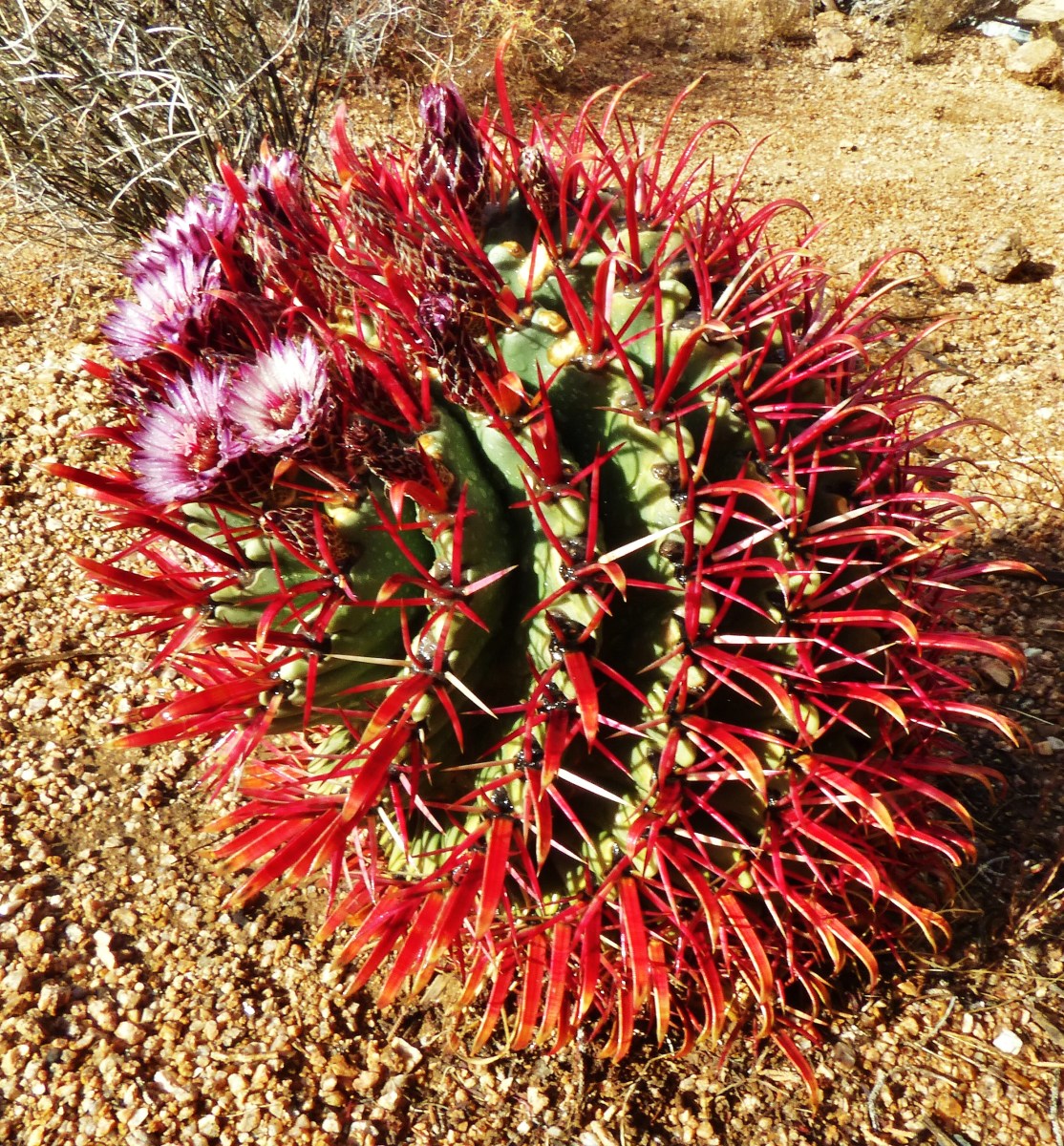
In the vast, sun-scorched expanses of the desert, where life clings to existence with tenacious resilience, the Ferocactus stands as a sentinel of raw, unyielding beauty. These cacti, with their ribbed, globular forms and spines that glint like daggered constellations, are not merely plants—they are fierce sculptures carved by the merciless hand of nature. To photograph them is to engage in a silent dialogue with the desert’s untamed spirit, to distill the essence of endurance into a single frame. Their beauty is not delicate; it is brutal, unapologetic, and utterly mesmerizing. It invites us to look closer, to marvel at the paradox of softness and sharpness, of fragility and fortitude, all coiled within the same spiky embrace.
The Allure of the Prickly Paradox: Why Ferocactus Captivates the Eye
There is something inherently compelling about the Ferocactus—its very presence defies the gentle, the predictable, the tame. Unlike the ephemeral blooms of a rose or the delicate unfurling of a fern, the Ferocactus thrives in conditions that would wither most life. Its ribs, like the corrugated metal of an old desert shack, channel water with ruthless efficiency, while its spines, arranged in hypnotic spirals, serve as both armor and artistry. To photograph it is to confront a living contradiction: a being that is both hostile and hospitable, both a fortress and a flower.
Consider the way light plays across its surface—a golden hour glow can transform its spines into a halo of fire, while the harsh midday sun etches deep shadows into its crevices, revealing the topography of its struggle. The Ferocactus does not ask for admiration; it demands it. And in that demand lies its magnetism. It is the desert’s most unapologetic resident, a testament to the idea that beauty need not be soft to be profound.
Composition as Rebellion: Framing Ferocity in the Frame
Photographing a Ferocactus is less about capturing a subject and more about staging a rebellion against conventional aesthetics. The rules of composition—balance, symmetry, the rule of thirds—are not discarded, but they are subverted. The Ferocactus thrives in asymmetry, its spines erupting in chaotic yet harmonious patterns. To place it dead center in a frame is to acknowledge its dominance; to angle it slightly is to invite the viewer into a conversation about power and perspective.
Leading lines become the ribs of the cactus itself, guiding the eye inward like a labyrinth of resilience. Negative space, often overlooked in nature photography, becomes a canvas for the desert’s emptiness, making the Ferocactus appear even more solitary, more defiant. And then there are the spines—each one a potential line, a potential point of tension. A skilled photographer doesn’t just capture the cactus; they capture the tension between the organic and the mechanical, the living and the sculpted.
The background is not merely a backdrop; it is a character. A blurred wash of desert hues or a stark, contrasting sky can elevate the Ferocactus from subject to icon. The key is to let the cactus feel both anchored in its environment and untethered from it, a paradox that mirrors the human fascination with these enigmatic plants.
The Desert’s Crucible: How Harsh Conditions Forge Ferocactus Beauty
To understand the Ferocactus’s beauty is to understand the crucible of the desert—the relentless sun, the parched earth, the howling winds that sculpt stone and bone alike. These conditions do not merely test the cactus; they forge it. The Ferocactus’s ribs are not just structural; they are a record of survival, each groove a testament to years of drought and resilience. Its spines are not just defensive; they are a language, a warning, a whisper of the desert’s unspoken rules.
Photographing the Ferocactus is, in many ways, photographing the desert’s soul. The way its surface reflects light can reveal the mineral composition of the soil, the way its shadows stretch long and lean like the fingers of a clock counting down to the next rain. The Ferocactus does not just grow in the desert; it is a product of it, a living archive of the land’s harsh poetry. To capture it is to hold a mirror up to the earth’s own ferocity.
And yet, for all its toughness, the Ferocactus is not without vulnerability. Its flowers, when they bloom, are ephemeral bursts of color in a monochrome world. They are a reminder that even the most indomitable beings must yield to the cycle of life. A photograph that captures both the spiny fortress and the delicate bloom is one that tells the full story—not just of endurance, but of the fleeting beauty that arises from it.
Light as a Weapon: Harnessing the Desert’s Glare
Light is the photographer’s most potent tool, and in the desert, it is a weapon. The harsh, unfiltered sunlight of the American Southwest can either annihilate a subject or elevate it to mythic status. For the Ferocactus, light is both sculptor and stage. Side lighting carves its ribs into high-relief topography, while backlighting turns its spines into a corona of fire. The golden hour, that photographer’s holy grail, bathes the cactus in a warmth that softens its edges without diminishing its strength.
But light in the desert is not always kind. The midday sun can bleach out color, flatten texture, and turn the Ferocactus into a silhouette against the sky. This is where the photographer must adapt—perhaps by waiting for the sun to dip, or by using a reflector to bounce light into the shadows, or by embracing the high-contrast drama of a black-and-white conversion. The Ferocactus does not care about the photographer’s struggles; it only cares about being seen. And so, the photographer must meet its ferocity with their own.
There is a particular satisfaction in capturing the Ferocactus in the harshest light, when its spines cast razor-sharp shadows and its ribs appear to pulse with internal fire. It is a reminder that beauty is not always gentle. Sometimes, it is the glare of the sun on a spiky sentinel, a moment of unflinching truth in a world that often prefers softness.
The Ferocactus in Myth and Metaphor: Beyond the Spines
The Ferocactus is more than a plant; it is a symbol. In the folklore of the indigenous peoples of the Southwest, cacti are often seen as guardians, as beings that bridge the gap between the earthly and the spiritual. The Ferocactus, with its imposing presence and its ability to thrive where others cannot, is no exception. To photograph it is to engage with these ancient narratives, to become part of a lineage of storytellers who have looked at the desert and seen not just a landscape, but a living, breathing entity.
In modern times, the Ferocactus has become a metaphor for resilience, for the ability to stand tall in the face of adversity. It is the plant equivalent of a warrior, unyielding and unapologetic. But it is also a reminder that resilience does not have to be devoid of beauty. The Ferocactus is proof that strength can be elegant, that ferocity can be mesmerizing. It challenges us to redefine our notions of beauty, to see the sublime in the spiky, the harsh, the uncompromising.
And perhaps that is why we are so drawn to it. In a world that often demands conformity, the Ferocactus stands as a defiant celebration of individuality. It does not ask to be tamed. It does not apologize for its spines. It simply is—fierce, beautiful, and utterly unforgettable.
FAQ
What is Ferocactus?
Ferocactus is a genus of cacti known for their fierce beauty, characterized by ribbed, globular forms and sharp spines.
How do you photograph Ferocactus effectively?
To photograph Ferocactus effectively, consider the time of day for optimal lighting, use composition techniques that highlight its unique structure, and embrace the harshness of the desert environment.
Leave a Reply