
Short Answer
Imagine a landscape where time slows to the pace of a saguaro’s deliberate growth, where the earth itself seems to exhale through spines and blooms. Cactus gardens are not merely collections of spiky plants; they are living galleries of resilience, biodiversity, and cultural storytelling. As we look ahead to 2026, these arid sanctuaries are poised to captivate travelers not just with their stark beauty, but with their profound ecological narratives and the quiet revolution they represent in sustainable tourism. From the sun-baked deserts of the American Southwest to the terraced hills of Mexico and the unexpected oases of Australia, cactus gardens are emerging as the new frontiers of botanical wonder. This is your invitation to reimagine travel—where every step is a meditation, every bloom a whisper of survival, and every garden a testament to nature’s unyielding creativity.

The Desert’s Silent Symphony: Why Cactus Gardens Are the Next Big Travel Trend
In an era when overtourism threatens to erode the soul of destinations, cactus gardens offer an antidote: intimacy. These landscapes do not scream for attention; they invite contemplation. The rise of cactus gardens as travel destinations reflects a broader cultural shift toward slow, mindful exploration. Unlike crowded city parks or over-visited beaches, cactus gardens demand patience. You must walk slowly. You must observe. You must listen—not to the wind, but to the stories etched into every ribbed column and flowering paddle. This is travel as a form of active stillness, a rebellion against the frenetic pace of modern life.
Moreover, these gardens are thriving in an age of climate consciousness. Cacti, with their water-storing ingenuity and fire-resistant exteriors, are symbols of adaptation in a warming world. Visiting them is not just aesthetically rewarding; it’s an education in survival. In 2026, expect guided “desert literacy” tours where botanists decode the language of spines and blooms, revealing how these plants have shaped human cultures from the Tohono O’odham people of Arizona to the indigenous communities of the Andes. These tours won’t just point out species—they’ll trace the threads between ecology, spirituality, and survival.
North America’s Arid Jewels: Where the Saguaro Stands Tall
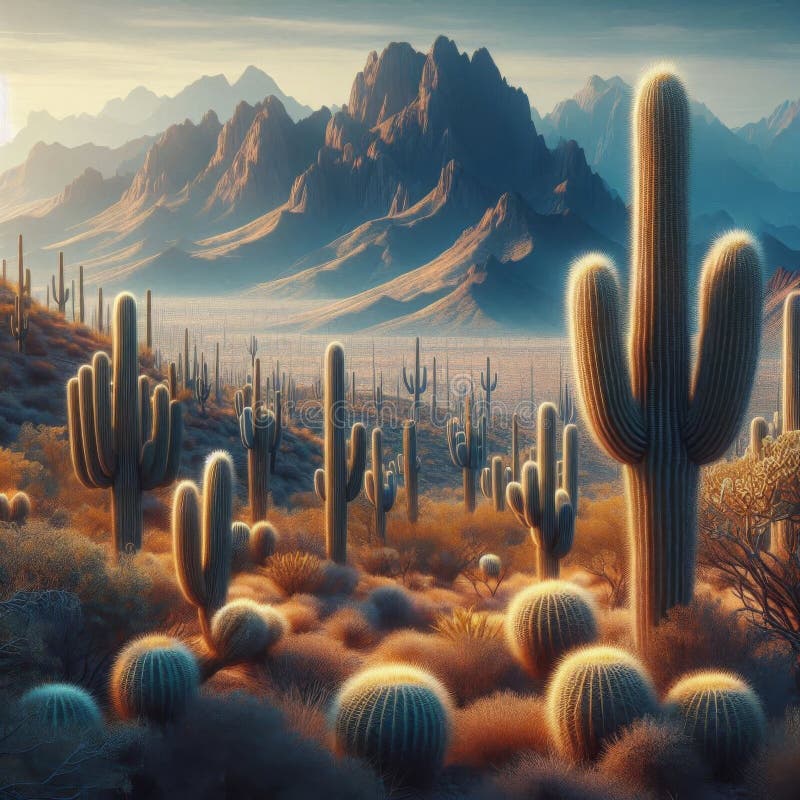
The Sonoran Desert, straddling the U.S.-Mexico border, is the crown jewel of cactus biodiversity. Here, the saguaro (*Carnegiea gigantea*) reigns supreme—a towering sentinel that can live for 150 years and grow up to 40 feet tall. But saguaros are not solitary giants. They form symbiotic relationships with desert wildlife, their hollowed-out skeletons becoming nests for Gila woodpeckers and their fruit a vital food source for coyotes and birds. In 2026, the Saguaro National Park in Arizona will unveil new “Sky Island” trails, where hikers ascend from desert floor to pine forests, watching the landscape transform like a living topographic map.
Venture south into Mexico’s Baja California, where the Vizcaíno Desert hosts the world’s largest cactus forest. The cardón (*Pachycereus pringlei*), a saguaro relative, dominates the scene, its candelabra-like arms reaching toward the sky. But it’s not just about scale. The cardón’s slow growth—sometimes less than an inch per year—makes it a living clock, its rings a record of centuries of drought and deluge. Local guides in 2026 will lead nighttime excursions to witness the desert’s most secretive blooms, when nocturnal pollinators like bats and moths emerge to dance among the spines.
Beyond the Border: Mexico’s Cactus Wonderlands
Mexico is a cactus paradise, home to over 500 species, many of which are found nowhere else on Earth. The Tehuacán-Cuicatlán Valley, a UNESCO World Heritage Site, is a UNESCO-listed marvel where ancient agricultural terraces cradle towering columnar cacti. This is where the first domesticated cacti—like the nopal (*Opuntia ficus-indica*), cultivated for its fruit and pads—were nurtured by indigenous communities thousands of years ago. In 2026, cultural ecotourism programs will invite travelers to participate in traditional harvests, learning how to prepare *mixiotes* (steamed cactus dishes) and *colonche* (fermented cactus fruit drinks) while hearing stories of resilience passed down through generations.
In the highlands of Oaxaca, the *Mammillaria* genus—with its globe-shaped clusters and vibrant flowers—becomes a living tapestry. The Mixtec people have long revered these “baby cacti” for their medicinal properties, using extracts to treat everything from inflammation to diabetes. Modern research is now validating these ancient practices, turning Oaxaca’s cactus gardens into both a wellness retreat and a living laboratory. Imagine sipping mezcal infused with *Mammillaria* extracts under a sky ablaze with stars, the air thick with the scent of earth and agave.
The Unexpected Oases: Cactus Gardens in Unlikely Places
Cacti are not confined to deserts. In the Mediterranean, the prickly pear (*Opuntia ficus-indica*) has naturalized, its pads and fruits woven into local cuisines and landscapes. On the island of Sicily, abandoned farmlands have been reclaimed by wild cacti, creating a surreal mosaic of green and gold. In 2026, Sicilian agritourism cooperatives will offer “re-wilding retreats,” where visitors help restore degraded soils by planting native cacti while learning about their role in combating desertification.
Even in the arid interior of Australia, cacti have carved out niches in the most unexpected places. The spinifex grasslands of the Pilbara region are dotted with *Eremophila* species, whose tubular flowers attract elusive honeyeater birds. Here, cacti are not invasive pests but vital components of a delicate ecosystem. Australian botanical artists are collaborating with Indigenous rangers to create “cactus story trails,” where each plant is paired with a Dreamtime tale, transforming a walk into a journey through time and myth.
Blooming in 2026: The Most Anticipated Cactus Festivals and Events
The year 2026 will be a banner year for cactus celebrations. In Tucson, Arizona, the annual “Cactus & Succulent Society Show” will expand into a month-long festival, featuring rare *Lophophora* (peyote) species, avant-garde cactus art installations, and a “Spine & Bloom” culinary competition where chefs reimagine prickly pear in everything from ceviche to ice cream. Meanwhile, in South Africa’s Karoo region, the “Karoo Desert National Botanical Garden” will host its first “Night of a Thousand Blooms,” a nocturnal event where visitors wander through fields of *Aloe* and *Euphorbia* under bioluminescent guides, their lanterns mimicking the glow of fireflies.
In Japan, the “Cactus & Succulent Expo” in Tokyo will showcase hybrid varieties cultivated by local artisans, including the elusive *Gymnocalycium* ‘Hibotan’, a bright red cactus grafted onto a green rootstock. These events are more than just showcases—they’re cultural exchanges, where traditions from the Americas, Africa, and Asia collide in a celebration of shared botanical heritage.
Sustainable Travel in Cactus Country: How to Visit Responsibly
To preserve these fragile ecosystems, responsible tourism is non-negotiable. In 2026, travelers will be encouraged to adopt the “Leave No Trace” principles adapted for deserts: stay on marked trails to avoid crushing delicate root systems, never remove plants or seeds, and carry all water out (even if it’s just a few drops). Some gardens will introduce “cactus passports,” where visitors earn stamps for participating in conservation activities like seed collection or invasive species removal.
Eco-lodges are sprouting up like desert blooms, offering solar-powered accommodations with composting toilets and rainwater harvesting systems. In Chile’s Atacama Desert, the “EcoCamp Patagonia” model is being adapted for cactus-rich regions, with geodesic domes that blend into the landscape and guided “astrotourism” experiences under some of the darkest skies on Earth. These stays are not just places to sleep—they’re immersive experiences that reconnect visitors with the rhythms of the desert.
The Future is Spiky: Why Cactus Gardens Are Here to Stay
As climate change reshapes our planet, cactus gardens are becoming beacons of hope. Their ability to thrive in extreme conditions makes them symbols of resilience, and their cultural significance offers a roadmap for sustainable coexistence with arid lands. In 2026, these gardens will not just be destinations—they will be classrooms, sanctuaries, and sources of inspiration. They will teach us to slow down, to observe, and to marvel at the quiet power of life in the harshest of places.
So pack your sturdy boots, your reusable water bottle, and your curiosity. The world’s cactus gardens are waiting—not to overwhelm, but to enchant. And in their spiny embrace, you might just find a new way to see the world.
FAQ
What are cactus gardens?
Cactus gardens are curated spaces showcasing various cactus species, emphasizing biodiversity and ecological importance.
Where are the best cactus gardens to visit in 2026?
Notable destinations include the Sonoran Desert, Baja California, and the Tehuacán-Cuicatlán Valley.
What events are planned for cactus lovers in 2026?
Expect festivals like the Cactus & Succulent Society Show and cultural events focusing on cactus conservation and culinary experiences.


Leave a Reply