
Short Answer
In the ever-evolving tapestry of modern interior design, where minimalism often reigns supreme, there exists a quiet revolution—one that thrives in the unassuming elegance of the Mammillaria, a genus of cacti that defies expectations. These globular, often spiky botanical wonders are not merely survivors of arid landscapes; they are silent muses, whispering secrets of resilience, texture, and unexpected sophistication to those willing to listen. If you’ve ever dismissed succulents as mere “low-maintenance” greenery, prepare to have your perspective shattered. Styling Mammillaria in a modern home isn’t just about adding a dash of desert chic—it’s about orchestrating a dialogue between nature and architecture, where each spine and shadow plays a pivotal role in redefining spatial harmony.
The Mammillaria Paradox: Why These Cacti Are the Ultimate Modern Muse
At first glance, the Mammillaria might seem like an unlikely contender for a starring role in contemporary decor. Its compact, often spherical form and dense clusters of spines evoke images of rugged terrains rather than sleek urban lofts. Yet, this paradox is precisely what makes it so compelling. The Mammillaria embodies the duality of modern design: it is both organic and geometric, soft and sharp, delicate and indomitable. Its architectural silhouette—reminiscent of a tiny, spiky globe—mirrors the clean lines of modern furniture, while its textured surface introduces a tactile rebellion against the smooth monotony of glass and steel.
Consider the Mammillaria elongata, with its elongated, finger-like projections, or the Mammillaria hahniana, crowned with a halo of white spines that resemble a miniature winter wonderland. These variations are not mere botanical quirks; they are design tools waiting to be wielded. By integrating Mammillaria into your space, you’re not just adding a plant—you’re introducing a living sculpture that challenges the viewer to see beyond the ordinary. It’s a statement that says, “I embrace the unconventional, the resilient, the beautifully imperfect.”
Curating a Cohesive Aesthetic: The Art of Pairing Mammillaria with Modern Elements
Modern decor thrives on contrast, and the Mammillaria is the perfect foil to the sleek, monochromatic palettes that dominate contemporary interiors. To create a harmonious yet striking arrangement, start by selecting vessels that complement rather than compete. Terracotta pots, with their earthy, sun-baked hues, evoke the cactus’s native desert environment, while matte black or concrete planters ground the plant in an urban, industrial aesthetic. For a more avant-garde approach, consider geometric ceramic vessels in muted tones—think slate gray, dusty rose, or even a deep, inky blue—that echo the sharp angles of modern furniture.
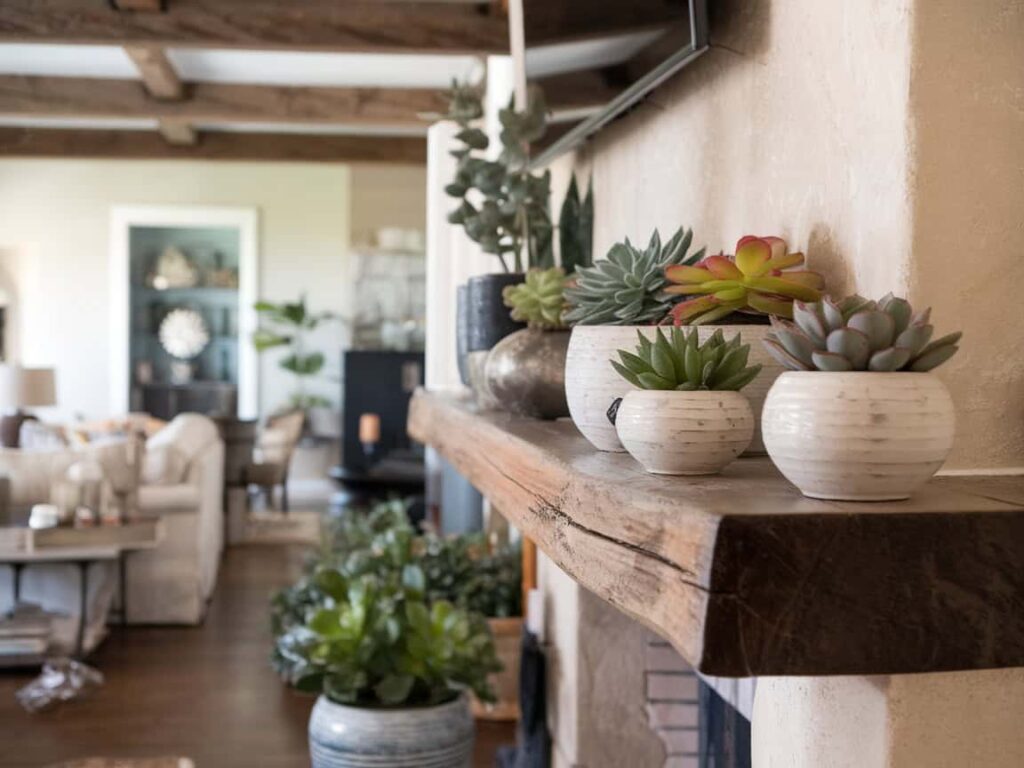
Placement is equally critical. A single Mammillaria perched on a floating shelf can serve as a minimalist focal point, its solitary presence amplifying the clean lines of the surrounding space. Alternatively, cluster several varieties together in a low, elongated trough to create a living centerpiece that commands attention without overwhelming. The key is to treat the Mammillaria as an extension of your decor, not an afterthought. Its placement should feel intentional, whether it’s nestled among a collection of vintage books on a floating shelf or standing guard on a marble console table, its spines catching the light like a constellation of tiny stars.
The Illusion of Depth: Layering Mammillaria for a Multi-Dimensional Space
Modern interiors often grapple with the challenge of creating depth in spaces that prioritize openness and light. Here, the Mammillaria shines as a master of illusion. By layering these cacti at varying heights and distances, you can craft a sense of dimensionality that draws the eye and invites exploration. Imagine a trio of Mammillaria arranged on a tiered plant stand, each at a different elevation, their shadows stretching across the wall behind them. The interplay of light and form transforms a flat surface into a dynamic tableau, subtly guiding the viewer’s gaze through the room.
For a more immersive experience, consider integrating Mammillaria into a vertical garden or a living wall. Their compact size makes them ideal candidates for such installations, where they can thrive alongside other succulents and air plants. The result is a lush, textured backdrop that softens hard surfaces while maintaining the crisp, modern aesthetic. To enhance the effect, backlight the arrangement with a subtle LED strip, casting a gentle glow that accentuates the cacti’s intricate spines and shadows. The result? A space that feels both expansive and intimate, a sanctuary where nature and design coalesce.
Color Palette Alchemy: How to Use Mammillaria to Pivot Your Interior’s Mood
The color story of your space can be dramatically altered by the strategic inclusion of Mammillaria. While these cacti are often associated with the muted tones of the desert—sandy beiges, soft grays, and muted greens—their spines and flowers introduce unexpected pops of color that can redefine a room’s ambiance. The Mammillaria zeilmanniana, for instance, bursts forth with vibrant magenta blooms, while the Mammillaria plumosa boasts feathery, snow-white spines that can brighten even the darkest corner.
To harness this alchemy, start by identifying the dominant hues in your space. If your palette skews neutral, a cluster of Mammillaria with deep green bodies and contrasting white spines can serve as a grounding element, while a single specimen with bold pink or red flowers can inject energy into the room. Conversely, if your space already features rich, saturated colors, opt for Mammillaria varieties with more subdued tones to create balance. The goal is to use these cacti as a bridge between disparate elements, harmonizing colors that might otherwise clash.
Beyond the Pot: Unconventional Display Ideas for the Modern Mammillaria
Why confine the Mammillaria to a traditional pot when its potential as a design element is virtually limitless? For the truly adventurous, consider suspending a cluster of these cacti in a macramé hanger, their spines creating a delicate, almost ethereal silhouette against a white wall. Alternatively, embed them in a concrete or resin sculpture, merging the organic with the synthetic in a striking fusion of textures. For a touch of whimsy, arrange several Mammillaria in a vintage teacup or a repurposed brass candlestick, their unexpected pairing evoking a sense of curated eclecticism.
Another innovative approach is to integrate Mammillaria into functional decor. A collection of these cacti nestled within the hollowed-out sections of a wooden side table or a modular shelving unit can transform everyday furniture into a living work of art. The key is to think outside the confines of the pot and explore how the Mammillaria can interact with its surroundings—whether it’s climbing a bookshelf, peeking out from behind a framed print, or serving as the centerpiece of a dining table arrangement.
The Psychological Impact: How Mammillaria Cultivates Calm and Curiosity
In a world that often feels chaotic and overwhelming, the Mammillaria offers a rare gift: the power to induce calm. Studies have shown that the presence of plants in interior spaces can reduce stress, enhance focus, and even improve air quality. But the Mammillaria goes a step further. Its slow growth, its quiet resilience, and its intricate details invite contemplation, encouraging us to pause and appreciate the beauty in stillness. Unlike high-maintenance plants that demand constant attention, the Mammillaria thrives on neglect, rewarding its caretaker with a sense of effortless elegance.
Moreover, the Mammillaria sparks curiosity. Its unusual form and the subtle drama of its spines provoke questions: How does it survive in such harsh conditions? What secrets do its flowers hold? By incorporating it into your space, you’re not just decorating—you’re inviting conversation, introspection, and a deeper connection to the natural world. In a modern home that often prioritizes sleek surfaces and digital interfaces, the Mammillaria is a tactile reminder of the world beyond the screen, a living testament to the beauty of simplicity.
Final Thoughts: Embracing the Mammillaria Mindset
The modern home is a canvas, and the Mammillaria is your boldest brushstroke. It challenges conventions, redefines textures, and infuses spaces with a quiet, unyielding strength. Whether you’re a minimalist seeking to soften stark lines or a maximalist eager to layer textures and colors, these cacti offer a versatile toolkit for transformation. They remind us that beauty doesn’t have to be loud to be impactful, and that resilience can be as elegant as it is enduring.
So, the next time you find yourself drawn to the allure of a perfectly manicured fern or a towering fiddle-leaf fig, pause. Consider the Mammillaria instead—a small, spiky rebel that promises to shift your perspective, one spine at a time.
FAQ
What is Mammillaria?
Mammillaria is a genus of cacti known for their unique globular shapes and dense clusters of spines.
How do you care for Mammillaria in home decor?
Mammillaria cacti require minimal care; they thrive in well-drained soil and need bright, indirect sunlight.




Leave a Reply