
Short Answer
Ever wondered why your spiky green roommate goes by the name Opuntia microdasys instead of just “that cactus on the windowsill”? What if I told you that behind every Latin-sounding name lies a story of botanical intrigue, historical feuds, and a dash of linguistic acrobatics? Welcome to the whimsical world of cactus nomenclature—where science meets poetry, and every name is a clue to a plant’s past, personality, and place in the grand tapestry of life.
The Grand Puzzle: Why Do Cacti Have Such Fancy Names?
Imagine strolling through a desert at dusk, the air thick with the scent of creosote and the distant hum of a roadrunner. You spot a cluster of round, ribbed plants glowing faintly in the moonlight. One is covered in soft, golden glochids, another bristles with fierce spines, and a third unfurls delicate pink flowers at dawn. How do you tell them apart without shouting, “Hey, fuzzy one!” across the sagebrush?
Enter scientific nomenclature, the botanical equivalent of a detective’s magnifying glass. Unlike common names—like “prickly pear” or “bunny ears”—which vary wildly by region (“That’s not a bunny ear, it’s a Micropuntia!” “No, it’s a Tephrocactus!”), scientific names are universal. They’re the plant world’s Rosetta Stone, ensuring that a botanist in Tokyo and a hobbyist in Tucson both know they’re talking about the same spiky marvel.
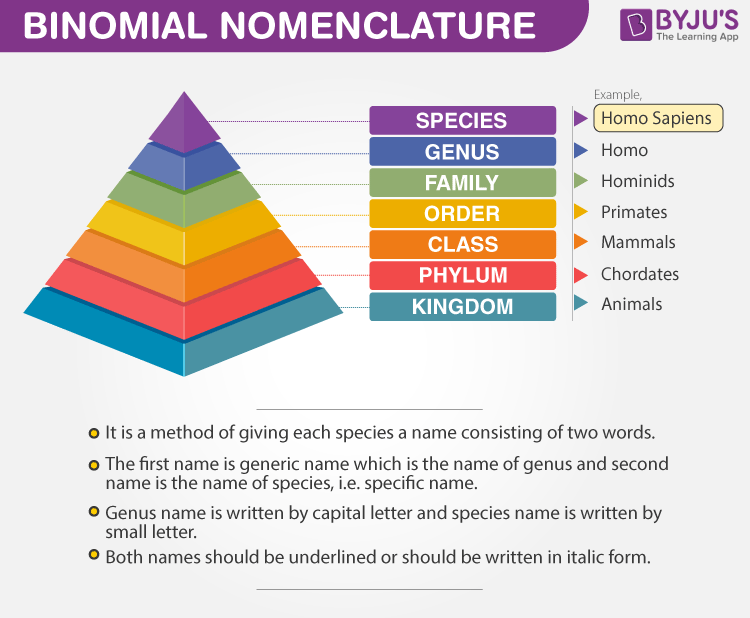
But here’s the twist: these names aren’t just random labels. They’re clues. Each word in a cactus’s binomial name (its two-part scientific name) tells a story about its appearance, origin, or even the whims of the person who named it. Echinocactus grusonii, for instance, isn’t just “golden barrel cactus”—it’s the “hedgehog cactus” (Echino- means spiny) named after Hermann Gruson, a 19th-century German cactus enthusiast who adored these globes of gold.
The Two-Part Symphony: Genus and Species Unveiled
Every cactus’s name is a duet: the genus (the first word) and the species (the second). Think of the genus as the cactus’s last name—shared by siblings like Mammillaria (the nipple cacti) or Ferocactus (the fierce, barrel-shaped giants). The species is its first name, the unique identifier that sets it apart. Mammillaria hahniana, for example, is the “old lady cactus,” named for its fuzzy, white-haired appearance that resembles a grandmother’s coif.
But why stop at two? Enter subspecies, varieties, and cultivars, the botanical world’s answer to middle names, nicknames, and stage names. A subspecies might denote a slight variation in habitat—like Echinocereus reichenbachii var. baileyi, a subspecies of hedgehog cactus found in a specific corner of Texas. A cultivar (cultivated variety) is a plant bred by humans for specific traits, such as Selenicereus ‘Misty Blue’, a night-blooming cereus with ethereal, pale blue flowers.
This hierarchy isn’t just pedantry; it’s a taxonomic map. It reveals evolutionary relationships, like how Lophophora williamsii (peyote) and Lophophora diffusa share a genus, hinting at their shared ancestry despite their differing appearances. It’s a family tree written in spines and flowers.
The Naming Game: How Are Cacti Bestowed Their Titles?
Naming a cactus isn’t as simple as slapping a label on it and calling it a day. It’s a process steeped in tradition, rivalry, and a healthy dose of obsession. The rules are governed by the International Code of Nomenclature for algae, fungi, and plants (ICNafp), a 300-page rulebook thicker than a saguaro’s trunk. Here’s how it works:
First, a botanist discovers a new cactus (or reclassifies an old one). They publish a description in a peer-reviewed journal, complete with detailed illustrations, measurements, and comparisons to known species. This description must include the plant’s type specimen—a physical sample preserved in a herbarium, the plant world’s version of a signed contract.
Then comes the etymology—the origin of the name. Some names honor people: Mammillaria karwinskiana pays tribute to Wilhelm Friedrich Karwinski, a 19th-century explorer who collected plants in Mexico. Others describe traits: Escobaria vivipara (“living young”) refers to its ability to reproduce via offsets. Some are downright poetic: Peniocereus greggii is the “queen of the night,” a nocturnal bloomer whose flowers unfurl like silver trumpets under the moonlight.
But beware—the naming process is fraught with taxonomic drama. Rival botanists might argue for decades over whether a plant deserves its own species or should be lumped in with a relative. The Ferocactus peninsulae vs. Ferocactus diguetii debate raged for years before genetic studies finally settled the score. And then there are the nomenclatural nomads—species that get shuffled between genera like musical chairs, their names changing as new evidence emerges.
The Language of Latin: Why Not English?
Why must cacti endure the linguistic equivalent of a root canal with Latin? The answer lies in history. Latin was the lingua franca of science in the 18th and 19th centuries, when Carl Linnaeus (the father of modern taxonomy) formalized the binomial system. It was a neutral, precise language, untainted by regional biases or political agendas. Plus, Latin’s inflectional richness allows for nuanced descriptions—cylindropuntia (“cylindrical Opuntia“) is far more specific than “spiky cactus with pads.”
But Latin isn’t just a relic; it’s a living tool. Botanists still coin new Latinized names today, often blending Greek and Latin roots for maximum descriptiveness. Eulychnia acida, for instance, combines eu- (good) + lychnos (lamp) + acidus (sour), hinting at its bright, candle-like stems and slightly acidic sap. It’s like solving a crossword puzzle where every clue is a clue to the plant’s soul.
Of course, Latin isn’t without its quirks. Some names are downright whimsical. Mammillaria herrerae is named after a Mexican botanist, but its common name? “Pincushion cactus.” Turbinicarpus schmiedickeanus sounds like a villain from a fantasy novel, but it’s just a tiny, turban-shaped cactus from Mexico. And then there’s Ariocarpus fissuratus, the “living rock” cactus, whose name sounds like it belongs in a sci-fi movie.
The Challenge of Misnomers and Lost Identities
Here’s where the story gets messy. Not every cactus name is accurate—or even logical. Misnomers abound in the cactus world, a testament to humanity’s tendency to slap labels on things without double-checking. Take Epiphyllum oxypetalum, the “queen of the night.” Despite its name, it’s not an epiphyte (it doesn’t grow on trees), and its petals aren’t particularly sharp. Or Gymnocalycium mihanovichii, the “chin cactus,” which is neither gymno (naked) nor a chin—its ribs resemble a receding hairline.
Then there are the lost identities. Some cacti have been misidentified for centuries, their names swapped like contraband in a black-market herbarium. The Mammillaria heyderi complex is a prime example—a group of cacti so similar that even experts struggle to tell them apart without genetic testing. And let’s not forget the nomen nudum (“naked name”), a name published without a proper description, leaving botanists scratching their heads like, “Wait, what even is this?”
This is the dark side of nomenclature—the confusion, the corrections, the endless debates. But it’s also what makes the field so fascinating. Every misstep is a clue, every correction a story. The cactus Echinocactus horizonthalonius was once thought to be a single species, but genetic studies revealed it was actually three distinct species hiding under one name. It’s like discovering that your “grandma’s secret recipe” is actually three different recipes masquerading as one.
Beyond the Binomial: The Future of Cactus Names
The world of cactus nomenclature isn’t static. With advances in DNA sequencing and phylogenetics, scientists are rewriting the family tree of cacti in real time. Entire genera are being split, merged, or reclassified based on genetic evidence. The Lophophora genus, for example, was once a dumping ground for peyote-like cacti, but now it’s a tightly defined group thanks to molecular studies.
But here’s the kicker: cultivars and hybrids are complicating things further. A x Grusichloa (a hybrid between Grusonii and Chihuahua cacti) doesn’t fit neatly into the binomial system. Neither does Mammillaria ‘Fred’ (a cultivar named after its creator’s cat). These plants exist in a nomenclatural gray area, where science meets artistry—and where the rules of taxonomy start to bend.
So, what’s next? Will we see a future where cacti are named using AI-generated Latin? Where every plant has a QR code linking to its genetic profile? One thing’s for sure: the naming of cacti will always be a blend of precision and passion, a dance between the rigid rules of science and the wild creativity of those who love these plants.
Next time you gaze at a cactus, take a moment to read its name. Behind those Latin syllables lies a world of discovery—of explorers, of debates, of the quiet resilience of life in the driest places on Earth. And who knows? Maybe one day, you’ll be the one to name the next great cactus. Just don’t forget to publish the description.


Leave a Reply