
Short Answer
In the arid embrace of commercial landscapes, where concrete jungles stretch toward the horizon, a silent revolution is blooming—one that thrives on resilience, aesthetic audacity, and minimal upkeep. Businesses are increasingly turning to cacti not just as decorative afterthoughts, but as bold statements of environmental harmony and architectural synergy. These spiky sentinels, often dismissed as mere desert curiosities, are now celebrated for their ability to transform corporate exteriors into living art installations that whisper sustainability while shouting style. What makes them so irresistibly appealing to modern enterprises? The answer lies in a fusion of pragmatism and poetic allure, where every spine tells a story of adaptation, and every bloom is a testament to nature’s quiet defiance.
The Unmatched Durability of Cacti in Harsh Urban Climates
Commercial properties face relentless assaults—scorching summers that blister paint, icy winters that crack pavement, and relentless foot traffic that grinds down even the hardiest perennials. Yet, cacti laugh in the face of such adversity. Their thick, waxy epidermis minimizes water loss, while their shallow yet extensive root systems act like nature’s own irrigation network, siphoning moisture from the slightest rainfall. This evolutionary marvel makes them ideal for rooftop gardens, parking lot islands, and sun-baked plazas where traditional landscaping withers and dies. Consider the Ferocactus, a genus whose barrel-shaped forms can endure temperatures from 15°F to 110°F without flinching. Its ribbed structure not only stores water but also provides structural integrity, resisting wind shear that topples less sturdy plants. For businesses, this translates to landscapes that remain lush and intentional year-round, without the need for costly replacements or constant irrigation—a boon for water-conscious municipalities and eco-driven corporations alike.

The Aesthetic Versatility: From Minimalist to Majestic
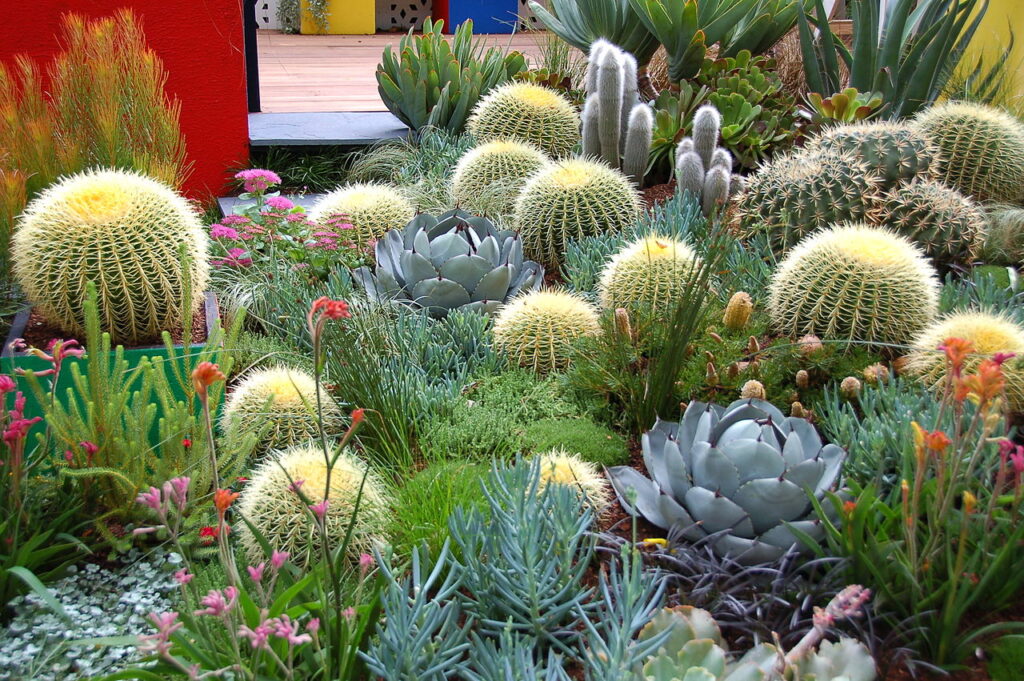
Gone are the days when cacti were relegated to kitschy Southwestern motifs or forgotten corner planters. Today, they are the darlings of landscape architects who prize their sculptural forms and textural contrasts. The Echeveria, with its rosette of powder-blue leaves, lends itself to sleek, monochromatic designs that echo the clean lines of contemporary office buildings. Meanwhile, the towering Saguaro—a symbol of the American Southwest—commands attention in grand atriums or corporate courtyards, its verticality creating a dramatic focal point that draws the eye upward. Even the humble Opuntia, or prickly pear, offers a dynamic palette of greens, purples, and reds, especially when stressed by sunlight, adding seasonal vibrancy to otherwise static facades. Businesses are leveraging these plants to craft biophilic environments that reduce stress for employees and impress clients with their commitment to organic beauty. A well-placed cluster of Agave americana can anchor a modernist plaza, while a drift of Mammillaria in a corporate garden whispers sophistication through its intricate, almost alien geometry.
Low-Maintenance, High-Impact: The Business Case for Cacti
The financial allure of cacti cannot be overstated. In an era where operational costs spiral and labor shortages plague the landscaping industry, these plants offer a reprieve. Unlike turfgrass, which demands weekly mowing, or flowering perennials that require deadheading and seasonal replanting, most cacti thrive on neglect. A once-monthly inspection for pests or overgrowth is often sufficient. This efficiency is particularly compelling for retail centers, where foot traffic can trample less resilient flora, or for industrial parks, where maintenance budgets are tight. Consider the Yucca genus, whose sword-like leaves and drought tolerance make it a favorite for parking lot medians. Its architectural form reduces the need for pruning, and its deep roots prevent soil erosion—a critical factor in stormwater management. For businesses, this means lower labor costs, reduced water bills, and fewer disruptions to daily operations. It’s a rare win-win: a landscape that looks meticulously curated while demanding almost nothing in return.

Ecological Benefits: Cacti as Urban Allies
Beyond their aesthetic and economic advantages, cacti are unsung heroes in the fight against urban heat islands and biodiversity loss. Their ability to store water makes them vital in regions plagued by drought, while their flowers provide nectar for pollinators like bees and hummingbirds—creatures increasingly under threat in concrete-dominated ecosystems. The Cholla, with its segmented branches, offers shelter for small reptiles and insects, fostering microhabitats in otherwise barren landscapes. Even their spines, often vilified as hazardous, serve a purpose: they deter pests and reduce the need for chemical pesticides. For businesses committed to sustainability certifications like LEED or WELL, incorporating cacti into landscaping isn’t just a design choice; it’s a strategic investment in ecological resilience. Imagine a corporate campus where Echinocactus grusonii, or golden barrel cactus, forms a living barrier that cools the air through transpiration while simultaneously reducing the heat reflected off pavement. It’s a small but meaningful step toward greener cities.
Cultural Symbolism: Why Cacti Resonate with Modern Audiences
There’s something deeply human about the cactus’s story—its ability to flourish where others cannot, its quiet endurance in the face of adversity. In a world where businesses are increasingly expected to embody resilience and adaptability, these plants become more than flora; they become metaphors. The Prickly Pear, for instance, is a symbol of hospitality in many cultures, its fruit offering sustenance in barren landscapes. Its presence in a commercial setting subtly communicates a company’s commitment to nurturing its environment, even in challenging conditions. Meanwhile, the Saguaro—which can live for over 150 years—embodies longevity and stability, qualities that resonate with investors and stakeholders alike. Even the cactus’s thorns, often seen as a deterrent, can be reframed as a reminder of the need for boundaries in an increasingly interconnected world. For brands seeking to align with values of sustainability, innovation, and strength, cacti offer a visual shorthand that requires no explanation.
Design Strategies: How to Integrate Cacti into Commercial Spaces
Integrating cacti into commercial landscapes requires more than random placement; it demands thoughtful curation. Start with a site analysis to assess sunlight exposure, soil drainage, and microclimates. South- or west-facing exposures are ideal for most species, while shaded areas may require more shade-tolerant varieties like Haworthia. Group plants with similar water needs together to simplify irrigation, and use gravel or decomposed granite as mulch to mimic their native habitats while suppressing weeds. For high-traffic areas, opt for larger specimens like Carnegiea gigantea (saguaro) or Ferocactus to minimize damage from foot traffic. In corporate atriums, consider vertical gardens featuring epiphytic cacti like Rhipsalis, which thrive in indirect light and add a lush, jungle-like feel to indoor spaces. Lighting is another critical element: uplighting can highlight the dramatic silhouettes of Cereus or Pilosocereus, while backlighting can create a halo effect around translucent species like Echeveria. The key is to treat cacti not as isolated specimens but as integral components of a larger design narrative.

The Future of Cacti in Commercial Landscaping
As climate change intensifies and urbanization accelerates, the role of cacti in commercial landscaping will only grow more pivotal. Innovations in drought-tolerant design are already pushing boundaries, with hybrid species like ×Gasteraloe (a cross between Gasteria and Aloe) offering new textures and colors. Even genetic research is exploring ways to enhance cacti’s already impressive drought resistance, potentially unlocking even greater versatility. For businesses, this means an ever-expanding palette of options to create landscapes that are not just beautiful but also forward-thinking. The cactus, once a humble desert dweller, is now poised to become a cornerstone of 21st-century commercial design—a living testament to the power of adaptation in an unpredictable world.
FAQ
Why are cacti popular in commercial landscaping?
Cacti are popular due to their resilience in harsh conditions, low maintenance needs, and ability to enhance the aesthetic appeal of business properties.
What design strategies can be used when integrating cacti?
Effective strategies include assessing sunlight exposure, grouping plants by water needs, and using appropriate mulch to mimic their native habitats.



Leave a Reply