
Short Answer
Have you ever wondered why some plants don’t just survive but thrive in the coziest corners of our homes, flaunting their vibrant blooms just in time for the holidays? Meet the Schlumbergera, affectionately dubbed the Christmas cactus—a botanical marvel that turns the bleakest winter days into a riot of color. But here’s the twist: this isn’t your average prickly cactus. Oh no! This festive green companion is a succulent rebel, a holiday showstopper that dances to the rhythm of your indoor garden. So, grab your gardening gloves (or your child’s tiny mittens), because we’re about to embark on a whimsical journey into the world of Schlumbergera for kids!
The Enchanting World of Schlumbergera: More Than Just a Holiday Plant
Picture this: a plant that doesn’t just tolerate your forgetful watering habits but actually *thrives* on them. The Schlumbergera, with its segmented, leaf-like stems, is a master of disguise. It masquerades as a cactus but is, in truth, a tropical epiphyte from the Brazilian rainforests. Its flat, paddle-shaped segments are not spines but rather nature’s clever way of storing water—like a camel of the plant world! And those dazzling blooms? They’re not just pretty faces; they’re a botanical badge of honor, signaling that winter has arrived in style.
But why does this plant steal the spotlight every December? The answer lies in its photoperiodic magic. Schlumbergera is a short-day plant, meaning it blooms when nights grow longer—a perfect synchronization with the winter solstice. It’s as if the plant is whispering, “Winter is coming, but so is my time to shine!” For kids, this is a living science lesson wrapped in petals and sunshine.
Why the Christmas Cactus is the Ultimate Kid-Friendly Plant
Let’s be real: not all plants are cut out for a household with tiny humans running amok. But the Schlumbergera? It’s the plant equivalent of a patient grandparent. It doesn’t mind the occasional tug on its stems (though we’d advise against turning it into a jungle gym). Its forgiving nature makes it an ideal first plant for kids, teaching them responsibility without the drama of a wilting fern.
Here’s the kicker: this plant is practically indestructible. Overwater it? It’ll forgive you. Underwater it? It’ll bounce back like a botanical superhero. And the best part? Kids can get hands-on with its propagation. Snip a segment, let it callus over, and—voilà!—you’ve got a brand-new plant to gift to Grandma or trade with a friend. It’s like a plant-based lemonade stand, but with fewer lemons and more leafy green stems.
But wait—there’s a challenge. The Schlumbergera is a bit of a diva when it comes to light. Too much direct sun, and its stems turn an unflattering shade of red. Too little, and it might skip its annual bloom show. For kids, this becomes a delightful experiment: “How much light does our cactus need to throw the best holiday party?”
The Science Behind the Magic: How Does It Bloom?}
Ever wondered how a plant decides to throw a flower party? For the Schlumbergera, it’s all about the light—or rather, the *lack* of it. This plant is a master of timing, requiring a strict 12-14 hours of darkness each day for about six weeks to trigger blooming. It’s like a plant version of a New Year’s resolution: consistency is key!
For kids, this is a fantastic way to introduce the concept of photoperiodism—the plant’s internal clock that tells it when to grow, bloom, or even take a nap. You can turn it into a science project: cover the plant with a cardboard box for 12 hours a day and watch as it transforms into a floral fireworks display. Just be prepared for the inevitable question: “Why can’t *I* get a nap like the cactus?”
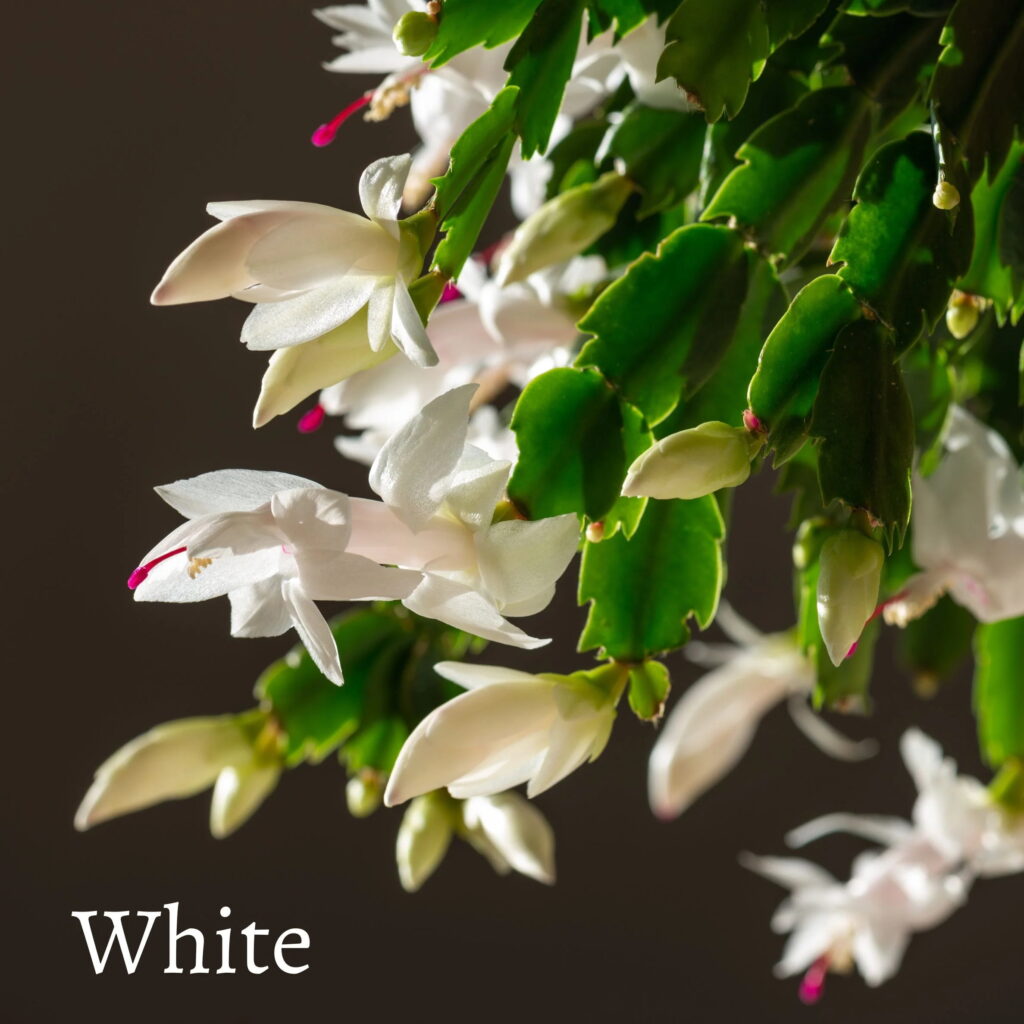
The blooms themselves are a marvel. They come in a dazzling array of colors—pink, red, white, orange, and even purple—like a crayon box come to life. Some varieties even boast bi-colored petals, as if Mother Nature herself couldn’t decide on just one hue. For kids, this is a visual feast, a chance to explore color theory while nurturing a living, breathing work of art.
Growing Your Own Festive Wonder: A Step-by-Step Guide
Ready to grow your own Schlumbergera? Here’s how to turn your home into a winter wonderland, one stem at a time. First, choose a pot with drainage holes—because soggy roots are a big no-no. Fill it with well-draining soil, preferably a mix of potting soil and perlite or sand. Think of it as creating a cozy bed for your plant’s roots, complete with a built-in air conditioning system.
Now, the fun part: planting! Gently nestle a segment into the soil, burying about a third of it. Water lightly, and then—here’s the hard part—practice restraint. This plant likes to dry out between waterings, so resist the urge to drown it in affection. Place it in bright, indirect light, and watch as it begins its slow and steady growth.
But here’s where the challenge comes in: patience. Schlumbergera isn’t a fast grower. It might take a year or two to reach its full, festive glory. For kids, this teaches delayed gratification—a lesson that’s harder to learn in a world of instant everything. Set a reminder to check on it weekly, and celebrate each new segment like it’s a milestone.
Fun Activities to Bond with Your Christmas Cactus
Why just grow a plant when you can turn it into an adventure? Here are some playful ways to engage kids with their Schlumbergera:
1. The Great Stem Hunt: Turn propagation into a treasure hunt. Give kids a magnifying glass and a list of “clues” (e.g., “Find a segment that’s at least three inches long”). Once they’ve snipped their prize, let them decorate the pot with glitter, stickers, or even tiny holiday figurines. Suddenly, a simple plant becomes a craft project.
2. The Bloom Prediction Game: Have kids predict when the plant will bloom based on the light exposure they’re giving it. Keep a journal with drawings of the plant’s progress. When the first bud appears, it’s a celebration worthy of fireworks!
3. The Storytelling Cactus: Encourage kids to imagine the plant’s life story. Is it a secret agent cactus on a mission to brighten winter days? A fairy-tale princess trapped in a stem? The possibilities are endless, and the act of storytelling fosters creativity and ownership of the plant.
Troubleshooting: When Your Christmas Cactus Acts Up
Even the hardiest plants have their off days. If your Schlumbergera’s stems look wrinkled, it’s begging for water. If they’re mushy or yellow, it’s had too much. And if it’s not blooming? Double-check the light schedule—it might be getting too much artificial light at night.
For kids, these moments are teachable ones. They learn that plants, like people, have needs and boundaries. It’s a gentle reminder that care isn’t just about giving; it’s about observing, adjusting, and understanding. Plus, fixing a plant crisis is a confidence booster—like solving a tiny, green puzzle.
The Legacy of the Christmas Cactus: A Plant for Generations
The Schlumbergera isn’t just a plant; it’s a tradition. Passed down through families, gifted at holidays, and nurtured with love, it becomes more than a decoration—it’s a living heirloom. For kids, this plant can be the start of a lifelong love for gardening, a connection to nature, and a reminder that even the smallest acts of care can yield the most beautiful results.
So, the next time you see a Schlumbergera in full bloom, remember: it’s not just a plant. It’s a story of resilience, a lesson in patience, and a splash of color in the darkest days of winter. And who knows? Maybe one day, your child will pass their own festive cactus down to their kids, whispering, “This plant taught me everything I know about love and growth.”
FAQ
What is a Christmas cactus?
The Christmas cactus, or Schlumbergera, is a tropical plant known for its vibrant blooms during the winter season.
How do you care for a Christmas cactus?
It requires bright, indirect light and should be watered only when the soil is dry to avoid root rot.
Can kids grow a Christmas cactus?
Yes, it's a forgiving plant that teaches kids responsibility and care without high maintenance.




Leave a Reply