
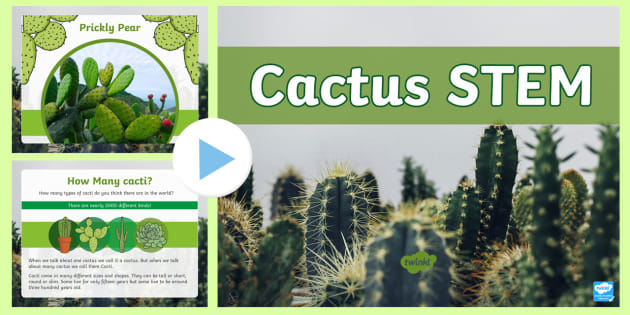
Short Answer
In the evolving landscape of STEM education, hands-on learning stands as a beacon, illuminating complex subjects through tangible experiences. One remarkable and often overlooked resource that encapsulates this philosophy is the humble cactus. More than a desert dweller, the cactus offers a unique gateway into the realms of science, technology, engineering, and mathematics. Its resilient biology, intricate anatomy, and adaptive mechanisms provide fertile grounds for inquiry-based learning and interdisciplinary exploration. This article delves into the multifaceted role of the cactus in STEM education, illustrating how it fosters curiosity and cultivates a profound understanding of living systems through engaging, experiential methodologies.
Biological Insights: Understanding Plant Physiology and Adaptations
Exploring the cactus offers an exceptional opportunity to study plant physiology in action, especially adaptations to arid environments. Students can observe firsthand the succulent’s water storage tissues, spines substituting leaves, and specialized photosynthesis processes like CAM (Crassulacean Acid Metabolism) that optimize water retention. This biological marvel invites learners to dissect cellular structures under microscopes, analyze stomatal behavior, and map out the plant’s unique anatomy.
Topics such as xerophyte adaptations become palpable when students examine the cactus’s epidermis, thick cuticles, and ribbed surfaces designed to expand and contract with water volumes. Encouraging learners to nurture a cactus cultivates responsibility and observational skills that transcend textbook theory, anchoring complex botanical principles in real-world living specimens.

Hands-On Experiments: Cultivating Scientific Inquiry and Hypothesis Testing
The cactus provides an accessible and robust model for hands-on experiments that bolster critical thinking and the scientific method. Educators can design activities encompassing seed germination rates under varying light conditions, the impact of differing soil compositions on growth, or water retention efficiency across species. These experiments illuminate principles of experimental design, variables control, data collection, and statistical analysis.
Moreover, observing physiological responses such as growth patterns or stress reactions under simulated drought conditions fosters analytical skills. Learners practice scientific inquiry not as a passive endeavor but as an immersive, iterative experience. The cactus thereby transforms abstract scientific concepts into dynamic, tactile investigations that reinforce perseverance and curiosity.
Mathematics in Nature: Quantification and Pattern Recognition
STEM education thrives at the intersection of disciplines, and the cactus is a quintessential example of nature’s inherent mathematical beauty. Its growth patterns often follow intriguing geometrical forms and fractal-like structures, inspiring explorations into symmetry, Fibonacci sequences, and phyllotaxis—the arrangement of spines and ribs around the cactus stem.
Students can engage in quantitative measurements such as growth rates, surface area calculations, and volume estimations of water retention. Graphing these variables over time introduces concepts of modeling and data visualization. This amalgamation of biology and mathematics cultivates a holistic understanding, demonstrating the omnipresence of math in living systems and the environment.

Engineering and Design: Biomimicry and Innovation Inspired by Cacti
The cactus’s ingenuity as a water-conserving marvel has inspired engineering breakthroughs, making it a compelling focus for design thinking within STEM curricula. Students exploring biomimicry can investigate how cactus adaptations influence architectural strategies for sustainability, water collection systems, or surface materials that minimize evaporation.
By drawing parallels between cactus spines and ventilation aids or studying ribbed stem structures for structural flexibility, learners engage in prototype development and problem-solving exercises. This hands-on exploration encourages multidisciplinary synthesis—melding biology, physics, and engineering—fostering creativity grounded in nature’s time-tested engineering.
Technology Integration: Digital Tools and Data Collection
Integrating technology elevates surplus value from cactus-based STEM lessons. Utilizing sensors to monitor moisture levels, temperature, or light intensity around cacti introduces students to real-time data collection and Internet of Things (IoT) applications. Digital microscopes allow intricate observation of cellular features and stomatal openings, bridging traditional botany with cutting-edge technology.
Software platforms for data logging and analysis cultivate computational thinking and digital literacy. Augmented reality (AR) apps can simulate internal cactus processes or desert ecosystems, enriching engagement and enhancing visual learning. This fusion of technology amplifies the exploratory potential of the cactus, underscoring its relevance in contemporary STEM education.
Environmental Awareness: Fostering Ecological Literacy and Sustainability
Using cacti in STEM education nurtures a deeper ecological awareness and responsibility. These hardy plants embody principles of conservation, resilience, and adaptation amidst global climate challenges. Lessons rooted in cactus biology can segue into broader discussions on desertification, water scarcity, and biodiversity preservation.
Students develop an appreciation for fragile ecosystems and the evolutionary strategies that sustain life under environmental stress. This ecological literacy empowers learners to think globally while acting locally—motivating sustainable practices and inspiring stewardship for natural resources.
Emotional and Social Dimensions: Cultivating Patience, Care, and Collaboration
Beyond intellectual enrichment, nurturing cacti instills patience and empathy—traits essential to scientific inquiry and lifelong learning. The slow, deliberate growth patterns of cacti encourage consistent observation, fostering mindfulness and respect for life cycles. Group projects centered on cactus care promote collaboration, communication, and shared responsibility among students.
Such emotional and social dimensions intertwine seamlessly with the cognitive, creating a comprehensive learning environment. This holistic approach ensures STEM education is not merely about knowledge acquisition but about developing well-rounded, caring individuals prepared to tackle future challenges.
In essence, incorporating cacti into STEM education transforms traditional pedagogies into vibrant, interactive adventures. From biological intricacies to mathematical marvels, engineering inspirations to technological applications, and environmental consciousness to personal growth, the cactus stands as a multifaceted muse—bridging disciplines and igniting minds. Through this wondrous plant, students embark on journeys of exploration that are as enriching as they are inspiring, illustrating the profound power of hands-on learning in cultivating tomorrow’s innovators and stewards.
FAQ
How can cacti be used in STEM education?
Cacti can be used to teach various STEM concepts through hands-on experiments, biological studies, and interdisciplinary projects that explore their adaptations and environmental significance.
What are the benefits of hands-on learning with cacti?
Hands-on learning with cacti fosters curiosity, enhances observational skills, and encourages critical thinking by providing tangible experiences that connect theoretical concepts to real-life applications.



Leave a Reply