
Short Answer
What if I told you that Earth’s prickliest plants—cacti—might just hold the key to unlocking the mysteries of Mars? It sounds like a botanical fairy tale, but NASA’s scientists are already peering into the spiky, water-storing secrets of these desert dwellers to prepare for humanity’s next giant leap. The Red Planet, with its barren landscapes and unforgiving climate, presents a challenge that makes the Sonoran Desert look like a tropical paradise. Yet, cacti thrive where others wither, their resilience woven into every rib and spine. Could these green warriors teach us how to survive—and even thrive—on Mars? Let’s dig into the prickly paradox of cacti and cosmic exploration.
Why Cacti? The Unlikely Heroes of Space Exploration
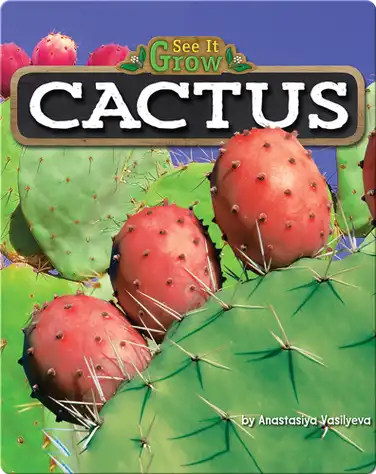
At first glance, cacti seem like the last creatures you’d trust to guide a Mars mission. These plants are the ultimate survivors, thriving in conditions that would kill most life forms: scorching days, freezing nights, and a near-total absence of water. Their secret? A mastery of water conservation that borders on the supernatural. Cacti store water in their thick, fleshy stems, their ribbed surfaces expanding and contracting like accordions to accommodate every precious drop. Their spines aren’t just for defense—they’re tiny umbrellas, casting shadows that reduce evaporation, while their shallow, widespread roots snatch up moisture from the briefest of rains.
NASA’s fascination with cacti isn’t about aesthetics; it’s about biomimicry—the art of stealing nature’s blueprints. If we can replicate the way cacti regulate water, temperature, and even photosynthesis under extreme stress, we might just crack the code for growing food, generating oxygen, and sustaining life on Mars. Imagine a greenhouse dome on the Red Planet, its walls lined with synthetic cactus-inspired materials that mimic the plant’s water-saving tricks. The stakes? Nothing less than the future of human colonization.

The Great Water Paradox: How Cacti Outsmart Drought
Water is the lifeblood of space exploration, yet Mars is a desert planet where liquid water is as rare as a polite Martian. Here’s where cacti become our most unlikely mentors. These plants have evolved to extract moisture from the air itself, using specialized structures in their roots and stems to condense water from even the driest atmospheres. Some species, like the Saguaro, can absorb up to 200 gallons of water in a single rainstorm—enough to fill a bathtub—and store it for years.
NASA’s experiments with cactus-inspired water harvesting systems are already underway. Researchers are developing materials that can pull moisture from Martian soil, where water exists in the form of ice or bound to minerals. By studying how cacti’s roots navigate and extract water from parched earth, scientists hope to design rovers or habitats that can do the same. The challenge? Mars’ soil is laced with perchlorates, toxic salts that could poison any plant—or human—unprepared for their bite. Cacti, it turns out, have a knack for tolerating these chemicals, a trait NASA is eager to exploit.
Spines and Solar Panels: The Dual Role of Cactus Architecture
Cacti are more than just water hoarders; they’re architectural marvels. Their spines aren’t just defensive weapons—they’re solar panels, angled to maximize light absorption while minimizing water loss. Some species even have reflective surfaces that bounce excess sunlight away, preventing overheating. This natural engineering has caught the eye of NASA’s materials scientists, who are exploring ways to integrate spine-like structures into solar panels for Mars missions. By mimicking the cactus’s ability to regulate temperature and light, these panels could become more efficient in the Red Planet’s harsh sunlight.
The challenge here is scale. A single cactus spine is a masterpiece of micro-engineering, but scaling it up to the size of a solar array requires precision and innovation. Researchers are experimenting with 3D-printed materials that replicate the spine’s geometry, testing whether they can improve energy capture in dusty, low-light conditions. If successful, these bio-inspired designs could revolutionize how we power habitats, rovers, and even future cities on Mars.
Photosynthesis on Steroids: Cacti’s Secret to Surviving the Red Planet
Most plants use the C3 photosynthesis pathway, a process that’s as inefficient as a steam engine in the age of electric cars. Cacti, however, use CAM photosynthesis—a nighttime-only process that minimizes water loss by opening their stomata (tiny pores) only when the sun isn’t beating down. This allows them to store carbon dioxide during the cool of the night and use it during the day, all while keeping their water locked tight inside. It’s a metabolic hack that could be a game-changer for Martian agriculture.
NASA’s plant biologists are working to transfer this trait to crops like tomatoes and lettuce, which could be grown in Martian greenhouses. The goal? To create plants that can photosynthesize efficiently in the Red Planet’s thin atmosphere and low temperatures. But here’s the catch: CAM photosynthesis is slow. It prioritizes survival over growth, meaning Martian farmers might have to wait longer for their harvests. The challenge is finding the balance between resilience and productivity—a puzzle that could take decades to solve.
From Desert to Dome: Building a Martian Cactus Oasis
The dream of a self-sustaining Mars colony hinges on our ability to create closed-loop ecosystems where every drop of water is recycled, every calorie of energy is accounted for, and every plant is a soldier in the fight against extinction. Cacti, with their unparalleled adaptability, could be the cornerstone of this vision. Imagine a Martian greenhouse where rows of genetically modified cacti-like plants purify water, regulate humidity, and even produce oxygen. Their spines could double as sensors, detecting toxic gases or structural weaknesses in the habitat.
The challenge, of course, is getting them there. Transporting living organisms to Mars is a logistical nightmare. Seeds might survive the journey, but whole plants? Unlikely. NASA’s solution? Bioengineered microbial communities that can be activated once on Mars, kickstarting the growth of cactus-inspired lifeforms from scratch. It’s a high-stakes gamble, but one that could redefine what it means to live beyond Earth.
The Final Thorn: Ethical Dilemmas of Interplanetary Borrowing
As we plunder the secrets of Earth’s flora for the sake of Mars, we must ask ourselves: at what cost? Cacti have evolved over millennia to survive in their niches. If we strip-mine their adaptations for space exploration, are we betraying the very resilience we seek to emulate? And what happens when these bio-inspired technologies return to Earth, potentially disrupting ecosystems that have coexisted with cacti for generations?
The challenge isn’t just technical—it’s philosophical. Do we have the right to exploit nature’s designs, even if it means saving humanity’s future? The answer may lie in collaboration. Indigenous communities, who have lived alongside cacti for centuries, hold knowledge that could guide NASA’s efforts without exploitation. Perhaps the future of Mars colonization isn’t just about technology, but about partnership—with the planet, its plants, and the people who understand them best.
FAQ
What adaptations help cacti survive in harsh conditions?
Cacti store water in their stems, have specialized roots for moisture extraction, and utilize CAM photosynthesis to minimize water loss.
What role does biomimicry play in NASA's research?
Biomimicry allows NASA to replicate natural mechanisms found in cacti to create efficient systems for life on Mars.




Leave a Reply