
Short Answer
Ever stared at a spiky green sentinel, its roots tangled in a cramped ceramic prison, and wondered: “What if I accidentally turn my cactus into a pincushion during its grand repotting escape?” Fear not, fellow desert whisperer! The art of repotting a cactus without sending it into a photosynthetic panic is less about brute force and more about finesse—like coaxing a grumpy porcupine into a fresh sweater. The secret? Acclimation. Let’s dive into the prickly details of how to give your spiky companion the smoothest transition possible, ensuring it thrives instead of wilts in protest.
The Perilous Dance of Root Disturbance: Why Cacti Hate Surprises
Imagine waking up to find your bed replaced with a bed of nails. That’s roughly what repotting feels like to a cactus. These desert-dwelling stoics are hardwired to resist change, their roots a labyrinth of water-hoarding efficiency. When you yank them from their cozy pot, even the gentlest disturbance can trigger a stress response—yellowing, wrinkling, or worse, a full-blown existential crisis. The key to avoiding this botanical trauma? Timing. Repot in early spring, when your cactus is emerging from its winter slumber, primed for growth rather than sulking. Avoid the dog days of summer, when heat stress could turn a simple transplant into a sunburnt disaster. Think of it as scheduling a spa day, not a surprise exorcism.


Pre-Repotting Prep: The Art of the Gentle Extraction
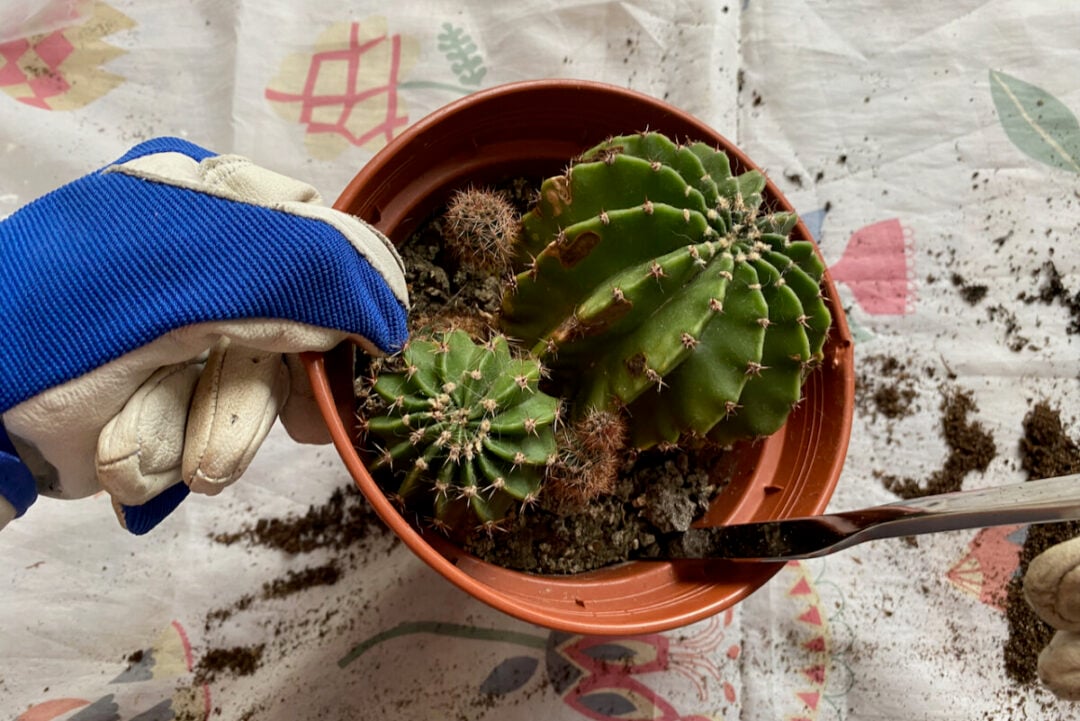
Before you even think about touching soil, arm yourself with the right tools: a pair of tongs (yes, really), thick gloves, and a newspaper-strewn workspace. The goal? To extract your cactus with the delicacy of a bomb squad technician defusing a spiky device. Start by watering the plant lightly a few days prior—this plumps the roots, making them less brittle. Then, invert the pot while cradling the cactus in your gloved hands, tapping the edges if necessary. If the plant is stubbornly clinging to its home, run a butter knife around the inner rim to loosen the soil. Pro tip: If your cactus is particularly ornery (looking at you, barrel cacti), wrap it in a towel for extra grip and protection. Remember, this isn’t a wrestling match—it’s a rescue operation.
Root Inspection: The Sherlock Holmes of Cactus Health
Once your cactus is free, resist the urge to immediately shove it into a new pot. Instead, play detective. Gently brush away excess soil to inspect the roots. Healthy roots are firm and white or tan; mushy, blackened, or foul-smelling roots signal rot—a death knell for your prickly pal. Trim any damaged roots with sterilized scissors, but don’t go overboard. Cacti are masters of regeneration, but they need a little something to work with. If the root ball is a tangled mess, consider teasing the roots apart with your fingers—like untangling a headphone wire, but with more dignity. This step ensures your cactus isn’t carrying any baggage (literally) into its new home.

The Perfect Pot & Soil: Crafting a Cactus Shangri-La
Choosing the right container is like picking a five-star hotel for your cactus—it needs space, drainage, and a view (or at least a window). Terracotta pots are ideal: their porous nature wicks away excess moisture, preventing root rot. Ensure the new pot has drainage holes; if it doesn’t, drill some yourself (or accept that you’re now a cactus serial killer). As for soil, forget generic potting mix. Cacti demand a gritty, fast-draining medium—think sand, perlite, and a dash of compost. A 50/50 blend of cactus soil and perlite works wonders. Avoid peat-heavy mixes, which retain too much water and turn your cactus’s roots into a soggy mess. Your goal? A home that’s as arid as the Arizona desert.
Acclimation 101: The Slow Dance of Adaptation
Here’s where the magic happens. After repotting, your cactus isn’t ready to bask in full sun or guzzle water like a camel on a road trip. Instead, give it a week or two in bright, indirect light—a shaded porch or a north-facing window works. This is the cactus equivalent of a recovery smoothie: no stress, no shock. During this period, resist the urge to water. A light misting is fine, but overwatering is the fast track to a mushy demise. Think of it as the plant’s version of a digital detox—no stimuli, just peace. If your cactus starts looking a little pale, don’t panic. It’s not dying; it’s just adjusting. Patience, young horticulturist.
Post-Acclimation Care: The Grand Re-Entry
After your cactus has had its fill of R&R, it’s time to reintroduce it to the world. Gradually reintroduce it to sunlight over a week, starting with just an hour a day and increasing incrementally. If you’re repotting in summer, shield it from the harsh midday rays with a sheer curtain. Water sparingly at first—only when the soil is bone dry. Over time, you can resume your regular watering schedule, but always err on the side of underwatering. Cacti are survivors; they’d rather be thirsty than drowned. Watch for signs of stress: wrinkled skin, soft spots, or a sudden urge to flee the pot. If any of these occur, dial back on the care and give your plant more time to acclimate.

Troubleshooting: When Your Cactus Holds a Grudge
Even the most meticulous repotting job can go awry. If your cactus starts leaning like the Tower of Pisa, it’s likely reaching for light. Rotate the pot regularly to encourage even growth. Yellowing or browning spines? Could be sunburn—shade it immediately. Drooping or wrinkled skin? It’s thirsty. Give it a drink, but don’t drown it. And if your cactus suddenly sprouts a new arm (or leg), consider it a sign of gratitude. Cacti aren’t known for their emotional range, but they do show appreciation in their own prickly way.
The Reward: A Thriving Cactus and a Proud Grower
Repotting a cactus without shock isn’t just about avoiding disaster—it’s about fostering a relationship. With each careful repot, you’re telling your spiky friend: “I see you. I respect you. Let’s grow together.” And when that cactus blooms in a riot of color, you’ll know the effort was worth it. So next time you’re faced with a pot-bound cactus, channel your inner zen master. Breathe. Prepare. Execute. And maybe, just maybe, you’ll avoid becoming a human pincushion in the process.
FAQ
How often should I repot my cactus?
Cacti typically need repotting every 2-3 years or when they outgrow their pot.
What type of soil is best for cacti?
A gritty, fast-draining mix, such as a blend of cactus soil and perlite, is ideal.
Leave a Reply