
Short Answer
There’s something quietly revolutionary about a cactus terrarium. In a world that often feels rushed, these miniature ecosystems offer a paradox: they demand patience yet reward instantly with their stark, sculptural beauty. They are self-sufficient, thriving on neglect while whispering tales of resilience. Perhaps that’s why they’ve become more than just a trend—they’re a quiet rebellion against the disposable culture that surrounds us. A single glass vessel, a handful of sand, and a spiky survivor can transform a shelf into a desert oasis, a reminder that life doesn’t need to be lush to be profound.
The Allure of the Arid: Why Cacti Captivate Our Imagination
Cacti are not just plants; they are architectural marvels. Their ribs, spines, and segmented forms echo the skeletal remains of ancient civilizations, as if they’ve been preserved in time. This geometric precision contrasts sharply with the organic chaos of most foliage, making them irresistible to those who crave order in a world of unpredictability. Their ability to store water in their flesh speaks to an evolutionary cunning, a silent defiance against drought. When we bring them indoors, we’re not just decorating—we’re inviting a piece of the desert’s tenacity into our homes. It’s no wonder they’ve become symbols of endurance, often gifted to those navigating life’s arid seasons.
Materials That Matter: Crafting with Intention
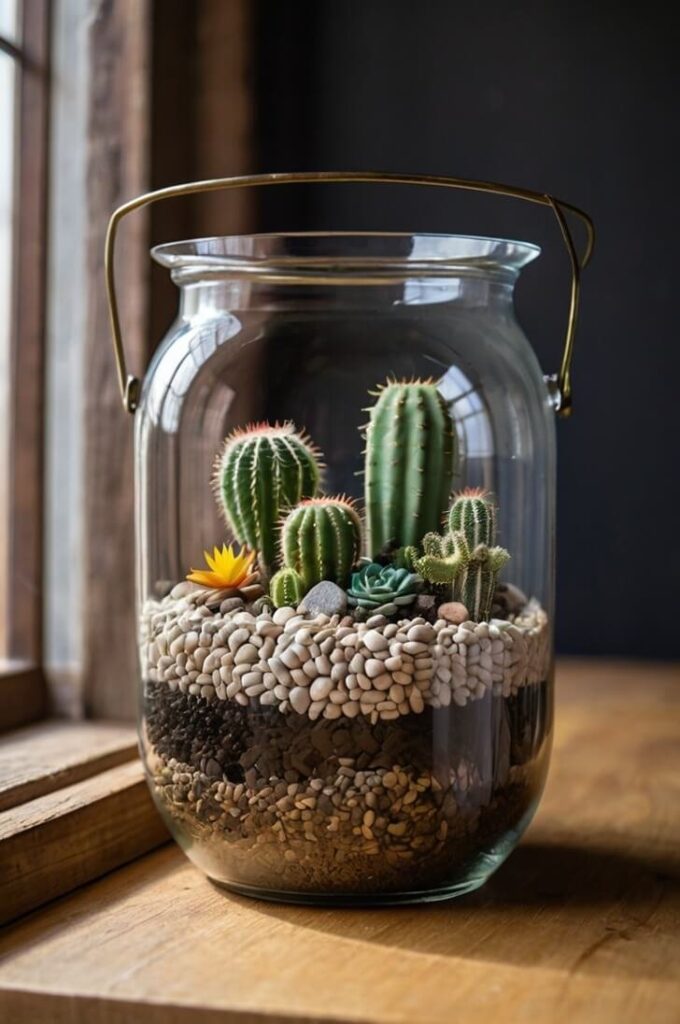
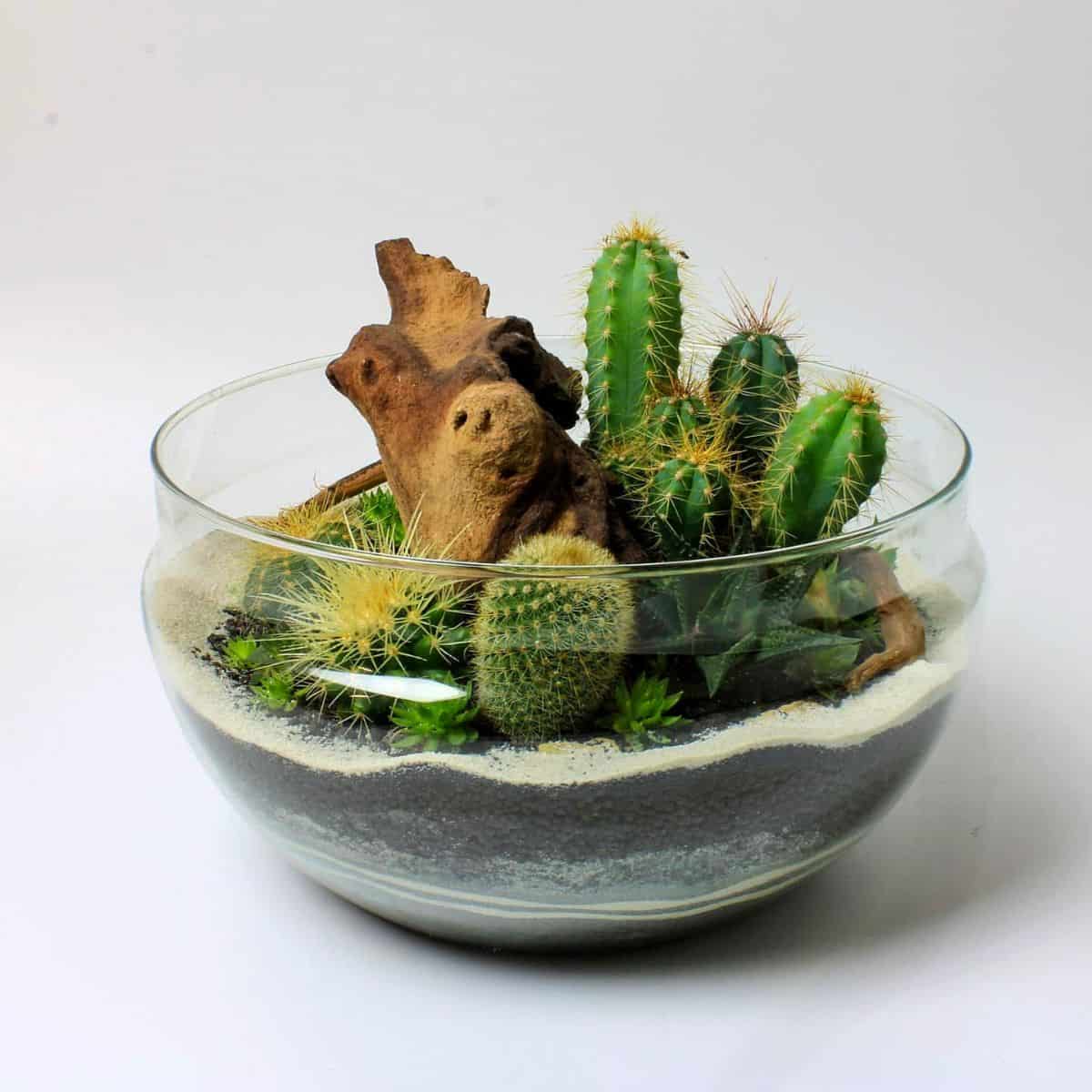
Creating a cactus terrarium begins with a curation of elements, each chosen for both function and aesthetics. Start with a glass vessel—clear or amber, wide-mouthed or narrow—depending on the drama you wish to evoke. A shallow dish lends itself to sprawling, ground-hugging species, while a tall cylinder accentuates the verticality of columnar cacti. The base layer is critical: coarse sand or fine gravel not only aids drainage but also mimics the rocky terrain of their native habitats. Activated charcoal, sprinkled sparingly between layers, acts as a silent guardian, warding off rot by keeping the environment fresh. And then, the soil—a gritty, fast-draining mix, perhaps amended with perlite or pumice, to ensure these desert dwellers never feel waterlogged. Each material is a deliberate choice, a nod to the harsh yet harmonious world these plants call home.
Design Philosophies: From Minimalist to Whimsical
The beauty of cactus terrariums lies in their versatility. For the minimalist, a single, solitary cactus in a sleek glass orb becomes a sculptural centerpiece, its spines casting intricate shadows against the vessel’s curves. The monochromatic palette—shades of green, gray, and terracotta—creates a calming, almost meditative presence. On the opposite end of the spectrum, a riotous arrangement of varied textures and heights can mimic a desert landscape in full bloom. Layer in moss for a touch of softness, or introduce a miniature agave for architectural contrast. Some designers push boundaries further, incorporating found objects: a smooth river stone as a “mountain,” a driftwood slice as a “bridge,” or even a tiny ceramic figurine as a whimsical inhabitant. The terrarium becomes a canvas, limited only by imagination.
The Art of Placement: Where These Desert Worlds Thrive
A cactus terrarium is not merely an object to be admired from afar—it’s a living sculpture meant to be engaged with. Place it where sunlight filters through, perhaps on a windowsill or a glass-topped desk, so its spines catch the light like a constellation of tiny stars. Avoid drafty spots or overly humid rooms; these are desert plants, after all, and they thrive in conditions that mimic their native climates. A south-facing window is ideal, but if that’s not possible, supplement with a grow light. Rotate the vessel occasionally to ensure even growth, preventing the cactus from leaning toward the light like a sunbather chasing the rays. The right placement transforms a terrarium from decoration to an interactive experience, a daily reminder of nature’s quiet persistence.
Care That Feels Like a Ritual
Tending to a cactus terrarium should be a mindful practice, not a chore. Watering, for instance, is less about quantity and more about intuition. A spray bottle is often sufficient, misting the soil lightly every few weeks—just enough to quench without drowning. Overwatering is the fastest way to undo months of careful cultivation, turning a thriving terrarium into a soggy grave. Instead, observe the soil’s dryness, the slight wrinkling of the cactus’s skin, as signals to act. Pruning is another act of care: removing dead or overgrown segments not only maintains shape but also encourages new growth. And when the time comes to repot, handle the cactus with reverence, its spines a gentle warning to proceed with caution. This care becomes a ritual, a small act of devotion to a living thing that asks so little yet gives so much.
Beyond the Glass: The Deeper Symbolism
There’s a deeper resonance to these miniature deserts. In a culture obsessed with instant gratification, a cactus terrarium teaches patience. It grows slowly, its changes almost imperceptible day to day, but over months and years, it transforms. It survives. It adapts. It endures. In this way, it mirrors our own journeys—times when progress feels invisible, when resilience is the only option. The terrarium becomes a metaphor for personal growth: the initial barrenness, the careful nurturing, the eventual flourishing. It’s no coincidence that these creations have surged in popularity during eras of global uncertainty. They offer control in a world that often feels uncontrollable, a tangible reminder that beauty can emerge from the most unforgiving conditions.
Inspiration for Every Skill Level
Whether you’re a seasoned green thumb or a complete novice, cactus terrariums welcome all. Beginners might start with a simple kit, a foolproof introduction to the basics. Intermediate crafters can experiment with layered landscapes, introducing elements like sand art or colored gravel to create depth. Advanced enthusiasts might delve into hybridization, grafting different cactus species to create chimeras of striking contrast. The learning curve is gentle, the rewards immediate. And for those who love a challenge, the world of rare and exotic cacti awaits—species with names like *Mammillaria elongata* or *Gymnocalycium mihanovichii*, each more peculiar and captivating than the last. The terrarium becomes a gateway, a small step into a vast, spiny universe of botanical wonder.
A Lasting Legacy in Glass
Perhaps the most magical aspect of a cactus terrarium is its longevity. Unlike cut flowers that wilt within days or houseplants that outgrow their pots, a well-crafted terrarium can thrive for years, even decades. It becomes a living heirloom, passed down through generations or gifted to mark milestones. Each new shoot, each slight shift in color, tells a story. It’s a testament to the idea that the most meaningful things in life are often the slowest to reveal their beauty. So if you’ve been searching for a hobby that marries creativity, science, and a touch of rebellion, look no further. The world of cactus terrariums awaits—where every spine is a story, and every glass vessel holds a desert’s worth of dreams.
FAQ
What materials do I need to create a cactus terrarium?
You’ll need a glass vessel, coarse sand or fine gravel, activated charcoal, and a gritty, fast-draining soil mix.
How often should I water my cactus terrarium?
Watering should be intuitive, typically using a spray bottle every few weeks, ensuring not to overwater.
Can beginners create cactus terrariums?
Yes, cactus terrariums are suitable for all skill levels, with beginner kits available for easy setup.
Leave a Reply