
Short Answer
There’s something quietly revolutionary about watching a Rebutia cactus thrive in a humble container—whether it’s perched on a sun-drenched windowsill or nestled in a courtyard’s dappled shade. These diminutive globes of spiny splendor, often dismissed as mere novelties for succulent enthusiasts, possess an understated tenacity that belies their size. Their ability to flourish in confined spaces isn’t just a testament to adaptability; it’s a quiet rebellion against the notion that grandeur requires vast acreage or elaborate setups. For those who’ve marveled at how a Rebutia’s vibrant blooms unfurl with almost defiant cheerfulness, the real fascination lies not in the spectacle itself, but in the unspoken dialogue between plant and container—a dialogue where the vessel becomes an extension of the grower’s intent, and the cactus, a living manifesto of resilience.
The Allure of Rebutia: Why These Tiny Titans Captivate Us
Rebutia cacti, with their spherical forms and jewel-like flowers, are the unsung heroes of the succulent world. Their compact stature belies a complexity that draws enthusiasts into a deeper appreciation of nature’s ingenuity. Unlike their towering, columnar cousins, Rebutias remain demure, their growth patterns slow and deliberate, as if savoring each moment of their existence. This restraint is deceptive; within their unassuming frames lies a metabolic efficiency that allows them to thrive in conditions that would leave other plants gasping. Their fascination isn’t merely aesthetic—it’s a study in evolutionary frugality, where every spine, every groove, serves a purpose in water conservation and solar optimization. To grow them is to engage in a silent conversation with time itself, where patience is rewarded not just in blooms, but in the quiet dignity of a plant that refuses to be rushed.
Choosing the Ideal Container: A Marriage of Form and Function
The container is more than a vessel; it’s a co-conspirator in the Rebutia’s journey. Porous materials like terracotta are often hailed as ideal, their unglazed surfaces whispering promises of aeration and moisture regulation. Yet, the choice extends beyond mere practicality. A shallow, wide dish might cradle a cluster of Rebutias like a communal hearth, while a tall, slender pot could spotlight a solitary specimen, turning it into a living sculpture. The color of the container matters too—darker hues absorb heat, which can be a boon in cooler climates but a curse in scorching summers. Conversely, lighter shades reflect sunlight, safeguarding the delicate roots from thermal shock. For outdoor settings, consider containers with drainage holes that double as architectural accents, their rustic charm complementing the cactus’s rugged elegance. Indoors, where humidity lingers like an uninvited guest, a container with a breathable base can prevent the dreaded root rot, ensuring the Rebutia’s vitality remains undiminished.
Soil Composition: Crafting a Foundation for Flourishing
The soil isn’t just dirt; it’s the Rebutia’s lifeline, a carefully calibrated ecosystem where drainage reigns supreme. A standard cactus mix, though serviceable, often lacks the finesse required for these particular species. To elevate it, blend in perlite or pumice—these volcanic allies create air pockets, preventing compaction and allowing roots to stretch their metaphorical legs. For an added layer of sophistication, incorporate a smattering of coarse sand or fine gravel, mimicking the gritty, mineral-rich soils of their native Andean habitats. The pH balance, too, plays a subtle but critical role; Rebutias favor slightly acidic to neutral soils, a preference that aligns with their preference for well-draining conditions. Over time, as the soil compacts or decomposes, resist the urge to repot hastily. Instead, top-dress with fresh grit, a gentle reminder that growth, like all things worth nurturing, thrives on incremental care rather than abrupt upheaval.
Light Requirements: Balancing Radiance and Restraint
Rebutias are sun-worshippers, but their devotion is tempered by a need for moderation. In their high-altitude Andean homes, they bask in intense sunlight, yet the thin air and frequent cloud cover act as natural buffers. Indoors, a south-facing window is the gold standard, but even here, the challenge lies in avoiding the siren call of direct, unfiltered rays that can scorch their tender epidermis. A sheer curtain or a strategically placed sheer screen can diffuse the light, transforming harsh glare into a gentle caress. Outdoors, the equation shifts. Morning sun is a gift, but afternoon’s relentless glare demands shade—a dappled canopy from a nearby tree or the partial shelter of a pergola. The key is observation: watch for signs of etiolation, where the cactus stretches toward the light in a desperate bid for sustenance, or bleaching, where the spines lose their vibrancy under the sun’s unrelenting gaze. Adjust accordingly, and the Rebutia will reward you with blooms that seem to glow from within.
Watering Wisdom: The Art of Restraint
Watering a Rebutia is less about quantity and more about rhythm. These cacti are not thirsty beasts; they are survivors, evolved to endure prolonged dry spells with equanimity. The temptation to overwater is strong, especially for those new to the succulent world, but restraint is the watchword. Allow the soil to dry completely between waterings—a test of patience that separates the dilettantes from the devoted. In winter, when growth slows to a crawl, reduce watering to a mere whisper, just enough to prevent the soil from turning to dust. The first signs of spring herald a return to generosity, but even then, moderation is key. A good rule of thumb is to water deeply but infrequently, ensuring the moisture reaches the roots without drowning them. And always, always err on the side of underwatering; a Rebutia can rally from drought, but soggy soil is a death sentence.
Temperature and Seasonal Shifts: Mimicking the Andes
Rebutias are creatures of habit, their life cycles attuned to the rhythms of their native Andes. To coax them into blooming, replicate these conditions as closely as possible. During the growing season, they thrive in temperatures between 70°F and 80°F (21°C to 27°C), but they can tolerate brief dips into the 50s°F (10s°C) without complaint. Winter, however, is a different story. A cool, dry dormancy period—ideally between 40°F and 50°F (4°C to 10°C)—is essential for triggering the hormonal shifts that lead to flowering. This doesn’t mean subjecting them to Arctic conditions; a cool windowsill or an unheated greenhouse can suffice. The critical factor is consistency. Sudden temperature swings, like those caused by drafts or heaters, can stress the plant, leading to stunted growth or, worse, a refusal to bloom. For outdoor growers, the challenge is greater, but not insurmountable. A sheltered spot, perhaps under the eaves of a roof or nestled against a sun-warmed wall, can provide the necessary insulation against frost while still allowing the cactus to experience the seasonal cues it craves.
Pests and Pathogens: The Unseen Adversaries
Even the hardiest Rebutia faces invisible foes. Mealybugs, those cottony interlopers, and spider mites, the arachnid opportunists, see succulent flesh as an all-you-can-eat buffet. Their presence is often betrayed by a white, powdery residue or a fine webbing, but by then, the damage is already done. Prevention is the best defense: quarantine new plants, inspect them with the scrutiny of a detective, and maintain a clean growing environment. If an infestation takes hold, act swiftly. A cotton swab dipped in rubbing alcohol can dispatch mealybugs with surgical precision, while a blast of water from a hose can dislodge spider mites. For more stubborn cases, neem oil or insecticidal soap offers a gentler alternative to chemical warfare. Root rot, the silent killer, is another threat, its presence signaled by a mushy, discolored base. If detected early, repotting into fresh, dry soil may save the plant; if not, it’s a lesson in the fragility of even the most resilient beings.
Propagation: Multiplying the Magic
There’s a profound joy in watching a single Rebutia give rise to a colony of its kin. Offsets, or “pups,” emerge like tiny clones, clinging to the parent plant until they’re ready to strike out on their own. The process is simple but requires a deft touch. Gently separate the pup from the mother using a clean, sharp knife, ensuring that it retains some of its own roots. Allow the cut to callus over for a day or two, a natural bandage against rot, before planting it in a small container filled with the same gritty mix used for mature plants. Keep the soil barely moist, and within weeks, the pup will send out its own roots, a testament to the tenacity encoded in its DNA. For those eager to experiment, seed propagation offers another path, though it demands patience. Sow the seeds in a shallow tray filled with a fine, well-draining mix, mist lightly, and cover with a plastic dome to maintain humidity. Place the tray in a warm, bright spot, and in time, the first green specks of life will emerge, a reminder that even the smallest beginnings can lead to extraordinary growth.
Designing with Rebutia: Aesthetic Alchemy in Containers
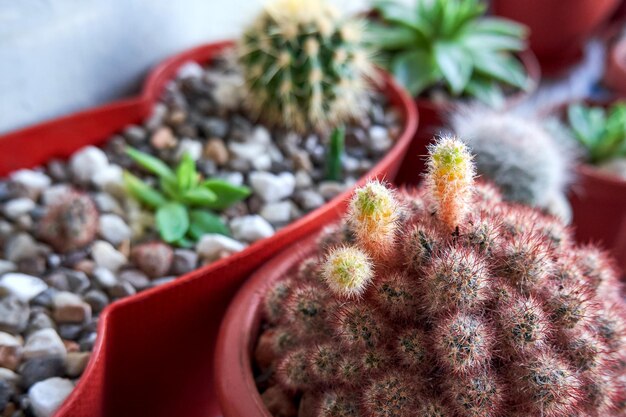
The true magic of Rebutia lies not just in its cultivation, but in the way it transforms its container into a living tableau. A shallow dish filled with a cluster of Rebutias becomes a miniature desert landscape, while a tall, tapered pot can turn a single specimen into a focal point of elegance. For a touch of whimsy, intersperse the cacti with small pebbles or a scattering of moss, creating a scene that feels plucked from a fairy tale. Color, too, plays a role. The vibrant hues of Rebutia blooms—crimson, gold, violet—can be echoed in the container’s glaze or the surrounding decor, forging a visual harmony that delights the eye. Outdoors, consider grouping containers at varying heights, or arranging them along a pathway to guide the viewer’s eye through a curated journey of texture and form. The key is to let the Rebutia take center stage, its spiny elegance serving as the anchor around which the rest of the design revolves.
FAQ
What is the best soil for Rebutia cacti?
Rebutia cacti thrive in well-draining soil, ideally a mix that includes perlite or pumice to create air pockets.
How often should I water my Rebutia?
Water your Rebutia only when the soil is completely dry, typically allowing for a thorough watering in spring and summer while minimizing it in winter.
What light conditions do Rebutia cacti prefer?
Rebutia cacti prefer bright, indirect sunlight, with protection from harsh afternoon rays.
What pests should I watch for when growing Rebutia?
Common pests include mealybugs and spider mites; maintaining a clean environment and regular inspections can help prevent infestations.


Leave a Reply