
Short Answer
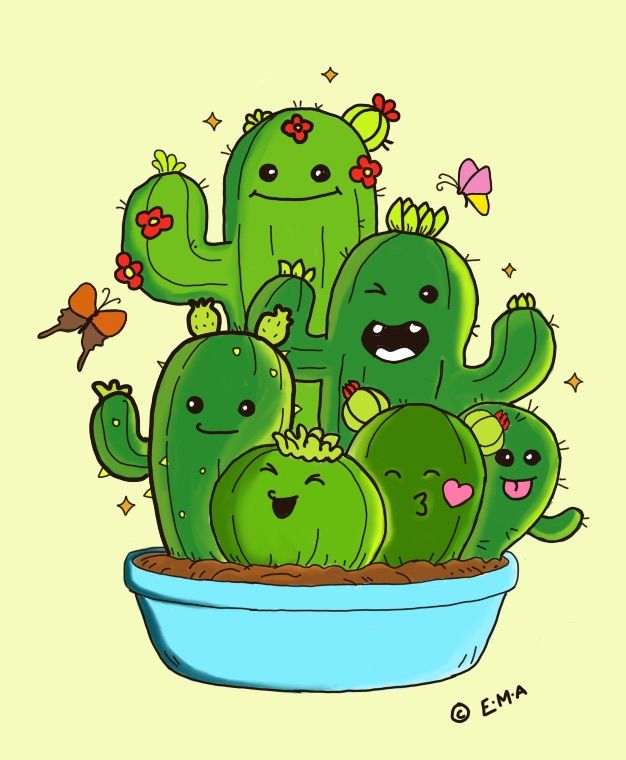
In the vast, pixelated expanse of digital art, few subjects captivate the imagination quite like the humble cactus. This prickly paradox—simultaneously forbidding and endearing—has burgeoned into a recurring muse for illustrators worldwide. Its resurgence isn’t merely a trend; it’s a cultural artifact, a visual shorthand for resilience, adaptability, and the quiet defiance of nature’s harshest conditions. But why does this spiky sentinel of the desert command such fervent artistic devotion? The answer lies not just in its aesthetic versatility but in the deeper narratives it embodies, from ecological metaphor to psychological symbolism.
The Cactus as a Canvas: A Study in Contrasts
Digital art thrives on juxtaposition, and the cactus is a masterclass in contradiction. Its geometric precision—sharp spines radiating from a rounded body—lends itself effortlessly to clean, modern compositions. Yet, beneath this structured exterior lies a paradox: a plant that thrives in aridity, its very existence a testament to survival against the odds. Illustrators exploit this duality, using the cactus as a vessel to explore themes of fragility and fortitude. A minimalist line drawing might emphasize its skeletal elegance, while a hyper-detailed render could highlight the delicate, almost lace-like patterns of its spines, transforming a desert dweller into a creature of ethereal beauty.
This interplay of harshness and softness mirrors the digital artist’s own struggle—balancing precision with creativity, control with spontaneity. The cactus, in its silent way, becomes a mirror. It reflects the artist’s journey: a process of pruning away the superfluous to reveal the core essence, much like the way a cactus sheds its lower leaves to conserve energy in a drought. The result? Art that feels both timeless and urgently contemporary.
Color Palettes and Emotional Resonance
No discussion of cactus art would be complete without diving into the chromatic alchemy that brings these illustrations to life. The desert’s palette—ochres, burnt siennas, and muted greens—is a natural starting point, but digital artists often subvert expectations. Neon spines against a monochrome backdrop evoke cyberpunk dystopias, while pastel-hued cacti in watercolor textures nod to whimsical, almost childlike wonder. The choice of palette isn’t arbitrary; it’s a deliberate emotional cue. Warm tones radiate energy and passion, while cooler shades suggest introspection or melancholy.
Consider the psychological weight of a deep emerald cactus against a stormy gray sky. The contrast isn’t just visual—it’s visceral. It whispers of growth amid adversity, a quiet rebellion against the bleakness of the world. Conversely, a cactus rendered in electric pink or acid yellow feels like a rebellion in itself, a defiant burst of life in a medium often criticized for its sterility. These color choices aren’t just aesthetic; they’re declarations. They challenge the viewer to see the cactus not as a passive object, but as an active participant in the narrative of resilience.
Texture and Tactility: The Illusion of Touch
Digital art is, by nature, intangible—but the best illustrations make you ache to reach out and trace a spine with your fingertip. The cactus is a master of this illusion. Through meticulous use of brush textures, lighting, and shading, artists imbue their work with a tactile quality that transcends the screen. A cactus rendered in oil-paint strokes feels velvety, its spines almost prickly to the touch, while a vector-style illustration might mimic the smooth, almost waxy surface of a succulent’s skin.
This obsession with texture speaks to a deeper human longing—for connection, for the tangible in a world increasingly dominated by the virtual. The cactus, with its paradoxical blend of softness and sharpness, becomes a stand-in for this yearning. It’s no coincidence that many digital cactus illustrations are paired with themes of nostalgia or comfort. The textures evoke memories of childhood desert explorations or the haptic feedback of a well-loved sketchbook. In an era where screens mediate nearly every interaction, the cactus becomes a tactile talisman, a reminder of the physical world’s enduring allure.
Symbolism and the Cactus as Cultural Archetype
Beyond its visual appeal, the cactus carries a weight of symbolism that resonates across cultures. In Mexican folklore, it’s a symbol of protection and sustenance, its fruit a lifeline in harsh terrains. In Japanese art, it might represent endurance or the fleeting nature of beauty. Digital artists, whether consciously or not, tap into this collective unconscious, using the cactus as a vessel for universal themes. A cactus blooming in full technicolor glory could symbolize hope in the face of climate change, while a wilted, skeletal specimen might critique the dehumanizing effects of modern life.
This symbolism isn’t static; it evolves with the artist’s intent. A feminist illustrator might depict a cactus with exaggerated, almost vulvic curves, reclaiming the phallic associations often imposed on desert flora. Another might use the cactus as a metaphor for the female body—prickly on the outside, nurturing within. The beauty of digital art lies in its malleability; the cactus is a blank slate, ready to absorb the artist’s subconscious and spit it back out in vibrant, thought-provoking form.
The Cactus in Motion: Animation and Interactivity
Static images are just the beginning. The cactus has also found a home in the realm of animation, where its spiky silhouette lends itself to playful, dynamic compositions. Looping GIFs of a cactus “blooming” in time-lapse fashion play on the plant’s slow but inevitable transformation. Interactive web art allows users to “water” a digital cactus, watching as its colors shift and its spines grow in response—a digital metaphor for care and growth.
These animated interpretations aren’t just eye candy; they’re a commentary on our relationship with nature in the digital age. They suggest a world where the boundaries between the organic and the synthetic blur. A cactus that glows in the dark or changes shape with a mouse click isn’t just a plant—it’s a cyborg, a fusion of the natural and the artificial. This hybridization reflects our own evolving identities, where the lines between human and machine, organic and digital, are increasingly indistinct. The cactus, in its quiet way, becomes a guide through this uncharted territory.
From Screen to Society: The Cactus as a Cultural Phenomenon
The cactus’s popularity in digital art isn’t an isolated trend—it’s part of a broader cultural fascination with desert aesthetics. From the rise of “cottagecore” to the resurgence of mid-century modernism, there’s a collective yearning for simplicity, for the uncluttered lines of a desert landscape. The cactus, with its no-nonsense attitude and striking silhouette, embodies this ethos. It’s a plant that asks for little but gives much in return: beauty, resilience, and a quiet reminder of nature’s quiet power.
This cultural moment also reflects a deeper reckoning with our environmental impact. As climate change reshapes landscapes, the cactus becomes a symbol of adaptation, a plant that thrives where others wither. Digital artists, often at the forefront of social commentary, use the cactus to interrogate our relationship with the planet. A cactus rendered in melting ice or a desert rendered in post-apocalyptic hues forces the viewer to confront uncomfortable truths about sustainability and survival.
In the end, the cactus in digital art is more than a trend—it’s a mirror. It reflects our fears, our hopes, our contradictions. It’s a plant that asks nothing of us but offers everything in return. And in a world that often feels fragmented and uncertain, that’s a rare and precious thing.
FAQ
What themes do cacti represent in digital art?
Cacti often symbolize resilience and adaptability, reflecting deeper narratives of survival and beauty.
What techniques do artists use to depict cacti?
Artists use various techniques, including contrasting color palettes, textures, and animations to evoke emotions.





Leave a Reply