
Short Answer
There’s something quietly revolutionary about placing a spiky, sun-baked sentinel of the desert—an Echinocactus—into the confines of a glass terrarium. It’s a juxtaposition that feels almost subversive: the untamed aridity of the Sonoran Desert, distilled into a miniature world where the cactus stands as both conqueror and curator of its own microcosm. These barrel cacti, with their ribbed, geometric perfection and slow but relentless growth, have long fascinated botanists, artists, and dreamers alike. But when we shrink their universe into a terrarium, we don’t just observe a plant—we engage in a dialogue between scale and spectacle, between the wild and the warded.
The Allure of the Overgrown: Why Large Echinocactus Captivate Us
There’s an undeniable magnetism to a mature Echinocactus grusonii or Echinocactus horizonthalonius when it dominates a terrarium. These cacti, often referred to as “mother-in-law’s cushion” for their formidable spines, grow with a deliberate grandeur, their ribs spiraling outward like the grooves of a vinyl record playing a silent hymn to resilience. In nature, they command attention, standing sentinel in landscapes where water is a fickle guest. In a terrarium, they become the unspoken sovereign of a glass kingdom, their presence both grounding and transcendent.
The fascination isn’t merely aesthetic. It’s a psychological pull—an unconscious reverence for endurance. These cacti thrive where others wither, their slow metabolism a masterclass in patience. When we cultivate them in terrariums, we’re not just replicating their environment; we’re paying homage to their tenacity. The terrarium becomes a shrine to their survival, a controlled chaos where the cactus’s dominance is both celebrated and contained.
Choosing the Right Terrarium: Glass as a Canvas for Thorny Artistry
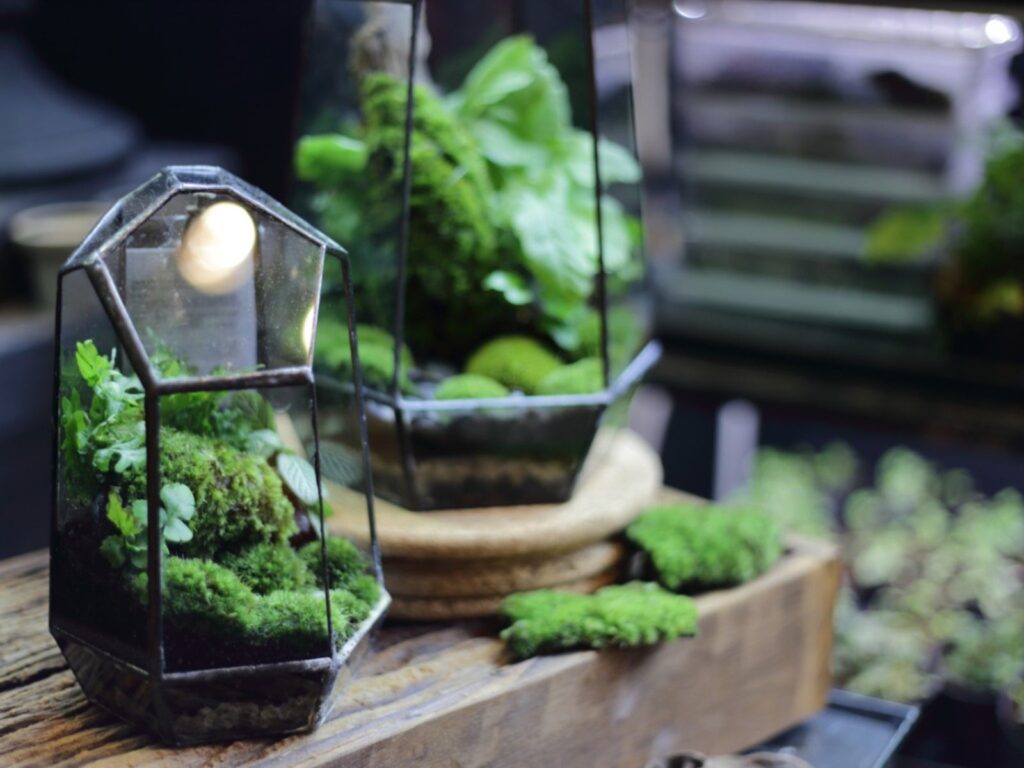
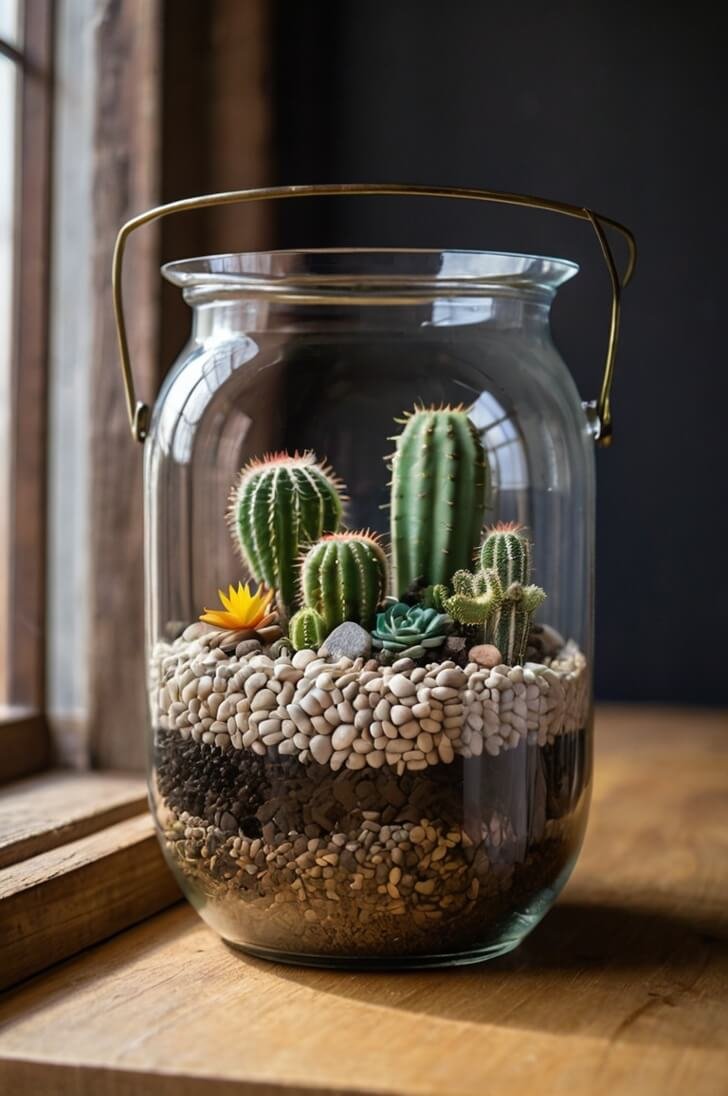
Not all terrariums are equal when it comes to housing a large Echinocactus. The vessel must be more than a container—it must be a collaborator in the cactus’s slow-motion performance. A tall, narrow terrarium is ill-suited for these barrel-shaped giants; their growth is horizontal, their presence demands space to sprawl. Instead, opt for a wide, shallow dish or a broad, low-profile terrarium with ample headroom for their eventual girth. Glass, with its transparency and weight, becomes the perfect medium—allowing light to flood in while the cactus’s spines cast intricate shadows, turning the terrarium into a living diorama.
Consider the terrarium’s opening as well. A narrow neck might restrict airflow, creating a stagnant microclimate that could invite rot. A wide-mouthed terrarium, on the other hand, allows for better ventilation and easier access for pruning or repositioning the cactus as it grows. The material matters too—clear glass enhances visibility, while frosted or tinted glass can add a layer of mystique, softening the cactus’s formidable silhouette.
Substrate Alchemy: Crafting a Desert in Miniature
The substrate in an Echinocactus terrarium isn’t just soil—it’s a foundation for a desert ecosystem. These cacti despise soggy roots, so the mix must be porous, gritty, and fast-draining. A blend of coarse sand, perlite, and a smattering of pumice creates the ideal environment, mimicking the loose, mineral-rich soils of their native habitats. Avoid organic matter like peat or coconut coir; while they retain moisture, they also encourage rot in these drought-adapted species.
Layering is key. Start with a base of coarse gravel or expanded clay pellets for drainage, then add the substrate mix. The depth should accommodate the cactus’s roots without suffocating them—typically 3 to 4 inches of soil is sufficient for a large specimen. For an added touch of authenticity, sprinkle a thin layer of fine gravel or crushed granite on top. This not only enhances the aesthetic but also prevents soil compaction and deters pests.
Light: The Invisible Sculptor of Spines
Light is the sculptor of an Echinocactus’s form. In the wild, these cacti bask in the relentless sun, their ribs stretching toward the light in a slow, rhythmic dance. In a terrarium, replicating this intensity is crucial. A south-facing window is ideal, but artificial grow lights can step in when natural light is scarce. LED grow lights with a spectrum rich in red and blue wavelengths will encourage compact, healthy growth, while full-spectrum bulbs can mimic the sun’s natural hues.
Position the light source carefully. Too close, and the cactus may etiolate, its spines elongating in a desperate search for light. Too far, and it will grow stunted, its ribs remaining tightly packed. Rotate the terrarium regularly to ensure even exposure, preventing the cactus from leaning toward the light like a sunflower chasing the sun. Over time, you’ll notice the subtle shifts in its form—a testament to the light’s invisible hand.
Water: The Delicate Dance of Scarcity and Sufficiency
Watering an Echinocactus in a terrarium is less about hydration and more about restraint. These cacti are built for drought, their thick, waxy epidermis minimizing water loss. Overwatering is the fastest path to rot, so the golden rule is: when in doubt, don’t. A thorough soak every 3 to 4 weeks is usually sufficient, allowing the substrate to dry out completely between waterings. In winter, reduce the frequency further—these cacti enter a semi-dormant state, their growth slowing to a near halt.
Observe the cactus’s appearance as your guide. A plump, firm stem indicates health, while wrinkles or soft spots suggest dehydration or rot. The terrarium’s environment plays a role too—high humidity or poor airflow can exacerbate moisture issues. If condensation lingers on the glass, it’s a sign to hold off on watering. Patience is the gardener’s greatest tool here; the cactus’s slow, deliberate growth is part of its charm.
Pruning and Maintenance: Taming the Wild Without Stifling It
Even in a terrarium, an Echinocactus will grow—slowly, but inevitably. Pruning isn’t about suppression; it’s about refinement. Remove dead or damaged spines with sterilized tweezers, taking care not to disturb the healthy ones. If the cactus becomes too large for its terrarium, consider repotting it into a slightly larger vessel, but resist the urge to overpot. These cacti prefer snug conditions, their roots thriving when slightly root-bound.
Maintenance extends beyond the cactus itself. Dust can accumulate on the spines, dulling their sharpness and obscuring their color. Gently brush them with a soft-bristled brush or use a hairdryer on a cool setting to lift the dust. Check for pests like mealybugs or scale, which can hitch a ride on the cactus or the terrarium’s glass. Early detection is key—these invaders multiply quickly and can devastate a carefully curated ecosystem.
The Terrarium as a Mirror: What Large Echinocactus Reveal About Ourselves
There’s a deeper layer to cultivating large Echinocactus in terrariums—a mirror held up to our own relationship with control and chaos. We seek to contain the wild, to distill its essence into something manageable, yet in doing so, we often find ourselves in awe of its unyielding nature. The cactus doesn’t bend to our will; it grows on its own terms, its spines a reminder of boundaries that cannot be crossed.
Perhaps that’s why these terrariums resonate so deeply. They are not just displays of horticultural skill; they are meditations on resilience, on the beauty of endurance. In a world that often feels fragmented, the Echinocactus stands as a symbol of wholeness—a reminder that even in confinement, life finds a way to thrive.
FAQ
How often should I water my Echinocactus in a terrarium?
Water every 3 to 4 weeks, allowing the substrate to dry out completely between waterings.
What kind of terrarium is best for large Echinocactus?
A wide, shallow terrarium is ideal to accommodate their horizontal growth.
What substrate should I use for Echinocactus?
Use a mix of coarse sand, perlite, and pumice to ensure good drainage.
Leave a Reply