

Short Answer
In the vast, sun-scorched expanses of the desert, where life clings to existence with tenacious grit, the Ferocactus stands as a silent sentinel of endurance. Its barrel-shaped silhouette, adorned with fierce, hooked spines, is more than a mere botanical curiosity—it is a living testament to the unyielding spirit of resilience. To those who pause and observe, this cactus whispers ancient truths about strength, adaptability, and the quiet power of persistence. But why does this spiky sentinel captivate our imagination so deeply? Perhaps it is because, in its thorny embrace, we see a reflection of our own struggles and triumphs.
The Ferocactus: A Paradox of Fragility and Fortitude
The Ferocactus is a master of contradiction. Externally, it is a fortress of spines, a seemingly impenetrable barrier against the harshest elements. Yet, beneath its armored exterior lies a core of remarkable vulnerability—soft, succulent flesh that stores precious water, a lifeline in arid landscapes. This duality mirrors the human experience: we, too, are both shield and softness, strength and sensitivity. The cactus does not hide its fragility; it integrates it into its very being, teaching us that true resilience is not about being unbreakable but about thriving despite our vulnerabilities.
Consider the Ferocactus’s ability to absorb and retain water. In the desert, where rainfall is a rare and fleeting gift, this cactus has evolved to hoard every precious drop. Its ribbed structure expands and contracts like a bellows, storing water in its fleshy interior while minimizing surface area to reduce evaporation. This ingenious adaptation is a metaphor for emotional resilience—holding onto what nourishes us, even when the world around us seems parched and unforgiving.
Spines as Symbols: The Armor of Adaptation
The spines of the Ferocactus are not merely defensive tools; they are intricate symbols of adaptation. Unlike the delicate petals of a rose or the broad leaves of a maple, these spines serve multiple purposes. They deter predators, of course, but they also cast shadows that create microclimates of coolness around the cactus, reducing water loss. In this way, the spines are both shield and shade, a dual role that speaks to the multifaceted nature of resilience.
Metaphorically, the spines can be seen as the challenges we face—each one a reminder of the obstacles that shape us. Yet, just as the Ferocactus uses its spines to thrive, we, too, can transform our struggles into tools for growth. The cactus does not resent its spines; it utilizes them. Similarly, resilience is not about avoiding hardship but about learning to wield our experiences as instruments of strength.
Roots of Resilience: The Invisible Network
Beneath the desert floor, the Ferocactus’s roots sprawl like a vast, subterranean web, anchoring it to the earth while seeking out the faintest traces of moisture. This hidden network is a powerful reminder that resilience is not always visible. Often, the deepest strength lies beneath the surface, in the unseen connections that sustain us. The roots of the Ferocactus teach us that true endurance is built on a foundation of patience and persistence—qualities that are easy to overlook in a world that celebrates instant gratification.
In our own lives, we may not always see the roots of our resilience—the quiet moments of reflection, the small acts of self-care, the relationships that ground us. Yet, like the Ferocactus, we rely on these invisible networks to weather the storms. The cactus does not rush its growth; it grows deliberately, one ring at a time. Similarly, resilience is not a sprint but a slow, steady accumulation of wisdom and experience.
The Blooming of Perseverance: Flowers as a Reward
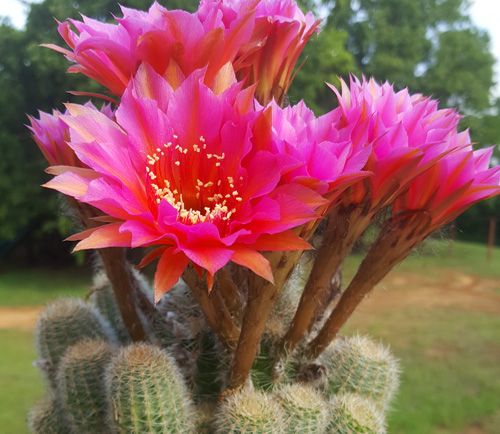
After years of patient growth, the Ferocactus rewards its perseverance with a spectacular display of color. Its vibrant flowers, bursting forth from the crown of spines, are a fleeting but breathtaking spectacle. This bloom is not just a reward for the cactus; it is a symbol of hope and renewal. In the desert, where life is often harsh and unforgiving, the appearance of these flowers is a reminder that beauty and resilience go hand in hand.
For humans, too, the rewards of perseverance are often the most profound. The moments of joy, creativity, and connection that follow periods of struggle are not just coincidences—they are the blossoms of our resilience. The Ferocactus does not bloom every year; it blooms when it is ready, teaching us that patience is not passive waiting but an active cultivation of strength. When we finally emerge from our own deserts, the world around us is transformed by the colors of our perseverance.
Ecological Resilience: A Lesson in Interdependence
The Ferocactus does not exist in isolation. It is part of a delicate ecological tapestry, interacting with pollinators, birds, and other desert dwellers. Its flowers attract bees and hummingbirds, while its fruits provide sustenance for creatures in need. This interdependence is a lesson in the power of community. Resilience, in nature as in life, is not a solo endeavor. It is a dance of give and take, a reminder that our strength is amplified when we support and are supported by others.
In a world that often glorifies individualism, the Ferocactus offers a different narrative. It thrives because it is part of a larger ecosystem, and so do we. The cactus does not hoard its resources; it shares them, ensuring the survival of the many. This is the essence of true resilience—knowing that our strength is not diminished by lifting others but is, in fact, magnified.
The Ferocactus in Culture: A Symbol Across Civilizations
Throughout history, the Ferocactus has been more than a plant—it has been a symbol. Indigenous cultures of the Americas have long revered it as a guardian of the desert, a source of food, and a spiritual emblem. Its resilience has been woven into myths and legends, where it often represents endurance, protection, and the cyclical nature of life. In modern times, the Ferocactus continues to captivate artists, writers, and thinkers, who see in its spiny form a metaphor for the human spirit’s unyielding nature.
Why does this cactus hold such a powerful place in our collective imagination? Perhaps because it embodies a truth we all intuit but rarely articulate: that strength is not the absence of vulnerability but the courage to face it. The Ferocactus does not ask to be admired from afar; it demands to be seen in all its complexity—thorny, tender, and utterly resilient.


Leave a Reply