
Short Answer
In the quiet, sun-dappled world of cacti cultivation, few species captivate the soul quite like the Lophophora genus. These enigmatic, button-like plants—often called “peyote” in cultural lore—are not merely succulents; they are living artifacts of resilience, patience, and the slow, deliberate dance between earth and sky. To coax their first tender roots from the soil is to participate in a ritual older than agriculture itself, a practice where timing is not just a suggestion but a sacred covenant with the seasons. Sowing Lophophora seeds at the wrong hour is like planting a whisper in a hurricane; the elements must align, the stars must nod in approval, and the gardener must become a student of the subtle, shifting moods of nature.
The Cosmic Choreography of Germination: Why Seasonal Timing is Non-Negotiable
Lophophora seeds, those microscopic marvels of botanical engineering, are not designed for haste. They are the tortoises of the plant kingdom, prizing endurance over speed. The best time to sow them is not when the calendar flips to spring, but when the earth itself begins to stir from its winter slumber—a phenomenon known as vernal awakening. This period, typically spanning late winter to early spring, is when soil temperatures hover between 20°C and 25°C (68°F–77°F), a thermal embrace that mimics the conditions of their native habitats in the Chihuahuan Desert. Too early, and the seeds may rot in cold, damp soil; too late, and the scorching summer sun will parch them before they’ve had a chance to drink.
The interplay between temperature and moisture is the invisible hand guiding germination. Lophophora seeds require a delicate balance: enough warmth to signal life, but not so much that evaporation outpaces absorption. Think of it as a courtship dance—each step must be measured, each gesture deliberate. The gardener’s role is to act as the choreographer, ensuring the environment performs its part flawlessly.
The Alchemy of Light: Mimicking the Desert’s Golden Hour
Light is the sculptor of growth, and for Lophophora, it is no less critical than water or soil. These seeds are not sun-worshippers like their spiky cousins; they thrive in the dappled, indirect light of a desert understory, where the sun’s rays are filtered through the skeletal branches of mesquite or the protective canopy of grasses. Direct, unrelenting sunlight is their enemy, a force that can desiccate them before their first true leaves unfurl. The ideal setup is a diaphanous veil of shade cloth or a north-facing windowsill, where the light is soft and diffused, like sunlight passing through the veins of a leaf.
Artificial grow lights can step in when nature’s bounty is scarce, but they must be calibrated with precision. A 12-hour photoperiod—mimicking the equinoctial balance of day and night—is the golden rule. Too much light, and the seeds will bolt toward maturity prematurely; too little, and they will languish in a vegetative stupor. The grower must become a timekeeper, tracking the sun’s arc across the sky with the same reverence as an ancient sundial maker.
The Soil’s Secret Language: Crafting a Bed for the Seeds’ First Breath
Lophophora seeds are not picky, but they are discerning. They demand a medium that is porous enough to prevent waterlogging yet retentive enough to hold moisture during their fragile germination phase. The ideal substrate is a blend of inorganic and organic matter—a loam of whispers—where coarse sand, perlite, and a whisper of peat moss or coconut coir create a structure that crumbles like ancient adobe under gentle pressure. The pH must hover between 6.5 and 7.5, a neutral zone where nutrients are neither locked away nor leached into oblivion.
Sterilization is the unsung hero of this process. A 10-minute bath in boiling water or a light roasting in the oven (120°C for 30 minutes) will purge the soil of fungal interlopers and bacterial marauders that might feast on tender seedlings. The gardener must don the mantle of a chemist, ensuring every ingredient is pure, every measurement exact. This is not gardening; it is alchemy, where the right mixture can transmute inert dust into life.
The Waiting Game: Patience as the Gardener’s Greatest Virtue
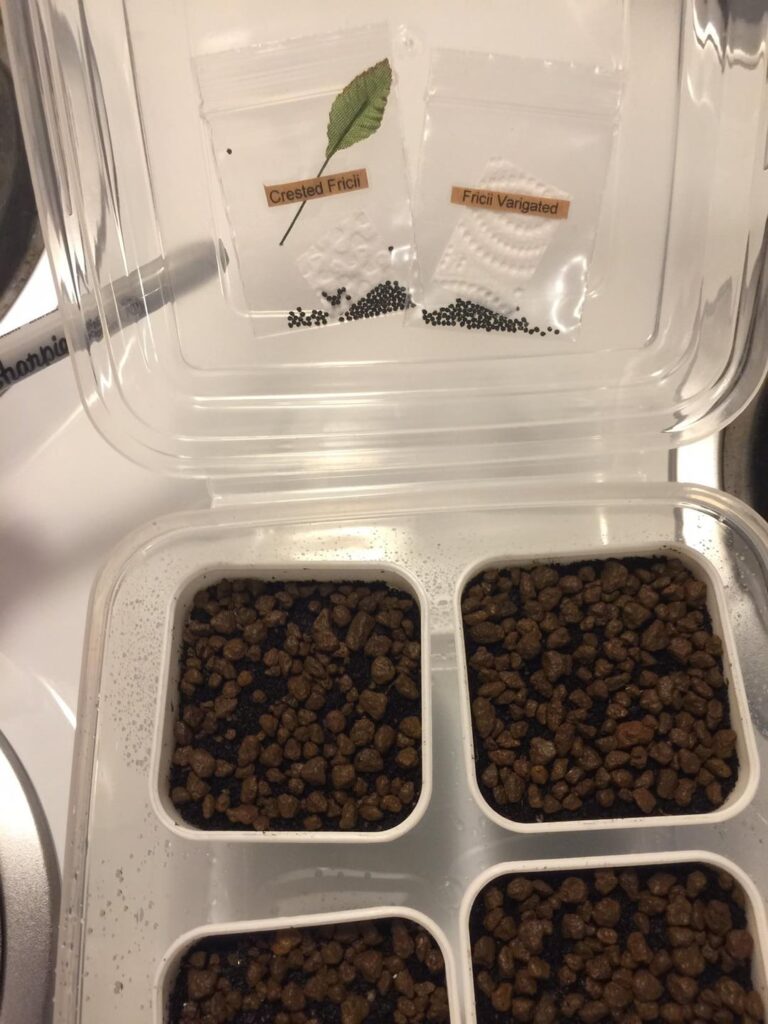
Germination is not an event; it is a slow unraveling, a process that can take anywhere from two weeks to three months. The seeds may lie dormant, biding their time like seeds in a fairy tale, until the conditions are just right. The gardener’s role is to resist the urge to dig, to disturb, to coax. Each day, the soil must be misted—not drenched—with a fine spray, like morning dew settling on a spider’s web. The container should be covered with a humidity dome or a sheet of clear plastic, creating a microclimate where moisture lingers like a held breath.
When the first signs appear—a tiny, pinkish-purple hook breaking the soil’s surface—it is time to remove the cover and introduce the seedlings to the world. But even now, the pace must be slow. The young plants must acclimate to the air’s dryness gradually, lest they shrivel like parchment in a flame. This is where many fail, mistaking eagerness for care. True mastery lies in the art of restraint.
The Seasons’ Sway: Adapting to Microclimates and Unpredictable Skies
Not all climates are kind to Lophophora, and the gardener must become a student of local idiosyncrasies. In regions where winters are mild, sowing can begin as early as February, provided the soil is warm enough. In harsher climes, a heated propagator or a sunny windowsill becomes essential. The key is to observe the soil’s temperature, not the air’s. A thermometer buried an inch deep will reveal the truth, while a weather app’s forecast may lie.
Summer’s heat can be a double-edged sword. While warmth accelerates germination, it also increases the risk of damping-off disease, a fungal assassin that strikes when humidity is high and air circulation is poor. The solution? A fan set to low, circulating air like a gentle breeze through a canyon. The seedlings must stand firm, their stems thickened by the struggle, their roots deepened by the challenge.
The Reward: A Living Testament to Timing and Tenacity
When the first true leaves—those iconic, ribbed crowns—emerge, it is a moment of quiet triumph. The seeds have not just sprouted; they have begun their lifelong dialogue with the sun, the soil, and the seasons. Each plant is a microcosm of patience, a living metaphor for the slow, deliberate work of creation. To grow Lophophora is to participate in an ancient pact between human and nature, where the gardener learns to listen as much as to act.
The best time to sow these seeds is not a date on a calendar, but a feeling—a sense that the earth is ready, the light is kind, and the gardener is prepared to wait. In a world that demands instant gratification, Lophophora teaches the value of the unhurried. It is not a plant for the impatient, but for those who understand that the most profound growth happens in the shadows, where time moves like honey and every small step is a victory.
FAQ
What is the best time to sow Lophophora seeds?
The best time to sow Lophophora seeds is during the vernal awakening, typically from late winter to early spring when soil temperatures are between 20°C and 25°C.
What type of light do Lophophora seeds need?
Lophophora seeds thrive in dappled, indirect light rather than direct sunlight, which can desiccate them.
How long does it take for Lophophora seeds to germinate?
Germination can take anywhere from two weeks to three months, depending on conditions.



Leave a Reply