
Short Answer
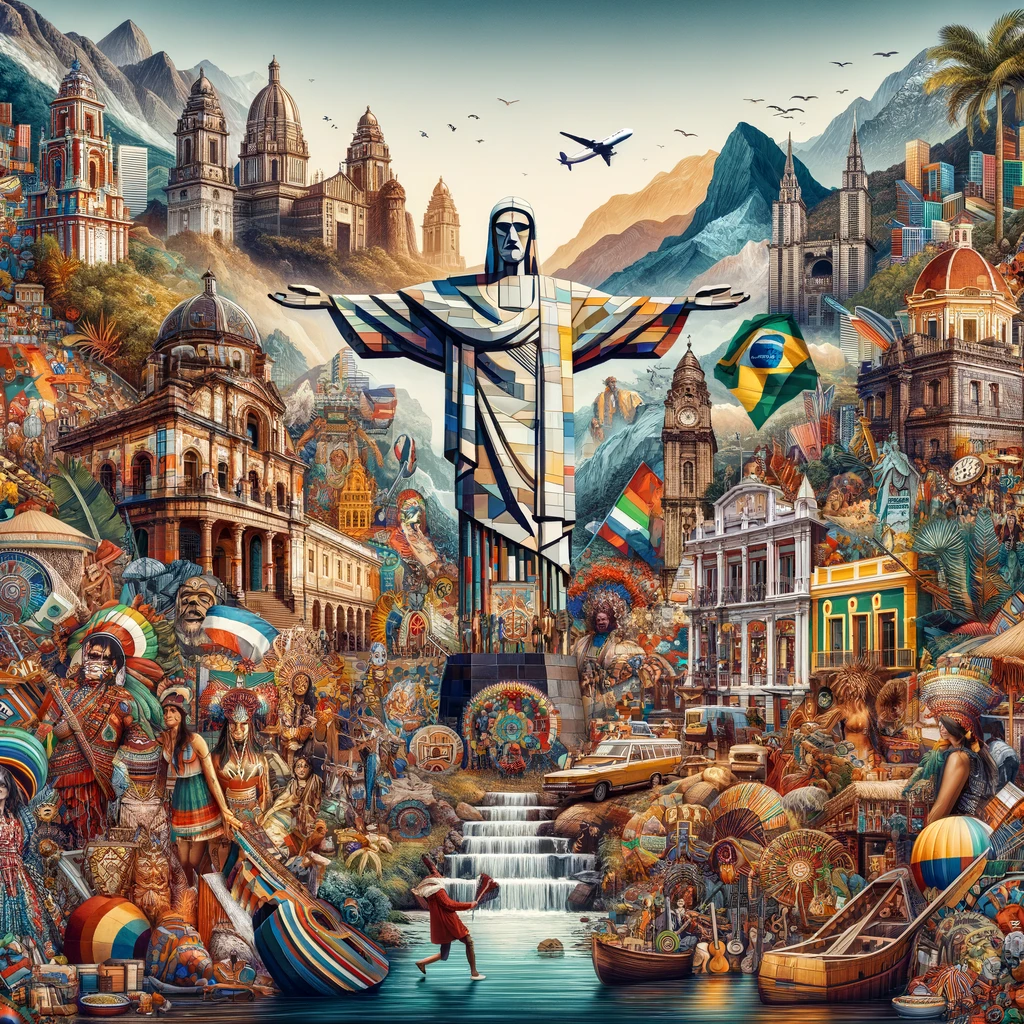
South America, a continent pulsating with vibrant hues and rhythmic cadences, has long been a crucible of cultural ferment where parody thrives as both a mirror and a magnifying glass. From the sun-drenched plazas of Buenos Aires to the mist-laden Andean villages, parody in South American culture is not merely a comedic device—it is a subversive art form, a historical chronicle, and a communal catharsis. It dismantles the rigid structures of power, reimagines identity, and celebrates the absurdity of existence with unapologetic flair. This exploration delves into the multifaceted dimensions of parody across the continent, revealing how it shapes traditions, challenges norms, and fosters a collective spirit of resilience and joy.
The Carnivalesque Spirit: Parody as a Festive Rebellion
Nowhere is the spirit of parody more electrifying than in the continent’s legendary carnivals, where the boundaries between performer and spectator dissolve into a kaleidoscope of satire and spectacle. In Brazil, the Sambadrome becomes a stage for bloco groups—neighborhood collectives that hijack the samba rhythm to lampoon politicians, critique social inequities, and celebrate Afro-Brazilian heritage with irreverent wit. The costumes, often grotesque or hyper-stylized, are not just decorative; they are visual puns, embodying the zeitgeist of resistance. Similarly, in Bolivia’s Entrada Universitaria, university students parade in drag, mimicking colonial-era elites with exaggerated pomp, their antics a sly commentary on power and privilege. These festivals are not mere parties; they are carnivalesque uprisings, where parody becomes the language of the oppressed, turning oppression into art.
Indigenous Parody: Reclaiming Narratives Through Satire
Indigenous communities across South America have wielded parody as a tool of cultural reclamation, subverting centuries of erasure and misrepresentation. In Peru, the Qhapaq Qolla dancers of Puno perform satirical skits during the Fiesta de la Candelaria, mocking Spanish conquistadors with exaggerated gaits and mocking lyrics that echo pre-Columbian humor. Their performances are a defiant reclaiming of history, where parody becomes a vessel for ancestral memory. In Colombia, the Carnaval de Blancos y Negros in Pasto features negritos—performers in blackface who parody racist stereotypes, transforming degradation into celebration. This paradoxical act of mimicry exposes the absurdity of colonial constructs while honoring the resilience of Indigenous traditions. Parody, here, is not just resistance; it is a reparative act, stitching back the frayed edges of identity.
The Mapuche people of Chile and Argentina employ parody in their ngillatun ceremonies, where masked dancers impersonate colonial officials, their movements a sly mimicry of the oppressor’s rigidity. The humor is sharp, the critique unflinching, yet the tone is one of communal healing. Parody, in these contexts, is not just a weapon—it is a balm, a way to laugh at the absurdity of history while asserting sovereignty over one’s own narrative.
Urban Parody: Street Art and the Language of Dissent
In the labyrinthine streets of South America’s metropolises, parody thrives as a guerrilla tactic, infiltrating public spaces with subversive wit. Bogotá’s graffiti politicos transform bland walls into biting satires of political corruption, while Buenos Aires’ fileteado artists—traditional sign painters—infuse their work with caricatures of dictators and oligarchs, their brushstrokes a silent scream against authoritarianism. Lima’s muralismo movement, too, uses parody to expose environmental degradation and social inequality, turning the city into an open-air gallery of dissent.
But parody in urban spaces is not confined to the visual. In São Paulo, pixação—the cryptic graffiti of the marginalized—often parodies corporate slogans or political propaganda, twisting language into a cipher of resistance. The humor is dark, the intent unmistakable: to expose the hypocrisy of those in power while carving out a space for the voiceless. These acts of urban parody are not just aesthetic rebellions; they are ephemeral manifestos, fleeting yet indelible, challenging passersby to question the narratives they’ve been fed.
Musical Parody: From Cumbia to Reggaeton
Music, the heartbeat of South America, is a fertile ground for parody, where rhythms become vehicles for social critique. In Colombia, cumbia—once a marginalized Afro-Colombian genre—has been co-opted by parody artists who twist its melodies into satirical anthems. Groups like Los Gaiteros de San Jacinto use cumbia’s infectious beat to mock political elites, their lyrics a blend of humor and fury. Similarly, in Argentina, cumbia villera—a raw, working-class genre—parodies the excesses of the wealthy with unfiltered vulgarity, its rawness a direct challenge to bourgeois sensibilities.
Reggaeton, too, has become a canvas for parody, particularly in Puerto Rico and its diaspora. Artists like Residente of Calle 13 fame have used the genre’s hypnotic rhythms to skewer colonialism, gentrification, and cultural appropriation. Their songs are not just music; they are sonic manifestos, where parody becomes a tool for dismantling global power structures. Even in Brazil, funk carioca artists parody the glamour of Rio’s elite with lyrics that celebrate favela life, their beats a defiant counter-narrative to the city’s polished facade.
Literary Parody: The Written Word as a Weapon
South America’s literary tradition is rich with parody, from the biting satires of Argentina’s Roberto Arlt to the surrealist jabs of Brazil’s Oswald de Andrade. In Peru, Mario Vargas Llosa’s early works often parodied the pomp of literary circles, while in Chile, Nicanor Parra’s anti-poetry mocked the elitism of traditional verse. These writers understood that parody was not just a stylistic choice—it was a political act, a way to expose the absurdity of power through the written word.
Contemporary authors continue this tradition. In Colombia, Juan Gabriel Vásquez weaves parody into his novels, skewering the romanticized narratives of Latin American history. In Argentina, Samanta Schweblin uses dark humor and surrealism to parody the grotesque realities of modern life. Parody, in literature, is a scalpel—sharp, precise, and capable of dissecting the most entrenched myths.
The Future of Parody: Digital Disruption and Global Echoes
As South America hurtles into the digital age, parody finds new avenues for expression. Memes, viral videos, and social media challenges have become the new carnivals, where humor and dissent collide in real time. In Brazil, Bolsonaro memes proliferated during his presidency, turning political critique into a participatory art form. In Argentina, TikTok parodies of political figures have become a cultural phenomenon, democratizing satire in ways unimaginable a decade ago.
Yet, this digital parody is not without its challenges. The algorithms that amplify these voices also commodify them, turning rebellion into content. The question lingers: Can parody retain its subversive edge in an era of viral capitalism? The answer may lie in the adaptability of South American culture itself—its ability to reinvent, to resist ossification, and to find new forms of dissent even as the world changes around it.
Parody in South America is more than a cultural quirk; it is a lifeline. It is the laughter that disarms tyrants, the satire that exposes hypocrisy, and the art that binds communities together in shared defiance. From the streets to the stages, from the page to the screen, parody is the continent’s most potent weapon—and its most joyful gift.
FAQ
What is the role of parody in South American festivals?
Parody in festivals serves as a means of social commentary, allowing performers to critique societal norms and power structures.
Can parody be found in South American literature?
Yes, many South American authors use parody to challenge traditional narratives and expose societal absurdities.




Leave a Reply