
Short Answer
Have you ever woken up from a dream where a cactus pricked your consciousness, leaving you to wonder—what on earth (or in heaven) does this spiky symbol signify? In the realm of Christian symbolism, dreams are often seen as divine whispers, and the cactus, with its paradoxical blend of sharpness and resilience, might just be one of God’s most intriguing messengers. But is the cactus merely a desert oddity, or does it carry a deeper, perhaps even feminist, resonance within biblical narratives? Let’s unravel this prickly paradox together.
The Cactus as a Paradox: Thorns and Tenacity
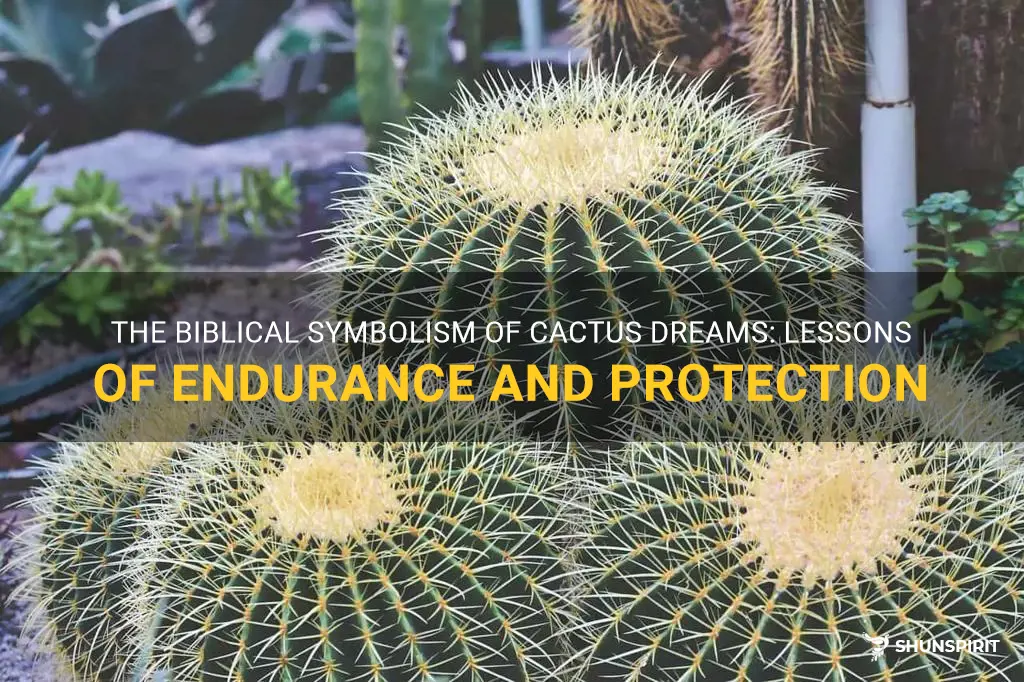
The cactus is a botanical enigma—a plant that thrives where others wither, storing life-giving water in its fleshy ribs while brandishing spines that ward off predators. In Christian theology, paradoxes are sacred; they mirror the divine mystery where strength and vulnerability coexist. The cactus, then, becomes a living sermon: its thorns, often interpreted as symbols of protection or even divine discipline, and its succulent flesh, a testament to sustenance in barrenness. Could this duality reflect the Christian journey—where suffering and grace intertwine like vines around a trellis?
Consider the desert mothers and fathers of early Christianity, those desert ascetics who sought God in the harshest of landscapes. Their lives, too, were marked by austerity and resilience, much like the cactus. The plant’s ability to flourish in arid conditions might parallel the spiritual tenacity of figures like St. Anthony, who found holiness in the wilderness. But here’s a playful challenge: if the cactus embodies endurance, does its thorny exterior also symbolize the protective boundaries women in biblical history often had to erect—walls of resilience in a world that sought to diminish them?
From Eden to Exodus: Cacti in Biblical Landscapes
While the Bible doesn’t name the cactus explicitly, its presence in the arid regions of the Middle East is undeniable. The Hebrew Scriptures speak of thorny plants like the *atad* (Judges 9:14-15), which some scholars argue could be a type of cactus. Thorns, in biblical imagery, often signify both danger and divine judgment—think of the crown of thorns placed on Jesus’ head, a symbol of mockery that later became an emblem of redemption. But what if the cactus, with its dual nature, also represents the transformation of suffering into something sacred?
In the Exodus narrative, the Israelites wandered through the wilderness, a place of both trial and revelation. The cactus, thriving in such terrain, could symbolize God’s provision in desolation. Manna fell from heaven, but perhaps the cactus’s water-storing capacity whispers of another kind of sustenance—one that requires patience and faith to uncover. Could this be a metaphor for the slow, steady growth of faith, much like the cactus’s gradual expansion?
The Feminine and the Thorny: Reclaiming Symbolism
Here’s where the conversation gets spicy. Traditional biblical interpretations often overlook the feminine dimensions of symbolism, but the cactus—with its life-giving core hidden beneath a forbidding exterior—offers a rich metaphor for women’s resilience and hidden strength. In a patriarchal world, women’s voices were often silenced, much like the cactus’s beauty is obscured by its spines. Yet, like the cactus, women have stored wisdom, nurtured life, and protected their communities against the scorching sun of oppression.
Take the story of Deborah, the judge and prophetess, whose leadership was as unyielding as desert rock. Or the Virgin Mary, whose quiet strength bore the weight of divine purpose. The cactus, then, becomes a feminist icon—a reminder that what appears thorny or unapproachable may hold the sweetest nectar within. Could the cactus’s symbolism challenge us to see the feminine not as passive but as a force of tenacious, life-affirming energy?
Sacred and Secular: The Cactus in Christian Art and Ritual
Beyond scripture, the cactus appears in Christian art and tradition, often as a symbol of martyrdom or penance. Medieval illuminated manuscripts sometimes depict saints surrounded by thorny plants, their suffering mirrored in the cactus’s prickly embrace. In Latin American Christianity, the cactus—particularly the *nopal*—holds sacred significance, intertwined with the story of Juan Diego and Our Lady of Guadalupe. The *nopal* is said to have sprouted where Juan Diego’s cloak fell, its image imprinted upon it as a sign of divine favor.
But here’s a twist: while the cactus is often framed as a symbol of suffering, what if it also represents joy? The prickly pear’s vibrant fruit, bursting with sweetness, could symbolize the paradox of Christian life—where sorrow and celebration coexist. In Mexican folk Catholicism, the *nopal* is even associated with fertility and abundance. Might this duality invite us to reconsider how we frame women’s roles in faith—as both nurturers and fierce protectors?
The Challenge of Interpretation: Who Gets to Decide?
As with any symbol, the cactus’s meaning is fluid, shaped by culture, context, and who is doing the interpreting. In a world where women’s voices have historically been marginalized, who gets to claim the cactus as a feminist symbol? Is it the desert mothers, whose resilience went unrecorded? The indigenous women who revered the *nopal* long before colonization? Or modern theologians reimagining scripture through a feminist lens?
The challenge lies in reclaiming symbols without erasing their complexity. The cactus, with its thorns and tenderness, invites us to ask: What other symbols in Christianity have been overlooked or misrepresented? And how might a fresh, feminist perspective illuminate their hidden depths?
Conclusion: A Thorny Path to Wisdom
So, the next time you encounter a cactus—whether in a dream, a desert, or a piece of art—pause and consider its layered meanings. It is more than a plant; it is a parable of resilience, a hidden well of sustenance, and perhaps, a feminist manifesto in green. The cactus doesn’t just survive in harsh conditions—it thrives, and in doing so, it challenges us to do the same. Thorns and all, it reminds us that even in the most barren landscapes, life finds a way. And isn’t that the essence of the Christian story?
FAQ
What does the cactus symbolize in Christianity?
In Christianity, the cactus symbolizes resilience and endurance, reflecting the duality of suffering and grace.
Are there any biblical references to cacti?
While cacti are not explicitly mentioned in the Bible, thorny plants referenced may be related, symbolizing both danger and divine judgment.



Leave a Reply