
Short Answer
Imagine a plant so resilient it thrives where others wither, its silhouette sharp against the merciless sun, its spines a paradox of defense and allure. The cactus—this architectural marvel of the arid world—has long captivated artists, not merely as a subject, but as a symbol of tenacity and transformation. Whether rendered in the meticulous realism of a botanical study or the bold strokes of a stylized sketch, drawing a cactus is an exercise in patience, observation, and creative courage. This guide isn’t just about lines and shadows; it’s an invitation to rethink how we perceive form, texture, and life itself through the lens of one of nature’s most enigmatic survivors.
The Anatomy of Resilience: Understanding Cactus Structure Before You Draw
Before your pencil meets paper, pause. Observe. A cactus is not a mere blob with spikes—it’s a living sculpture of geometry and biology. Start with the ribs: those vertical ridges that spiral up the stem like the threads of a screw, a design that distributes water efficiently and channels sunlight. Notice how these ribs create valleys where shadows pool, and peaks where light dances. Then there are the areoles—those small, woolly cushions from which spines, flowers, and new growth emerge. Each areole is a microcosm of potential. When sketching, treat these elements not as afterthoughts, but as the skeleton of your drawing. A misplaced areole can skew the entire silhouette. Use light construction lines to map their placement before committing to ink or tone. Think of it as building a city: the ribs are the streets, the areoles are the plazas, and the spines are the streetlamps—each element must align with purpose.
From Observation to Interpretation: Mastering Realistic Cactus Rendering
Realism demands more than accuracy—it demands reverence. Begin with a light, gestural sketch to capture the overall posture. Is your cactus upright and proud, or does it lean like a weary traveler? Use simple ovals and cylinders to block in the main forms. Then, refine. Pay attention to the subtle undulations of the ribs. A cactus isn’t a perfect cone; it’s a living thing with imperfections. Add wrinkles near the base where water has been stored and depleted. These creases tell a story of survival. When shading, observe the light source. Is it harsh and directional, like desert noon? Then your shadows will be sharp and defined. Or is it diffused, like golden hour? Then your transitions will be softer, more ethereal. Use cross-hatching or stippling to mimic the fibrous texture of the stem. Remember: every spine is a tiny shadow-caster. Don’t just draw them—sculpt them with your pencil, varying thickness and direction to imply depth and wind resistance. The goal isn’t to copy, but to evoke the essence of resilience through texture and form.

Breaking the Mold: Stylized Cactus Drawing Techniques
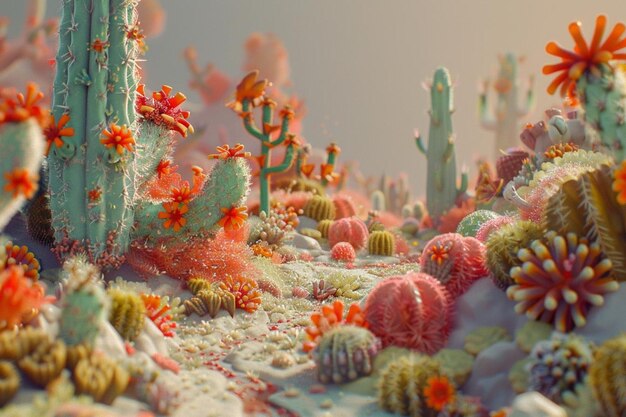
Why should realism have all the fun? Stylization is where creativity flourishes. Start by exaggerating the silhouette. Turn a simple barrel cactus into a squat, cartoonish sentinel with exaggerated ribs that bulge like muscle. Or flatten it into a minimalist icon, reducing it to a single curved line and a cluster of spikes. Play with proportion. Make the spines longer, thinner, or even curved like question marks. Use bold, confident strokes instead of delicate lines. Ink can be your ally here—let it bleed, splatter, or drip to suggest the harshness of the desert environment. Color adds another dimension. Try a monochromatic palette with high contrast, or go wild with neon greens and electric pinks to evoke a surreal desert dreamscape. The key is consistency. Once you choose a style—whether it’s Art Deco symmetry, cyberpunk neon, or folk-art whimsy—stick with it. Let every line serve the narrative you’re weaving. A stylized cactus isn’t just a plant; it’s a character in a visual story.
Texture as Language: Conveying Spines, Wrinkles, and Weathering
Spines are not just decorations—they are armor, they are communication. In nature, they deter predators and cast intricate shadows. In art, they define character. When drawing spines, vary their length, thickness, and direction. Some should point upward like arrows, others outward like barbs. Use a fine liner or a sharp pencil to create crisp, tapered tips. For wrinkles, think of them as the cactus’s wrinkles—evidence of age, drought, and endurance. These lines should be organic, not mechanical. Use a kneaded eraser to lift graphite and create subtle highlights along the ridges. For a tactile effect, try blending with a tortillon, then lifting graphite from the valleys to simulate the soft wool of areoles. If working digitally, use texture brushes that mimic the fibrous quality of cactus skin. The goal is to make the viewer feel the roughness of the plant, to almost hear the crunch of sand underfoot as they imagine touching it.
Light and Shadow: Sculpting the Cactus with Contrast
Light doesn’t just illuminate—it sculpts. In the desert, the sun is a tyrant, casting stark contrasts that define every contour. When rendering your cactus, consider the angle of the light. A top-down light source will flatten the ribs, while a side light will exaggerate their depth. Use a value scale to map out your shadows and highlights. The darkest areas should be in the crevices between ribs and under the base, where the plant meets the ground. The brightest highlights will be on the uppermost ridges, catching the sun’s gaze. Don’t forget reflected light—even in the desert, light bounces off the sand, subtly illuminating the lower stems. For a dramatic effect, use a limited palette with high contrast. For a softer, more organic feel, allow mid-tones to dominate. The interplay of light and shadow isn’t just technique—it’s the heartbeat of your drawing.
Color Theory in Cactus Art: From Earthy Tones to Vibrant Hues
Green is not just green. A cactus’s green is a symphony of olive, sage, teal, and even hints of blue or yellow, depending on species and age. Start with a base layer of muted green, then glaze transparent washes to build depth. Use complementary colors—reds and greens, purples and yellows—to create vibrancy without overwhelming the composition. For stylized work, don’t shy away from bold, unnatural colors. A neon pink cactus against a black background isn’t just eye-catching—it’s a statement. Consider the emotional tone you want to evoke. Earthy tones feel grounded and authentic. Bright hues feel playful and surreal. Monochromatic schemes feel modern and cohesive. Whatever palette you choose, let it serve the story you’re telling. The cactus is a canvas for your imagination—paint it with intention.
Common Pitfalls and How to Avoid Them: A Troubleshooting Guide
Even the most seasoned artists stumble. One common mistake is over-rendering. A cactus doesn’t need every spine to be perfectly symmetrical or every wrinkle to be meticulously defined. Leave some areas loose, some lines raw. Another trap is ignoring the background. A cactus in isolation feels lonely. Place it on a cracked earth surface, or against a distant mountain range. Let the environment tell a story. Beware of stiff lines—nature is fluid. Use organic, flowing strokes to mimic growth patterns. And finally, don’t rush. A rushed cactus looks lifeless. Let your drawing evolve. Step back. Breathe. The cactus will reveal itself to you if you give it time.
Beyond the Drawing: The Symbolic Power of the Cactus
The cactus is more than a plant. It’s a metaphor for endurance, adaptability, and quiet strength. In cultures around the world, it represents protection, healing, and even resurrection. When you draw a cactus, you’re not just creating an image—you’re channeling a legacy of survival. Let that meaning infuse your work. Whether your cactus stands tall and proud or wilts in stylized defiance, let it carry a story. Let it be a reminder that beauty often thrives where life is harshest. And let your art be a testament to the power of seeing the extraordinary in the ordinary.
FAQ
What materials do I need for cactus sketching?
Basic sketching materials like pencils, erasers, and paper are sufficient, along with colored pencils or inks for stylization.
How do I capture the texture of a cactus?
Use varied line thickness and shading techniques to convey the roughness of spines and surface wrinkles.


Leave a Reply