
Short Answer
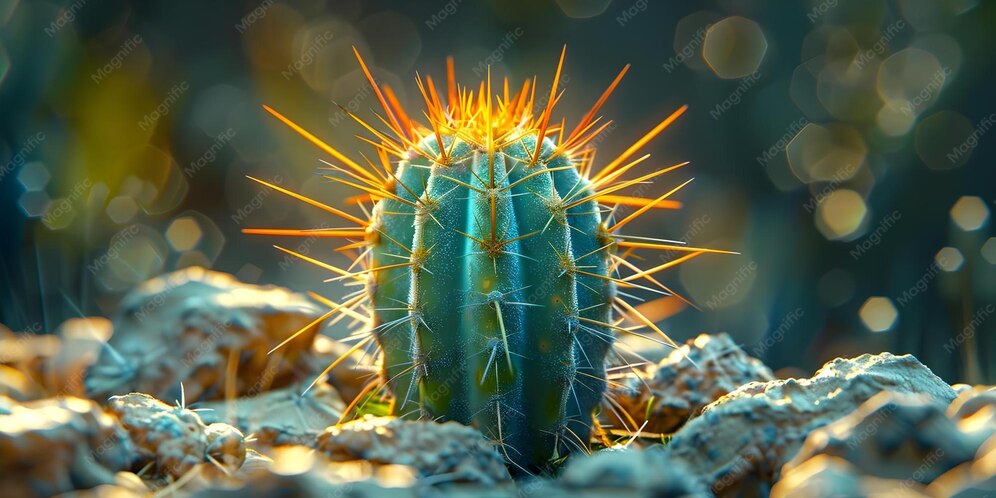
Imagine a plant so unassuming in appearance, yet so fiercely defended that it has become a global emblem of resilience. The cactus, with its stoic silence and spiny armor, whispers secrets of survival not through words, but through the very thorns that adorn its flesh. These spines are not mere adornments—they are guardians, teachers, and silent philosophers, each one a boundary etched in nature’s own handwriting. To understand the cactus is to decode a language of protection and boundaries, one that has been etched into the earth’s crust for millennia. What if the thorns we often avoid are actually the keys to a deeper understanding of strength, self-preservation, and the art of saying “no”? Let’s venture beyond the prickly exterior and uncover the profound symbolism woven into every spine.
The Cactus as a Living Fortress: Nature’s Unyielding Boundary
In the arid expanse of deserts, where water is a fleeting mirage and the sun burns relentlessly, the cactus stands as a bastion of life. Its spines are not random protrusions but a calculated defense mechanism, a fortress wall grown from within. Each spine is a modified leaf, transformed over eons of evolutionary pressure into a needle-sharp deterrent. But these spines do more than repel predators—they regulate the cactus’s microclimate, casting delicate shadows that shield the plant from the scorching rays while allowing just enough light to sustain photosynthesis.
This dual role—protection and preservation—mirrors the boundaries we set in our own lives. Like the cactus, we too must cultivate defenses that do not isolate us but instead create the conditions for growth. The spines remind us that boundaries are not walls meant to keep others out, but filters that allow in what nourishes us while deflecting what drains us. In a world that often glorifies self-sacrifice, the cactus teaches the radical act of self-preservation as a form of wisdom.

Spines as Symbols: The Language of Defiance and Resilience
Across cultures and epochs, the cactus has been a silent witness to human struggle, its spines serving as metaphors for defiance and endurance. In Mexican folklore, the cactus—particularly the nopal—is sacred, its spines representing the sharp edges of life’s challenges that, when navigated with care, lead to sustenance and prosperity. The Aztecs revered it as a symbol of the heart’s resilience, its thorns a reminder that pain and growth are intertwined.
In modern symbolism, the cactus spine has evolved into a universal emblem of personal boundaries. It is the unspoken “no” we dare not say aloud, the prickly refusal to engage in toxic dynamics, or the quiet assertion of our need for space. The cactus does not apologize for its spines; it does not shrink from its role as a protector. Instead, it stands tall, a living testament to the power of saying “enough” without guilt. To embrace the cactus’s symbolism is to reclaim agency over our own lives, to recognize that our spines—our boundaries—are not weapons but shields, not barriers but gateways to healthier relationships.
The Paradox of the Cactus: Softness Within the Spines
There is a profound irony in the cactus’s design: beneath its armored exterior lies a succulent core, a reservoir of life-giving moisture that sustains it through the harshest droughts. This paradox—hardness and softness coexisting—challenges our binary perceptions of strength and vulnerability. The cactus does not choose between being tough or tender; it is both, simultaneously. Its spines do not diminish its capacity for love or connection; they ensure that such connections are chosen, not imposed.
This duality invites us to reflect on our own lives. How often do we harden ourselves to avoid pain, only to find that we’ve also walled off joy? The cactus teaches that boundaries need not be rigid or unfeeling. They can be tender, adaptive, and even beautiful. The spines are not a rejection of intimacy but a prerequisite for it—they create the space where true connection can flourish, where we can offer our softness without fear of being trampled.

Cultivating Boundaries: Lessons from the Desert
In an era where burnout is pandemic and the pressure to be perpetually available is relentless, the cactus offers a radical blueprint for living. It does not apologize for its need to conserve energy. It does not equate self-preservation with selfishness. Instead, it thrives by honoring its limits, by recognizing that growth is not synonymous with depletion.
To cultivate boundaries like a cactus is to adopt a philosophy of intentionality. It means saying “no” to obligations that drain us, to relationships that deplete us, and to environments that stifle us. It means recognizing that our spines—the boundaries we set—are not a sign of weakness but of profound self-awareness. The cactus does not grow in lush, overcrowded forests; it thrives in solitude, where it can stretch its roots deep and its arms wide without competition. Similarly, we too must seek the conditions that allow us to flourish, even if it means standing alone for a while.
This is not to advocate for isolation, but for discernment. The cactus’s spines do not keep all life at bay; they filter it. They allow in the pollinators that sustain it, the occasional rain that nourishes it, and the rare passerby who pauses to admire its tenacity. Our boundaries, too, should be porous enough to let in what is good while keeping out what is harmful.
From Thorns to Triumph: The Alchemy of Protection
There is an alchemy in the cactus’s journey from vulnerability to strength. A seedling cactus is tender, almost fragile, its spines just beginning to emerge. Yet as it matures, those spines become a source of power, a testament to its journey through adversity. This transformation is not passive; it is an active rebellion against erasure. The cactus does not wait to be protected—it becomes its own protector.
This alchemy is mirrored in our own lives. Every boundary we set, every “no” we utter, is an act of defiance against the forces that seek to diminish us. It is a declaration that we are not here to be walked over, to be used, or to be reshaped into someone else’s convenience. The cactus reminds us that protection is not a one-time event but a lifelong practice, a daily commitment to honoring our worth.
When we embrace the symbolism of the cactus spine, we are not just adopting a metaphor—we are stepping into a legacy of resilience. We are joining a lineage of survivors who have turned their pain into power, their boundaries into bridges, and their spines into symbols of unapologetic strength.
The Cactus in Modern Life: A Call to Reclaim Your Spines
In a world that often rewards self-sacrifice and penalizes self-care, the cactus stands as a rebellious icon. It is a plant that refuses to apologize for its needs, that does not shrink from its role as a protector, and that thrives precisely because it has learned the art of saying “enough.”
So the next time you see a cactus, do not merely admire its beauty or flinch at its spines. Pause. Reflect. Ask yourself: Where in my life do I need to grow my own spines? Where have I allowed my boundaries to erode, mistaking compliance for kindness? The cactus does not judge. It only waits, resilient and unyielding, for those who are ready to listen.
Perhaps the greatest lesson of all is this: protection is not a luxury. It is a necessity. And like the cactus, we too can learn to wear our boundaries with pride, to let our spines do the talking when words fail us, and to stand tall in the knowledge that our strength is not in our softness alone—but in the unshakable resolve to protect it.
FAQ
What do cactus spines symbolize?
Cactus spines symbolize protection and personal boundaries, representing the balance between strength and vulnerability.
How can we learn from cactus boundaries?
We can learn to set our own boundaries that protect our energy while allowing healthy connections in our lives.


Leave a Reply