

Short Answer
In the vast, sun-scorched expanses where the earth’s resilience is tested daily, a silent sentinel stands guard—the humble cactus. Often dismissed as mere desert ornamentation, these spiky survivors are emerging as unsung heroes in the narrative of climate change. Their unassuming presence belies a profound capacity for adaptation, offering a blueprint for survival in an era of ecological upheaval. What can these prickly plants teach us about resilience, innovation, and the future of our planet? The answer, as it turns out, is woven into the very fabric of their existence.
The Cactus as a Climate Zeitgeist: A Paradox of Fragility and Fortitude
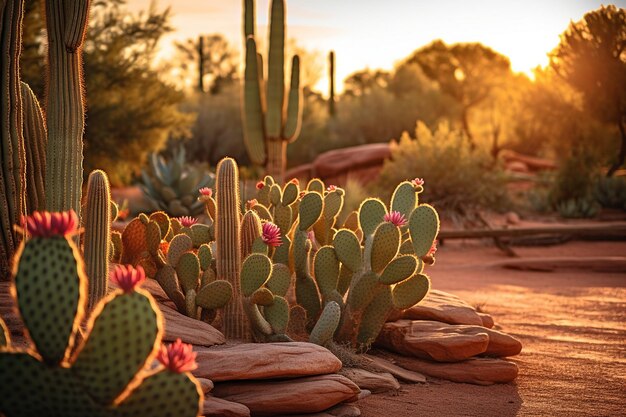
At first glance, cacti seem like the antithesis of grandeur—thorny, slow-growing, and confined to arid landscapes that most life forms flee. Yet, their very morphology is a masterclass in evolutionary ingenuity. The absence of leaves, a trait that might seem like a handicap, is actually a strategic retreat from the relentless evaporation of water in scorching climates. Instead, their succulent stems swell with moisture, storing life’s essence in gelatinous reservoirs. This adaptation is not merely a quirk of nature; it is a testament to the cactus’s ability to thrive where others wither.
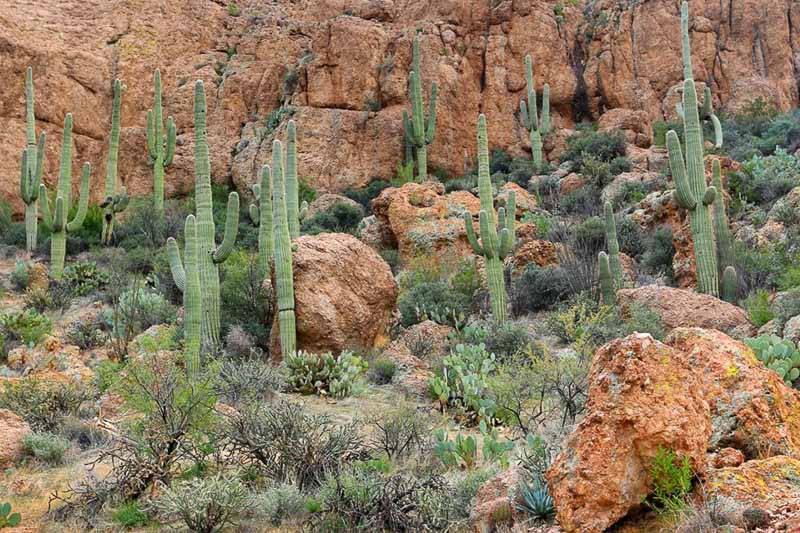
Consider the saguaro, a towering icon of the Sonoran Desert, which can live for over 150 years and store thousands of gallons of water. Its ribbed structure expands and contracts like a bellows, accommodating the ebb and flow of scarce resources. In an age where climate models predict increasingly erratic precipitation patterns, the cactus’s water-hoarding prowess offers a glimmer of hope. It challenges the notion that resilience requires speed or size, proving instead that endurance is a form of strength.
Photosynthesis Reimagined: The Crassulacean Acid Metabolism (CAM) Advantage
Beneath the cactus’s spiky exterior lies a metabolic marvel: Crassulacean Acid Metabolism, or CAM. Unlike the majority of plants, which open their stomata (pores) during the day to absorb carbon dioxide, cacti perform this critical exchange at night. This temporal shift is a stroke of evolutionary genius, minimizing water loss in the face of blistering daytime heat. By storing carbon dioxide as malic acid until daylight, they essentially decouple photosynthesis from the sun’s most intense rays, turning a liability into an asset.
This process is not just a biological curiosity; it is a potential game-changer for agricultural science. As global temperatures rise and arable land dwindles, crops that can mimic CAM’s efficiency could revolutionize food security. Imagine wheat or rice that photosynthesizes like a cactus, thriving in drought-stricken regions where traditional farming collapses. The cactus, in its quiet way, is whispering a secret to the world: survival does not always require brute force, but sometimes, the most elegant solutions are the most enduring.
Symbiosis and Soil: The Cactus as an Ecosystem Architect
Cacti are not solitary figures in the desert landscape; they are keystone species, shaping the very ecosystems they inhabit. Their roots, shallow yet extensive, spread like a web to capture the scantest rainfall, preventing erosion and fostering soil stability. Moreover, their spines and dense growth provide shelter for a myriad of creatures—from insects to birds—creating microhabitats in otherwise inhospitable terrain. In this way, cacti are the ultimate community builders, proving that even in the harshest conditions, life can flourish through collaboration.
This ecological role takes on new significance in the context of climate change. As deserts expand and grasslands retreat, cacti may become linchpins in the fight against desertification. Their ability to anchor soil and support biodiversity could be harnessed to restore degraded landscapes, turning barren expanses into thriving, self-sustaining ecosystems. The cactus, it seems, is not just a survivor but a restorer—a living testament to nature’s capacity for renewal.
The Cactus in Human Culture: From Survival Tool to Scientific Muse
Long before cacti became subjects of scientific inquiry, they were woven into the fabric of human civilization. Indigenous communities across the Americas have relied on them for sustenance, medicine, and shelter for millennia. The prickly pear, for instance, yields both edible fruit and a source of hydration, while the fibrous stems of the cholla have been used to craft tools and even musical instruments. This deep cultural connection underscores a profound truth: humanity’s relationship with the natural world is not one of domination, but of interdependence.
Today, as scientists scramble to decode the secrets of climate resilience, the cactus has become an unlikely muse. Researchers are studying its genetic code, its water-use efficiency, and its symbiotic relationships, seeking to replicate its strategies in human-engineered systems. From drought-resistant crops to bio-inspired materials, the cactus is inspiring innovations that could redefine sustainability. Its story is a reminder that the solutions to our most pressing challenges may already exist in the natural world—we need only to listen.
Challenges and Caveats: The Cactus in a Changing World
Yet, the cactus’s story is not without its shadows. Climate change itself poses a paradox: while cacti are adapted to aridity, the rapid shifts in temperature and precipitation patterns may outpace their ability to adapt. Some species face habitat loss as their ranges contract or shift, while others are threatened by invasive species or overharvesting. The very traits that make cacti resilient—slow growth, specific pollination requirements—can become liabilities in a world where change is the only constant.
Moreover, the cactus’s newfound fame in scientific circles has sparked ethical dilemmas. As demand for cactus-based products grows, so too does the risk of exploitation. Overharvesting for ornamental trade or traditional medicine could push vulnerable species to the brink. Conservation efforts must balance the cactus’s role as a climate ally with the need to protect its genetic diversity. The challenge, then, is not just to learn from the cactus, but to ensure its survival as we do so.
Lessons for the Future: What the Cactus Teaches Us About Adaptation
The cactus, in all its prickly glory, offers a masterclass in adaptation. It teaches us that resilience is not about resisting change, but about bending with it. It shows us that scarcity can breed ingenuity, and that even the most unassuming life forms can hold the keys to survival. In an era defined by ecological crisis, the cactus stands as a symbol of hope—a reminder that nature, in its infinite complexity, has already solved many of the problems we are only now beginning to understand.
As we confront the realities of a warming planet, the cactus challenges us to rethink our relationship with the natural world. It asks us to embrace efficiency over excess, collaboration over competition, and endurance over speed. In doing so, it offers a path forward—not as a panacea, but as a partner in the quest for a sustainable future. The next time you see a cactus, take a moment to appreciate its quiet defiance. For in its spines and its stoicism, it holds a lesson we ignore at our peril.
FAQ
What adaptations do cacti have for surviving in arid climates?
Cacti have specialized structures like succulent stems for water storage and Crassulacean Acid Metabolism (CAM) for photosynthesis, allowing them to thrive in harsh conditions.
How do cacti contribute to their ecosystems?
Cacti serve as keystone species, supporting biodiversity by providing habitat and preventing soil erosion through their extensive root systems.
What is the significance of cacti in climate change research?
Cacti offer insights into resilience strategies for adapting to climate change, including water conservation methods and ecosystem restoration capabilities.

Leave a Reply