
Short Answer
In the arid expanse where life teeters on the edge of survival, an unlikely hero emerges—not in the form of a towering oak or a sprawling river, but in the unassuming silhouette of a cactus. These prickly sentinels of the desert, often dismissed as mere curiosities of the harshest landscapes, are now the muse for a revolution in water conservation. Scientists, engineers, and visionaries are turning to these succulent survivors, not just to admire their resilience, but to decode the secrets of their water-saving mastery. The result? A paradigm shift in how humanity approaches one of its most pressing challenges: the efficient use of water in an era of scarcity.
The Silent Genius of Cacti: Nature’s Hydrological Alchemists
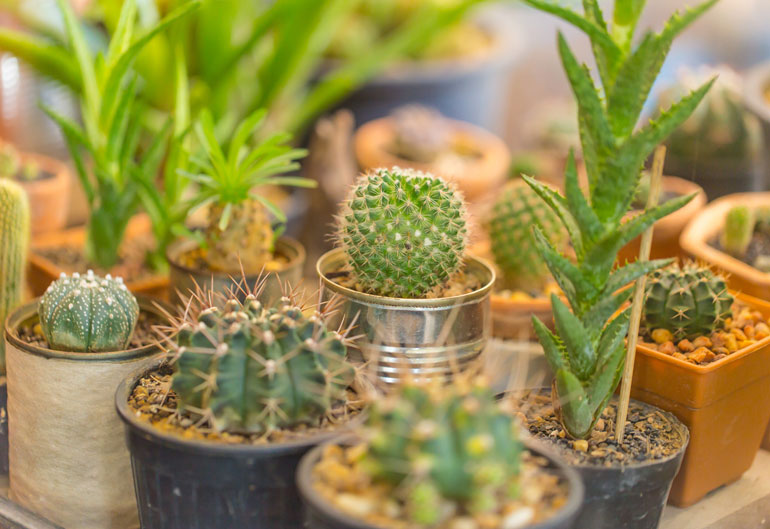
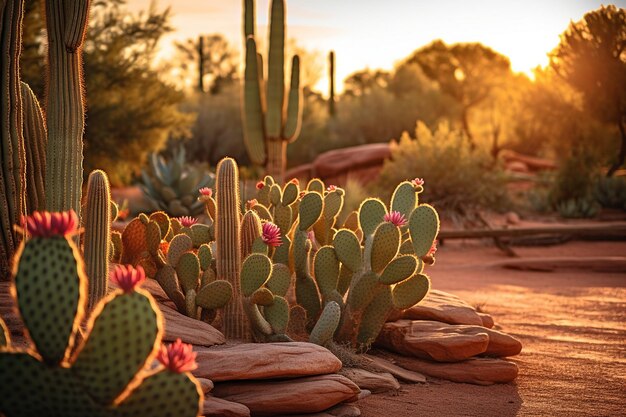
Cacti are not merely plants; they are hydrological alchemists, transforming the parched air and barren soil of their habitats into sustenance with an elegance that borders on the supernatural. Their secret lies in a suite of adaptations so finely tuned that they defy the very notion of drought. Unlike most flora, which open their stomata—tiny pores for gas exchange—during the day, cacti perform a nocturnal ballet, opening them at night when temperatures plummet and humidity rises. This reverse photosynthesis, known as Crassulacean Acid Metabolism (CAM), allows them to lock in carbon dioxide while minimizing water loss, a trick that has evolved over millennia.
Their ribbed and pleated structures are not mere aesthetic quirks but ingenious water-storage systems. These grooves expand and contract like bellows, accommodating the cactus’s fluctuating water reserves without rupturing. Meanwhile, their spines—often mistaken for mere defensive weapons—serve a dual purpose. They cast shadows that reduce evaporation from the plant’s surface and create microclimates that trap moisture. It’s a masterclass in passive hydrological engineering, one that humans are now scrambling to emulate.
From Desert Floor to Lab Bench: The Science of Biomimicry
The journey from observing cacti in their natural habitat to replicating their strategies in human-made systems is a testament to the power of biomimicry. Researchers are dissecting the cactus’s CAM pathway to develop synthetic versions that could revolutionize agriculture. Imagine crops that photosynthesize at night, thriving in arid conditions where traditional farming would wither. Early experiments with CAM-enhanced plants have shown up to a 50% reduction in water usage without sacrificing yield, a breakthrough that could redefine food security in drought-prone regions.
But the cactus’s lessons extend beyond photosynthesis. Engineers are studying the plant’s root systems, which can detect and exploit the tiniest pockets of moisture in the soil. By mimicking these fibrous, far-reaching networks, scientists are designing irrigation systems that deliver water directly to a plant’s roots, minimizing waste. Some prototypes even incorporate cactus-inspired sensors that monitor soil moisture in real-time, ensuring every drop is used with surgical precision. The implications are staggering: a future where fields no longer bleed water into the earth, where every drop is sacred and every plant is a paragon of efficiency.
Urban Oases: Cacti as Architects of Sustainable Design
The influence of cacti is not confined to the fields and farms; it is seeping into the concrete jungles of our cities. Architects and urban planners are turning to these desert dwellers for inspiration in designing buildings that breathe. Facades modeled after cactus ribs can regulate temperature and humidity, reducing the need for energy-intensive air conditioning. Green roofs adorned with succulent species mimic the cactus’s water-storing prowess, creating self-sustaining ecosystems that absorb rainwater and release it slowly, like a living sponge.
Even the way we structure our cities is being reimagined. Cactus-inspired water grids—networks of interconnected channels that distribute water with minimal loss—are being tested in pilot projects. These systems, which borrow from the plant’s vascular architecture, could eliminate the evaporation losses that plague traditional water infrastructure. Picture a city where every building, every street, every park is a node in a vast, cactus-inspired hydrological network, where water flows not as a wasteful torrent but as a calculated, conserved trickle.
The Ripple Effect: How Cacti Are Reshaping Global Water Policies
The cactus’s influence is not just technological; it is political. As evidence mounts about the viability of cactus-inspired water-saving technologies, policymakers are taking notice. Countries grappling with water scarcity are revising agricultural subsidies to favor CAM crops and drought-resistant varieties. International agreements on water conservation are beginning to incorporate biomimicry principles, recognizing that the answers to our crises may lie not in grand engineering feats, but in the quiet genius of nature.
In regions like the American Southwest and sub-Saharan Africa, where water is a flashpoint of conflict, cactus-based solutions offer a glimmer of hope. Farmers are adopting cactus farming not just for its water efficiency, but for its resilience against climate change. These plants, once seen as obstacles to progress, are now celebrated as allies in the fight for survival. The message is clear: the future of water management is not about domination, but about collaboration with the natural world.
Beyond the Lab: The Cultural Renaissance of Cacti
The cactus’s renaissance extends beyond science and policy; it is a cultural awakening. Indigenous communities, who have long revered these plants for their medicinal and nutritional value, are now being recognized as stewards of ancient water-saving knowledge. Their traditional practices, such as intercropping with cacti to retain soil moisture, are being integrated into modern agroecology. Meanwhile, artists and storytellers are weaving the cactus’s story into the fabric of contemporary culture, challenging the narrative of the desert as a wasteland and instead celebrating it as a cradle of innovation.
This cultural shift is crucial. It reminds us that the solutions to our most pressing problems often lie not in the new, but in the ancient; not in the artificial, but in the organic. The cactus, once a symbol of desolation, is now a beacon of possibility. It teaches us that resilience is not about brute force, but about adaptability, about working with the rhythms of the earth rather than against them.
The Future: A World Where Every Drop Counts
As we stand on the precipice of a water crisis that threatens to upend societies, the cactus offers a lifeline. It is a reminder that nature has already solved many of the problems we are only now beginning to understand. The technologies we are developing—from CAM crops to cactus-inspired infrastructure—are not just innovations; they are acts of humility, of learning from the earth rather than exploiting it.
Yet, the journey is far from over. The cactus’s secrets are vast, and our understanding of them is still in its infancy. The next frontier lies in integrating these insights into a cohesive, global strategy for water conservation. It will require collaboration across disciplines, from biology to engineering to policy. It will demand that we rethink our relationship with water, from seeing it as an infinite resource to treating it as the precious, finite commodity it truly is.
In the end, the cactus is more than a plant. It is a teacher, a guide, a silent revolutionary. And as we continue to unlock its mysteries, we may just find that the key to our survival has been standing right in front of us all along—prickly, resilient, and utterly indispensable.
FAQ
How do cacti adapt to arid environments?
Cacti have evolved to open their stomata at night to reduce water loss and develop ribbed structures that store water efficiently.
What impact do cacti have on global water policies?
Cactus-inspired technologies are influencing policies to promote sustainable farming practices in water-scarce regions.


Leave a Reply