

Short Answer
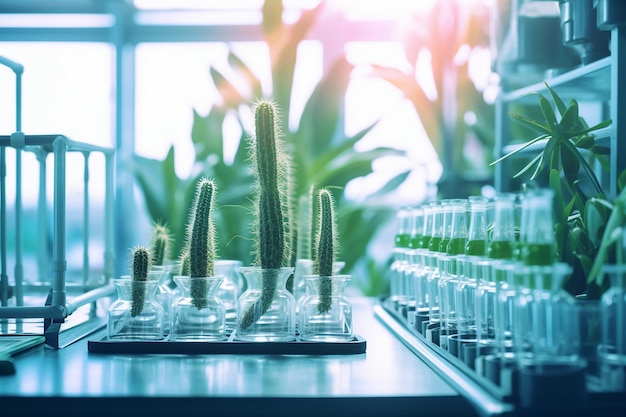
As humanity’s gaze turns ever more resolutely toward the cosmos, the humble cactus—long confined to terrestrial deserts—is poised to become a symbol of resilience and innovation in the final frontier. Once dismissed as mere flora, these spiny sentinels of arid lands are now being reimagined as potential pioneers of space science, their unique biological adaptations offering profound insights into survival beyond Earth. The future of cactus research in space science is not just a botanical curiosity; it is a multidisciplinary odyssey that intertwines astrobiology, synthetic biology, and even exoplanetary colonization. From the cracked, sunbaked soils of the Atacama to the sterile chambers of orbital laboratories, the cactus is emerging as an unlikely but indispensable ally in humanity’s quest to thrive among the stars.
The Botanical Beacon: How Cacti Illuminate Extraterrestrial Adaptations
At the heart of cactus research in space science lies a fundamental question: how do organisms endure extremes? Cacti, with their water-storing stems, CAM photosynthesis, and protective spines, embody evolutionary solutions to desiccation, temperature swings, and nutrient scarcity—conditions that mirror those on Mars or the icy moons of Jupiter. Scientists are dissecting these mechanisms not merely to understand Earth’s deserts but to design bio-inspired systems for extraterrestrial habitats. Imagine a future where cactus-inspired materials regulate humidity in lunar greenhouses or where genetically modified cacti purify water on Mars, their roots filtering perchlorates from regolith. The study of cacti in space science is, in essence, a masterclass in biomimicry, where the desert becomes a classroom for cosmic survival.
Astrobiology’s Spiky Ally: Cacti as Proxies for Alien Life
Astrobiologists are increasingly turning to cacti as terrestrial analogs for potential extraterrestrial life. The Atacama Desert, one of the driest places on Earth, hosts cacti thriving in conditions akin to those on Mars. By studying how these plants interact with microbial communities in such harsh environments, researchers can model how life might persist in the subsurface of other planets. Cacti’s symbiotic relationships with nitrogen-fixing bacteria and drought-resistant fungi offer a blueprint for ecosystems that could exist in the frozen soils of Europa or the methane lakes of Titan. Moreover, the cactus’s ability to enter suspended animation during droughts—reviving with the slightest hint of moisture—hints at strategies for panspermia, the theory that life could travel between worlds via spores or seeds. In this light, the cactus is not just a plant; it is a living Rosetta Stone for decoding the language of alien biology.
Synthetic Biology’s Thorny Frontier: Engineering Cacti for Space Colonies
The next frontier in cactus research lies in genetic tinkering, where biotechnologists are splicing cactus genes into other organisms to create space-hardy hybrids. Imagine a genetically engineered cactus that could photosynthesize under the dim light of Mars, its modified chlorophyll absorbing the red and infrared spectrums more efficiently. Or consider cacti engineered to produce edible proteins or pharmaceuticals, their succulent tissues serving as both food and medicine in self-sustaining colonies. The CRISPR revolution has made this possible, allowing scientists to tweak cactus genomes with surgical precision. Already, researchers have transplanted drought-resistant genes from cacti into crops like rice and wheat, boosting their survival rates in arid conditions. Extend this logic to space, and the cactus becomes a cornerstone of closed-loop life support systems, where every drop of water is recycled, and every molecule of carbon is repurposed. The future of space agriculture may well be spiky, resilient, and unapologetically green.
From Desert to Orbit: Cacti in Microgravity and Beyond
But the cactus’s journey into space science isn’t confined to Earth’s laboratories. Experiments aboard the International Space Station (ISS) are testing how cacti adapt to microgravity, a realm where water behaves like a gelatinous blob and roots struggle to orient themselves. Early results suggest that cacti may struggle with growth patterns in zero-G, their spines losing their defensive purpose in an environment where there’s no wind to carry away predators. Yet, this challenge is precisely what makes the research so thrilling. By observing how cacti recalibrate their biology in orbit, scientists can uncover fundamental truths about plant development—and perhaps even discover new ways to cultivate crops in artificial gravity habitats. The ISS, once a sterile outpost, is becoming a proving ground for the cactus’s cosmic potential, where each experiment plants the seeds of future interplanetary agriculture.
Cultural and Ethical Considerations: The Cactus in the Cosmic Imaginary
Beyond the lab, the cactus is also reshaping humanity’s cultural relationship with space. Indigenous communities in the Americas have long revered cacti as symbols of endurance and sacred knowledge. As space agencies and private companies like SpaceX and Blue Origin push toward Mars, these cultural narratives are being recontextualized. Should cacti be among the first organisms introduced to Mars? Who gets to decide which Earth species are granted interplanetary citizenship? These questions force us to confront the ethical dimensions of space colonization, where every introduction of life—no matter how humble—has cascading consequences. The cactus, with its deep roots in human mythology, becomes a focal point for debates about stewardship, exploitation, and the moral weight of terraforming. In this sense, the future of cactus research is not just scientific; it is a mirror reflecting our own values and fears about venturing into the unknown.
Economic and Industrial Opportunities: The Cactus Economy in Space
The commercial potential of cactus-based space technologies is staggering. Companies are already exploring cactus-derived materials for space suits, their fibers offering lightweight yet durable alternatives to synthetic fabrics. In the realm of in-situ resource utilization (ISRU), cacti could be harnessed to produce biofuels from their stored water and sugars, powering rockets or rovers on distant worlds. Even the spines of cacti are being studied for their potential in constructing lightweight, high-strength structures for lunar or Martian bases. The cactus economy in space is not a distant fantasy; it is an emerging industry where botany meets aerospace engineering. As private enterprises and space agencies race to establish off-world colonies, the cactus stands ready to play a pivotal role—not just as a survivor, but as an economic powerhouse.
Education and Public Engagement: Growing the Next Generation of Space Botanists
Finally, the future of cactus research in space science hinges on inspiring the next generation of scientists, engineers, and dreamers. Educational initiatives are leveraging the cactus’s charismatic resilience to engage students in STEM fields, from classroom experiments growing cacti under simulated Martian conditions to citizen science projects where amateur botanists track cactus health in extreme environments. Museums and science centers are featuring exhibits on “space cacti,” blending art and biology to showcase the intersection of Earth’s flora and cosmic exploration. The goal is to foster a culture where the cactus is not just a plant, but a gateway—a tangible, relatable entry point into the vast, abstract world of space science. After all, if a prickly, water-hoarding desert dweller can teach us how to live among the stars, then perhaps the future of space exploration is not so daunting after all.
FAQ
What makes cacti suitable for space research?
Cacti have evolved to survive in harsh, arid conditions through adaptations like water storage and CAM photosynthesis, which resemble conditions on planets like Mars.
How are cacti used in astrobiology?
They serve as terrestrial analogs to study potential extraterrestrial life and ecosystems in extreme environments.
Can cacti grow in microgravity?
Experiments show cacti face challenges like altered growth and spine function in microgravity, but ongoing research aims to overcome these issues.
What ethical concerns arise from introducing cacti to space?
Concerns include respecting indigenous cultural values and the impact of introducing Earth species to extraterrestrial ecosystems.
What economic benefits could cacti provide in space exploration?
They could produce biofuels, materials for space suits, and lightweight structures for space habitats.




Leave a Reply