
Short Answer
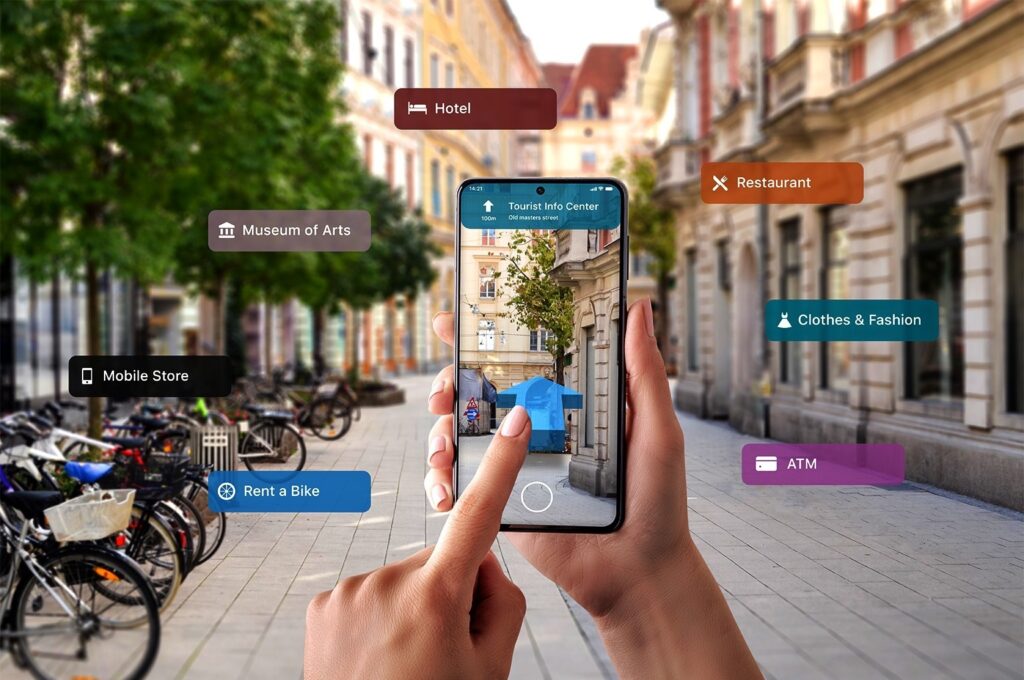
Imagine a world where the humble cactus—often relegated to the role of a prickly, silent observer in arid landscapes—suddenly springs to life, unfurling its secrets in a dance of light and interactivity. Augmented reality (AR) is not merely transforming how we perceive the natural world; it’s rewriting the narrative of even the most overlooked organisms. With AR, the cactus transcends its static existence, becoming a portal to education, wonder, and ecological enlightenment. This technological marvel promises to shift our perspective from passive observation to active engagement, turning every glance at a spiky silhouette into an opportunity for discovery.
The Dawn of Digital Botany: AR as a Catalyst for Curiosity
At the heart of AR’s promise lies its ability to dissolve the boundaries between the tangible and the virtual. A cactus, in its earthly form, may evoke a sense of resilience or even indifference, but when overlaid with digital enhancements, it becomes a living textbook. Interactive AR apps can peel back the layers of a cactus’s anatomy, revealing the intricate vascular systems hidden beneath its waxy skin or the symbiotic relationships it forges with pollinators. This isn’t just education; it’s a revelation. The cactus, once a mere backdrop in a desert tableau, now commands attention as a protagonist in a story of survival and adaptation.
Consider the child who, while hiking with their family, points a tablet at a saguaro and watches as its ribs pulse with simulated water storage, or the student in a classroom who sees a prickly pear’s spines transform into a 3D model of its defense mechanisms. AR doesn’t just show—it immerses. It transforms abstract botanical concepts into visceral experiences, making the invisible visible and the mundane magnificent. The cactus, in this digital renaissance, is no longer a passive subject but an active participant in the learner’s journey.
Educational Alchemy: Turning Spines into Learning Spires
The educational potential of AR extends far beyond mere visual spectacle. It’s a tool for alchemy, converting the raw materials of curiosity into gold-standard knowledge. For educators, AR apps offer a dynamic way to teach botany, ecology, and even climate science. A cactus’s spines, for instance, can be dissected virtually to reveal their role in reducing water loss, while its flowers might bloom in augmented reality to demonstrate pollination cycles. This hands-on approach caters to diverse learning styles, ensuring that visual, auditory, and kinesthetic learners alike can engage with the material.
Moreover, AR can bridge gaps in accessibility. Students in urban environments, far removed from desert ecosystems, can still explore the cactus’s adaptations through immersive simulations. The technology democratizes knowledge, making it possible for anyone with a smartphone to embark on a botanical expedition. It’s a quiet revolution—one where the cactus, a symbol of endurance, becomes a teacher of resilience, adaptation, and the delicate balance of life in harsh environments.
Gamification and the Cactus: Play as a Path to Understanding
What if learning about cacti felt less like a chore and more like an adventure? AR apps have the power to gamify education, turning the study of these spiky sentinels into an interactive quest. Imagine an app where users must “water” a virtual cactus by solving puzzles about its water retention strategies, or a game where they defend a digital garden from pests by deploying the cactus’s natural defenses. The cactus, in this context, becomes a character in a larger narrative—one where the player’s choices directly influence the plant’s survival.
Gamification doesn’t just make learning fun; it embeds knowledge deeply. When users interact with a cactus in a game, they’re not just memorizing facts—they’re experiencing the consequences of those facts. They learn, for example, that overwatering a cactus in the game leads to rot, just as it would in reality. This experiential learning fosters a deeper connection to the subject matter, transforming passive absorption of information into active, memorable engagement. The cactus, once a static object, now becomes a dynamic ally in the learner’s journey.
Art Meets Science: The Aesthetic Revolution of AR Cacti
Beyond education, AR is redefining the artistic and cultural representation of cacti. Digital artists are leveraging AR to create mesmerizing visualizations of these plants, blending science with surrealism. A cactus might bloom with fractal patterns in augmented reality, or its spines could shimmer with bioluminescent hues, evoking the magic of a desert night. These artistic interpretations don’t just appeal to the eye—they challenge our perceptions, inviting us to see the cactus not as a mere plant but as a canvas for creativity.
This fusion of art and science extends to cultural storytelling as well. Indigenous communities, for instance, have long held cacti sacred, imbuing them with spiritual significance. AR can honor these traditions by incorporating oral histories, myths, and legends into interactive experiences. A user might point their device at a cactus and hear a story of its role in ancient rituals, or see it transform into a mythical creature in a digital retelling. The cactus, in this way, becomes a bridge between past and present, tradition and innovation.
Conservation and Connection: AR as a Tool for Ecological Stewardship
The most profound promise of AR lies in its potential to foster a deeper connection to the natural world—and by extension, a commitment to its preservation. By making cacti and their ecosystems tangible and interactive, AR can cultivate empathy and environmental consciousness. Users who’ve “met” a cactus in augmented reality are more likely to care about its real-world counterparts. They might be inspired to support conservation efforts, reduce water waste (learning from the cactus’s own survival strategies), or advocate for the protection of desert habitats.
AR can also serve as a tool for citizen science. Enthusiasts can use AR apps to document cactus populations, track their growth over time, or even report illegal harvesting. The data collected through these interactions can feed into larger conservation databases, providing researchers with valuable insights. In this way, the cactus becomes more than a symbol—it becomes a collaborator in the fight to safeguard biodiversity.
The Future Unfolds: What Lies Beyond the Spines
The cactus in augmented reality is just the beginning. As AR technology evolves, so too will the possibilities for interactive and educational experiences. Future apps might incorporate haptic feedback, allowing users to “feel” the texture of a cactus’s spines or the weight of its water reserves. AI could personalize learning paths, adapting content to the user’s pace and interests. And as AR glasses become more mainstream, the line between the digital and physical worlds will blur even further, making the cactus’s augmented presence as natural as its real one.
Yet, for all its technological marvels, the true magic of AR lies in its ability to reignite wonder. In a world where screens often distance us from nature, AR brings us closer—one prickly, pixelated cactus at a time. It reminds us that even the most unassuming organisms hold stories worth exploring, lessons worth learning, and beauty worth celebrating. The cactus, in its augmented form, is no longer just a plant. It’s a gateway to a new way of seeing the world.
FAQ
What is augmented reality in relation to cacti?
Augmented reality (AR) enhances the experience of learning about cacti by overlaying digital information and interactive elements onto real-world cacti, making the learning process more engaging.
How can AR apps benefit education?
AR apps can transform traditional learning by providing interactive experiences that cater to various learning styles, making complex botanical concepts accessible and engaging.
What role do cacti play in ecological education through AR?
Cacti serve as an effective medium for ecological education in AR, illustrating their adaptations and importance in their ecosystems while promoting environmental stewardship.



Leave a Reply