
Short Answer
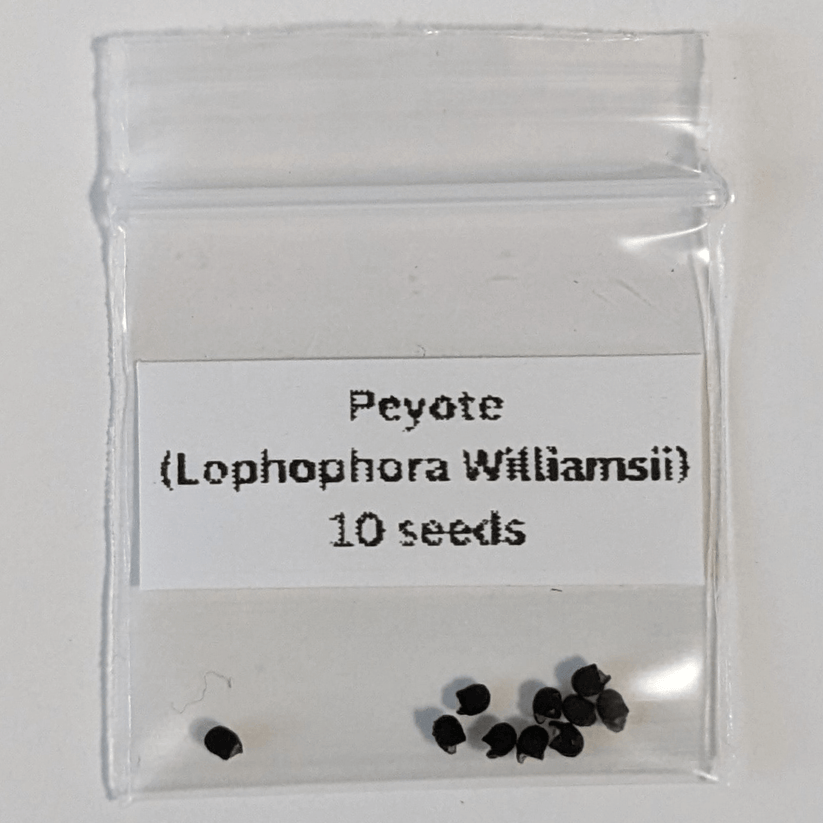
In the vast, undulating tapestry of Native American spirituality, where the earth breathes with the rhythm of ancient chants and the sky hums with the whispers of the unseen, few plants hold as much reverence as Lophophora williamsii—the sacred peyote. This unassuming, spineless cactus, with its small, button-like crown, is not merely a botanical curiosity; it is a living metaphor, a bridge between the mundane and the divine, a vessel of cosmic wisdom that has woven itself into the very fabric of ceremonial life. To speak of peyote is to delve into a world where time bends, where the boundaries between self and universe dissolve, and where the sacred is not just observed but experienced in its most intimate, transformative form.
The Whispering Crown: Peyote as a Portal to the Spirit World
Imagine, if you will, a moonlit desert, the air thick with the scent of creosote and sage. A circle of figures gathers, their faces illuminated by the flickering glow of a fire that seems to pulse with its own heartbeat. At the center lies a small, fibrous bundle—peyote—and as it is passed from hand to hand, it becomes more than a plant. It becomes a messenger, a guide, a silent interlocutor between the physical and the metaphysical. The Huichol people of Mexico call peyote hikuri, a divine ancestor who speaks in visions and teaches the language of the gods. For the Comanche, Kiowa, and other Plains tribes, it is peyotl, a sacred medicine that unlocks the doors of perception, allowing the seeker to converse with spirits, ancestors, and the great mystery of existence itself.
The peyote experience is not a passive one. It is a sacred dialogue, a conversation where the boundaries of the self are dissolved into the vastness of the cosmos. The alkaloid mescaline, nestled within its flesh, does not merely alter perception—it reconfigures it, revealing layers of reality that lie hidden in the mundane. A single button, consumed with reverence, can unravel the threads of linear time, allowing the participant to witness the unfolding of creation or to stand in the presence of the Thunderbird, its wings beating like the drum of the universe. This is not escapism; it is epiphany, a revelation that the sacred is not somewhere else—it is here, in the pulse of the blood, in the rustle of the wind through the mesquite.
The Communal Cauldron: Peyote in Ceremonial Gatherings
Peyote is rarely consumed in solitude. Its power is magnified within the crucible of community, where the collective intention of the circle becomes the alchemical catalyst for transformation. The Native American Church, born from the fusion of indigenous traditions and Christian syncretism, has preserved the peyote ceremony as a cornerstone of spiritual practice. Here, the ritual is not a spectacle but a symphony, where each participant plays a role in the orchestration of the sacred.
The ceremony unfolds in stages, like the petals of a flower slowly unfurling. The peyote is blessed, its energy invoked through prayer and song. The fire, a living entity in its own right, becomes the heart of the ritual, its flames licking the darkness and casting shadows that dance like spirits on the walls of a wickiup. The peyote is passed, and as each person consumes it, they enter a shared dream—a collective hallucination where the boundaries of individuality blur into the oneness of the universe. The songs, the drumming, the sacred tobacco smoke—all are threads in a tapestry that weaves the participants into the greater whole. To partake in a peyote ceremony is to be both the seeker and the sought, the question and the answer, the drop and the ocean.
This communal aspect is not incidental; it is essential. Peyote teaches that healing is not an isolated act but a shared sacrament. The visions that arise are not merely personal epiphanies but gifts to the community, fragments of wisdom that must be interpreted and woven back into the fabric of collective understanding. In this way, peyote becomes a living archive, a repository of ancestral knowledge that is continually renewed with each generation.
The Alchemy of Healing: Peyote as Medicine of the Soul
Beyond its role as a spiritual catalyst, peyote is revered as a medicine in the truest sense—a balm for the wounded psyche, a salve for the broken spirit. The Huichol people speak of peyote as a grandfather, a wise elder who teaches the art of healing through direct experience. For those burdened by trauma, addiction, or the existential despair of modernity, peyote offers a path to reclamation, a way to reintegrate the fragmented self into the wholeness of the universe.
The healing process is not gentle. Peyote does not offer quick fixes or facile comforts. Instead, it demands courage, forcing the participant to confront the shadows within—the grief, the rage, the unspoken sorrows that fester beneath the surface. But in this confrontation lies the possibility of transformation. The visions that arise are not mere distractions; they are mirrors, reflecting back the inner landscape with brutal clarity. A participant might witness the dissolution of their ego, only to be reborn in the embrace of the divine. They might see the roots of their suffering laid bare, the patterns of their life unraveled like a skein of yarn, and in that unraveling, find the threads to weave themselves anew.
This healing is not confined to the individual. In many traditions, peyote is used to diagnose and treat illnesses within the community. A medicine person might consume peyote to receive guidance on a patient’s ailment, their visions revealing the source of the imbalance—whether it be a spiritual breach, a curse, or a disconnection from the natural world. The peyote does not heal in the way of Western medicine; it heals by realignment, by restoring the patient to the harmony of the cosmos. In this sense, peyote is not just a medicine—it is a cosmology, a blueprint for how to live in right relationship with all of existence.
The Thornless Thorn: Peyote as a Paradox of Power
There is a peculiar irony in the form of peyote. Unlike its spiny kin, which defend themselves with barbs and venom, peyote is soft, vulnerable, its ribs gently undulating like the folds of a sleeping child’s blanket. It is a plant that offers itself without resistance, a paradox of power that teaches the lesson of surrender. To consume peyote is to accept vulnerability, to open oneself to the unknown, to trust in the wisdom of the universe even when its path is obscured by darkness.
This vulnerability is not weakness; it is the source of peyote’s transformative power. In a world that demands resilience, peyote reminds us that true strength lies in the ability to yield, to be porous, to allow the sacred to flow through us like water through a sieve. The peyote button, so small and unassuming, is a microcosm of this truth. It does not fight; it invites. It does not dominate; it participates. In its quiet way, it teaches that the greatest magic lies not in conquest but in communion, not in control but in surrender.
This paradox extends to the cultural perception of peyote. To outsiders, it is often reduced to a “drug,” a substance of recreational use. But to those who walk the peyote path, it is a sacrament, a sacred contract between humanity and the divine. The legal battles fought to protect its use are not merely about access to a plant; they are about the right to engage in a spiritual practice that has sustained generations. Peyote is a living testament to the resilience of indigenous wisdom, a defiant flourish in the face of colonial erasure.
The Eternal Return: Peyote in the Cycle of Life and Death
Peyote is not just a plant of the living; it is a plant of the dead and the unborn. In many traditions, it is believed that peyote grows from the bones of ancestors, a tangible link between the generations. The Huichol speak of the peyote pilgrimage to Wirikuta, the sacred desert where the plant is said to have first emerged, as a journey through the underworld, a descent into the realm of the dead to retrieve wisdom and bring it back to the living. For the Tarahumara, peyote is a psychopomp, a guide for the soul on its journey through the afterlife.
Even in death, peyote’s presence lingers. The ashes of consumed buttons are often returned to the earth, a final act of reciprocity with the plant that has given so much. In this way, peyote becomes a cyclical metaphor, a reminder that life and death are not opposites but phases of an eternal spiral. To consume peyote is to touch the hem of eternity, to stand in the presence of the ancestors, to hear the whispers of the yet-to-be-born.
The peyote ceremony often culminates in a sense of rebirth, a return to the world with a renewed sense of purpose and connection. The participant, having traversed the landscapes of the spirit, emerges with a deeper understanding of their place in the cosmos. They are no longer merely an individual but a thread in the great tapestry of existence, woven into the pattern by the hands of the divine.
FAQ
What is Lophophora?
Lophophora, commonly known as peyote, is a small, spineless cactus revered in Native American traditions for its psychoactive properties and spiritual significance.
How is peyote used in ceremonies?
Peyote is consumed in communal ceremonies where participants seek spiritual insights and healing, facilitated by its psychoactive effects.

Leave a Reply