
Short Answer
The world of cacti is a vast, sun-baked savannah of spiny wonders, where each species whispers secrets of resilience and beauty. Among these desert denizens, the genus Rebutia stands out as a jewel-toned rebellion—a cluster of petite, vibrant rosettes that defy the stereotype of cacti as mere prickly giants. These diminutive dynamos, often no larger than a teacup, pack an outsized punch of color, form, and tenacity. For collectors, they are not just plants; they are living art, miniature ecosystems, and testaments to nature’s boundless creativity. Whether you’re a seasoned succulent savant or a budding green-thumbed enthusiast, the allure of Rebutia lies in its ability to transform even the most modest windowsill into a kaleidoscope of desert splendor.
The Radiant Rosettes: A Symphony of Shape and Size
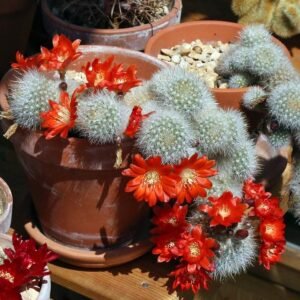
Rebutia species are the prima donnas of the cactus world, each one a perfectly formed rosette that seems plucked from a painter’s palette. Unlike their towering cousins, these cacti embrace a compact elegance, their globular bodies hugging the soil in tight, spiraled clusters. The Rebutia heliosa, with its sunburst of golden spines, resembles a tiny solar flare frozen in time, while the Rebutia marsoneri dazzles with its electric orange blooms that erupt like fireworks from the crown. Their sizes vary from the Rebutia pygmaea—a mere 2 centimeters in diameter—to the slightly more generous Rebutia senilis, which still fits snugly in the palm of your hand. This Lilliputian scale makes them ideal for terrariums, dish gardens, or even as accents in larger cactus arrangements. Yet, despite their small stature, their presence is anything but diminutive; each rosette is a study in geometric perfection, a living mandala that rewards close inspection with mesmerizing details.
Color Palette of the Desert: A Chromatic Revolution
If the desert were an artist, Rebutia would be its most audacious protégé. The genus is a riot of hues that defy the muted tones typically associated with arid landscapes. Imagine the Rebutia krainziana, its body a deep, velvety purple punctuated by contrasting white spines, like a shadow cast by moonlight. Or the Rebutia perplexa, which flaunts a gradient of pink and cream, as if dipped in the blush of a desert dawn. The blooms are where this chromatic rebellion reaches its zenith: fiery reds, electric pinks, and sunlit yellows that seem to glow from within. These colors are not mere decoration; they are survival strategies, evolved to attract pollinators in an environment where every hue must serve a purpose. For collectors, the challenge—and joy—lies in curating a collection that mirrors the diversity of a desert at twilight, where each plant is a brushstroke in nature’s grand masterpiece.

Spines and Textures: The Armor of Adaptation
Beneath the vibrant exteriors of Rebutia species lies a world of intricate textures and defensive adaptations. The spines, far from being mere adornments, are a cactus’s first line of defense against the harsh realities of its environment. In Rebutia minuscula, the spines are fine and hair-like, creating a soft halo around the plant that belies its tenacious nature. Contrast this with the stout, hooked spines of Rebutia albopectinata, which resemble the barbs of a fishhook, deterring would-be grazers with a deceptive gentleness. Some species, like Rebutia einsteinii, boast a dense mat of white spines that give the plant a woolly appearance, while others, such as Rebutia wessneriana, feature spines arranged in a radial pattern that resembles a starburst. These variations are not random; they are the result of millennia of evolutionary tinkering, each species fine-tuning its armor to thrive in its specific niche. For collectors, studying these textures is akin to examining the brushwork of a master painter—each stroke tells a story of adaptation and survival.
Blooming Brilliance: The Ephemeral Fireworks
The true magic of Rebutia unfolds when they burst into bloom, transforming from unassuming rosettes into veritable fireworks of color. The flowers, often larger than the plant itself, emerge from the crown in a dazzling display that can last for weeks. The Rebutia senilis produces clusters of vivid red blooms that seem to ignite the plant from within, while the Rebutia canigueralii dazzles with its neon pink flowers that resemble tiny, glowing embers. The timing of these blooms is often tied to seasonal cues, with many species flowering in response to increased light and warmth. For collectors, this ephemeral spectacle is a reminder of the fleeting beauty that defines the natural world. It is also a test of patience and care, as these plants often require specific conditions to encourage flowering. Yet, the reward—a plant adorned with jewels of color—is well worth the effort, a fleeting moment of brilliance that feels like a gift from the desert itself.
Cultivation Secrets: Nurturing Nature’s Miniatures
Growing Rebutia is an exercise in balance, a dance between providing the right conditions and allowing these resilient plants to thrive on their own terms. These cacti are native to the high-altitude regions of South America, where they endure intense sunlight, fluctuating temperatures, and periods of drought. To replicate these conditions, collectors should aim for a well-draining soil mix, ideally composed of coarse sand, perlite, and a touch of organic matter. Bright, indirect light is essential, though some species can tolerate direct sunlight if acclimated gradually. Watering should be infrequent but thorough, allowing the soil to dry out completely between sessions—a practice that mimics the sporadic rainfall of their natural habitat. During the winter months, a period of dormancy with cooler temperatures and reduced watering can encourage future blooms. The key to success lies in observing these plants closely, learning their rhythms, and resisting the urge to over-tend. In this way, cultivating Rebutia becomes less about control and more about collaboration with nature.
Collecting with Purpose: Building a Living Mosaic
For those drawn to the allure of Rebutia, the act of collecting is more than a hobby; it is a form of artistic expression. Each species offers a unique combination of color, form, and texture, allowing collectors to create living mosaics that evolve over time. Some enthusiasts focus on rare or hybrid varieties, such as the Rebutia ‘Fireball’ with its fiery red blooms or the Rebutia ‘Rainbow’, which boasts a kaleidoscope of pastel hues. Others may seek out species with specific cultural or historical significance, such as the Rebutia muscula, one of the first Rebutia species to be introduced to cultivation. The joy of collecting lies not only in the acquisition of new plants but in the relationships formed between them. A well-curated collection is a living tapestry, each plant contributing to a larger narrative of resilience, beauty, and adaptation. Whether displayed in a dedicated cactus greenhouse or scattered throughout a home, these miniature marvels invite contemplation and wonder, a reminder that even the smallest corners of the world can harbor extraordinary treasures.
The Future of Rebutia: A Legacy of Adaptation
As climate change reshapes the landscapes these plants call home, the future of Rebutia is both uncertain and inspiring. Some species may face habitat loss, while others could adapt to new conditions, proving once again the tenacity of life in the desert. For collectors, this presents an opportunity to play a role in conservation, whether by cultivating rare species or supporting ethical sourcing practices. The genus Rebutia is a testament to the power of adaptation, a reminder that beauty and resilience often go hand in hand. By nurturing these plants, we not only enrich our own lives but also contribute to the preservation of a unique and vibrant lineage. In a world that often feels fragmented, Rebutia offers a sense of connection—a link to the wild, untamed beauty of the desert and the enduring spirit of life itself.
FAQ
What are Rebutia species?
Rebutia species are small cacti known for their vibrant colors and compact rosette shapes, making them popular among collectors.
How do I care for Rebutia cacti?
Rebutia cacti require well-draining soil, bright indirect light, and infrequent watering, mimicking their native high-altitude habitats.




Leave a Reply