
Short Answer
In the arid, sun-scorched landscapes where the earth cracks like parched lips, a silent revolution thrives—one not of steel and concrete, but of delicate petals and hidden roots. The Ariocarpus seed banks stand as the guardians of a botanical treasure, a living archive where the whispers of ancient cacti are preserved not in dusty tomes, but in the very soil they once called home. These repositories are more than mere collections; they are the cradles of resilience, the vaults of genetic poetry, where each seed is a stanza in the earth’s enduring ode to survival. To explore them is to step into a world where time bends, where the past and future intertwine in a dance of thorns and blossoms.
The Living Libraries of the Desert: Ariocarpus as Botanical Zeitgeists
The Ariocarpus genus, with its enigmatic forms and cryptic beauty, is a testament to nature’s ingenuity in the face of adversity. These cacti, often resembling geological formations or the fragmented remains of some primordial creature, are not just survivors—they are storytellers. Each species, from the star-like Ariocarpus fissuratus to the geometric precision of Ariocarpus retusus, carries within its DNA the chronicles of millennia. Seed banks dedicated to these plants are not static collections; they are dynamic ecosystems of genetic memory, where the essence of drought, fire, and time is encoded in microscopic embryos. To preserve Ariocarpus seeds is to safeguard the blueprints of a desert’s defiance, a silent rebellion against the erasure of extinction.
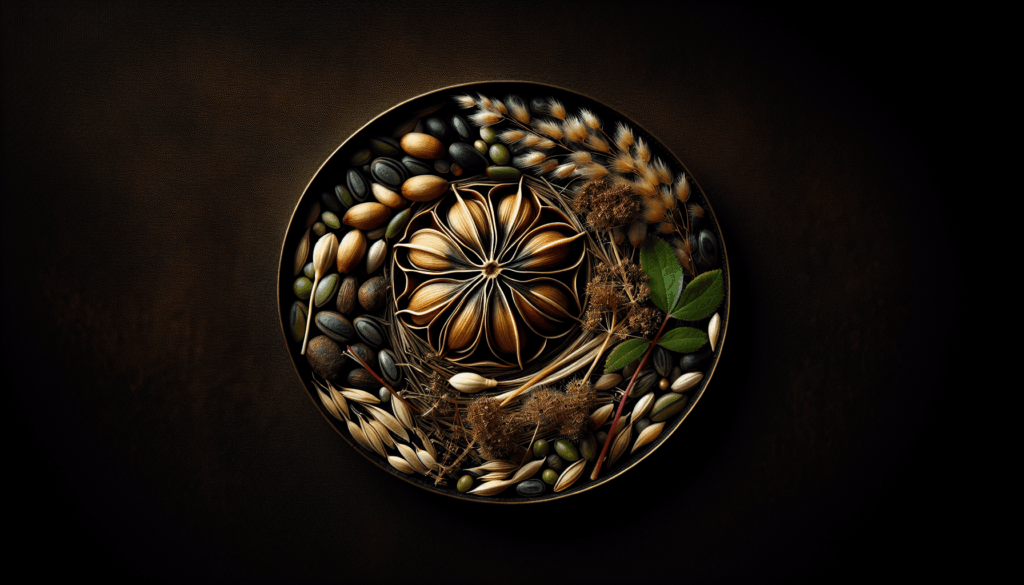
Consider the Ariocarpus kotschoubeyanus, a species whose very name evokes the aristocracy of botany. Its seeds, no larger than a grain of sand, hold the potential to resurrect a lineage that has weathered centuries of climatic upheaval. These seeds are not mere dormant particles; they are time capsules, each one a fragment of a lineage that has learned to thrive where others wither. The seed banks that house them are the modern-day Sistine Chapels of biodiversity, where every specimen is a brushstroke in the masterpiece of life’s tenacity.
The Alchemy of Preservation: Turning Dust into Legacy
Preserving Ariocarpus seeds is an alchemical process, blending science with reverence. Unlike the seeds of more common plants, these desert jewels require a delicate balance of conditions—cool, dry, and shielded from the caprices of humidity and temperature. The process begins with the careful extraction of seeds from mature fruits, a task that demands patience and precision, for these cacti are not prolific producers. Each seed is then subjected to rigorous viability testing, its potential to germinate measured not in days, but in decades. The seed banks themselves are marvels of modern engineering, designed to mimic the natural dormancy of these plants while shielding them from the ravages of climate change and human encroachment.
Yet, preservation is not merely about storage; it is about curation. The Ariocarpus seed banks are meticulously cataloged, not just by species, but by the microclimates and geological strata from which their parent plants were unearthed. This granularity ensures that when the time comes to reintroduce these species to the wild, they are not dropped into alien terrain but returned to the exact conditions that shaped their evolution. It is a form of ecological matchmaking, where the seeds are not just saved but given the chance to thrive anew. The banks are, in essence, the matchmakers of resilience, ensuring that the genetic dance of these cacti continues unbroken.
The Silent Rebellion: Ariocarpus in the Face of Extinction
The plight of Ariocarpus is a microcosm of a global crisis. These plants, once widespread across the Chihuahuan Desert and its fringes, now face the dual threats of habitat destruction and illegal collection. The demand for rare cacti in the horticultural trade has turned them into targets, their slow growth making them easy prey for poachers. Yet, the seed banks stand as a bulwark against this onslaught. By removing the pressure from wild populations—by making seeds available to nurseries and researchers rather than stripping the land bare—the banks are not just preserving life; they are undermining the black market that thrives on scarcity.
Moreover, the Ariocarpus seed banks are laboratories of hope. They provide a lifeline for scientists studying climate resilience, offering a glimpse into how these plants have adapted to extreme conditions. In an era where deserts are expanding and rainfall is becoming a fickle guest, the genetic secrets of Ariocarpus could be the key to engineering drought-resistant crops. The banks are not just archives; they are arsenals in the fight against agricultural collapse, where each seed is a bullet in the war on hunger.
The Aesthetic of Survival: Ariocarpus as Art and Inspiration
To behold an Ariocarpus in full bloom is to witness a paradox—a plant that is both fortress and flower, its tough, armored exterior giving way to petals of such delicate hue that they seem to defy the harshness of its environment. The seed banks, in preserving these plants, are also preserving a unique aesthetic, one that celebrates the beauty of endurance. The geometric patterns of Ariocarpus retusus resemble the tessellations of a Moorish palace, while the starburst forms of Ariocarpus fissuratus evoke the fractal patterns of snowflakes. These are not mere plants; they are living sculptures, each one a testament to the elegance of adaptation.
The appeal of Ariocarpus extends beyond the botanical. Artists, designers, and writers have long drawn inspiration from these cacti, their forms appearing in everything from Art Deco motifs to surrealist paintings. The seed banks, by ensuring the survival of these species, are also safeguarding a wellspring of creativity. They are the unseen patrons of countless artistic endeavors, the silent muses that remind us that beauty and resilience are not mutually exclusive but intertwined. In a world that often prioritizes the ephemeral, the Ariocarpus seed banks stand as a reminder that some legacies are meant to endure.
The Future in a Seed: Ariocarpus and the Next Generation
The true magic of the Ariocarpus seed banks lies not in what they preserve, but in what they promise. These repositories are not mausoleums; they are nurseries of the future. With each seed that germinates, with each new generation of cacti that takes root, the banks prove that extinction is not inevitable. They offer a blueprint for rewilding, for restoring landscapes that have been stripped of their botanical heritage. The Ariocarpus, with its slow and deliberate growth, teaches us patience—a virtue sorely lacking in an age of instant gratification.
Yet, the work is far from done. The seed banks must expand, not just in size but in reach. Collaborations with indigenous communities, who have long understood the value of these plants, are essential. Educational initiatives that highlight the importance of Ariocarpus—not just as a horticultural curiosity but as a linchpin of desert ecosystems—are crucial. The banks must become not just repositories, but beacons, illuminating the path toward a future where biodiversity is not a luxury but a necessity.
In the end, the Ariocarpus seed banks are more than collections of seeds. They are the embodiment of hope, the physical manifestation of humanity’s capacity to nurture rather than destroy. They remind us that even in the most inhospitable of environments, life finds a way—and that we, as stewards of this planet, have the power to ensure that way remains unbroken. To walk among these seeds is to stand at the intersection of past and future, to hold in one’s hands the fragile yet indomitable spirit of life itself.
FAQ
What are Ariocarpus seed banks?
Ariocarpus seed banks are facilities that store and preserve the seeds of Ariocarpus cacti, protecting their genetic diversity and ensuring their survival.
Why are Ariocarpus cacti endangered?
Ariocarpus cacti are endangered due to habitat destruction and illegal collection for horticultural trade.
How do seed banks contribute to conservation?
Seed banks provide a controlled environment for the seeds, allowing for long-term preservation and potential reintroduction into their natural habitats.



Leave a Reply