
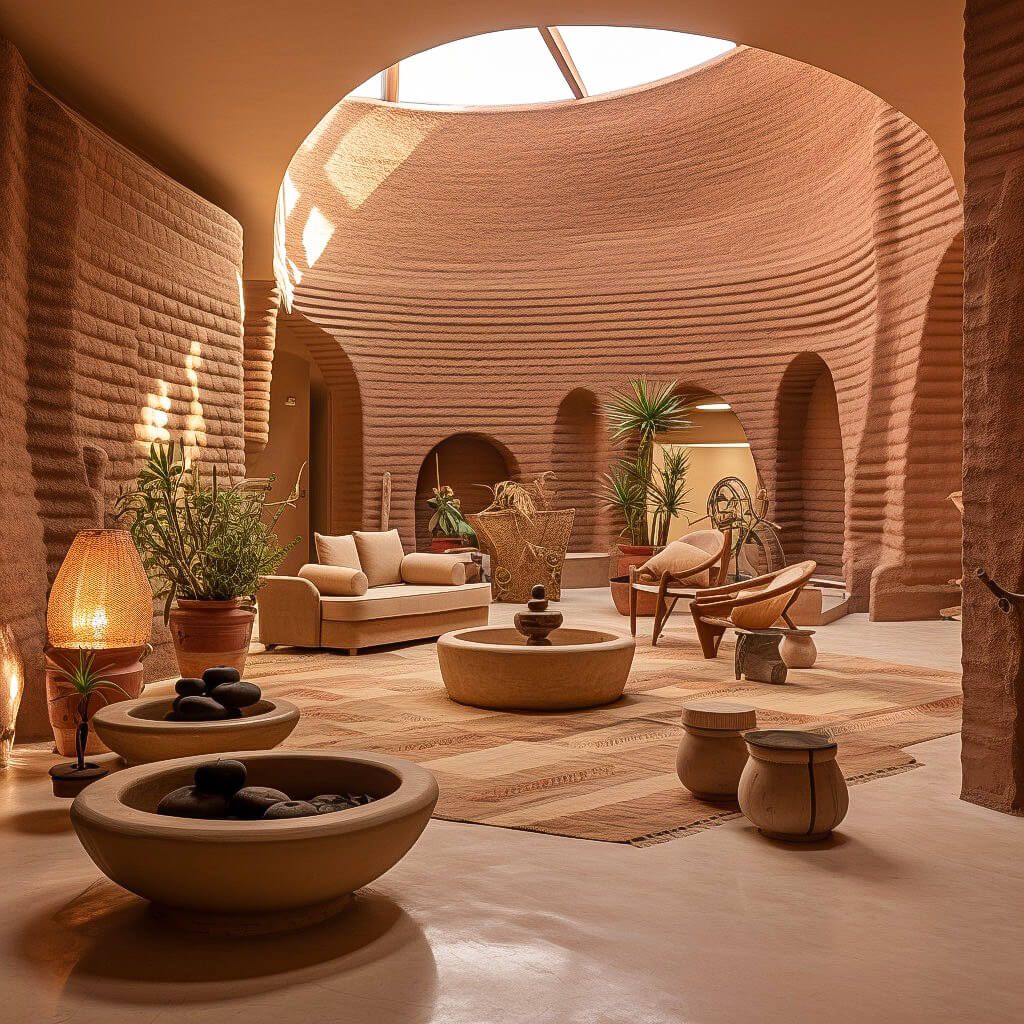
Short Answer
The arid expanse of a desert, where the sun’s relentless gaze sculpts the land into undulating dunes and jagged mesas, has long been a canvas for human imagination. Yet, it is not merely the harshness of such environments that captivates us—it is their paradoxical beauty, a harmony of stark contrasts where resilience and adaptation thrive. This fascination has bled into the realm of architecture, giving rise to a movement where buildings no longer stand in opposition to their surroundings but instead become the landscape. Among these organic marvels, cactus-inspired architecture emerges as a striking testament to humanity’s ability to learn from nature’s most tenacious creations. These structures, with their spiky silhouettes and water-storing forms, are not just aesthetic nods to the desert’s flora; they are a profound reimagining of how we inhabit the world, blending sustainability with surrealism.
The Allure of the Cactus: Why We’re Drawn to Its Form
There is something inherently rebellious about the cactus—a plant that defies convention by thriving where others wither. Its thick, fleshy stems, adorned with spines that double as water regulators and predators deterrents, are a masterclass in evolutionary ingenuity. Architects and designers, ever in pursuit of forms that marry function with fantasy, have turned to this desert dweller for inspiration. The cactus’s segmented, bulbous structure offers a blueprint for buildings that can expand and contract with environmental demands, much like the plant’s own adaptations. This biomimicry is not merely decorative; it is a radical departure from the rigid, energy-guzzling boxes that dominate urban landscapes. Instead, these buildings breathe, storing heat during the day and releasing it at night, or collecting rainwater in their ribbed exteriors. The cactus, in all its prickly glory, becomes a symbol of how we might reconcile human ambition with ecological stewardship.
Spines as Sentinels: Structural Resilience in Harsh Climates
One of the most striking features of cactus-inspired architecture is the integration of spines—not as mere ornamentation, but as structural reinforcements. These sharp protrusions, which in nature serve to protect the plant from herbivores and reduce airflow to minimize water loss, are reimagined in buildings as shading elements, ventilation ducts, or even load-bearing supports. Take, for instance, the Saguaro Tower in Dubai, a skyscraper whose façade is punctuated by vertical fins that mimic the ribs of a cactus. These fins not only cast shifting shadows to cool the interior but also create a dynamic interplay of light and shadow that transforms the building’s appearance throughout the day. Such designs challenge the notion that resilience must come at the cost of beauty. Instead, they prove that the most durable structures can also be the most visually arresting, their forms a direct response to the unforgiving climates they inhabit.
Water as Currency: The Cactus’s Lesson in Conservation
In a world where water scarcity looms as one of the most pressing challenges of the 21st century, the cactus’s ability to hoard moisture in its flesh offers a vital lesson. Buildings inspired by this principle often feature undulating, bulbous forms that maximize surface area for water collection while minimizing evaporation. The Desert Bloom Pavilion, a temporary structure in the Arabian Peninsula, exemplifies this approach with its pleated, petal-like roof that funnels rainwater into underground storage tanks. The design is not just pragmatic; it is poetic, evoking the way a cactus’s pleats expand to absorb moisture after a rare desert shower. This architectural mimicry extends beyond mere functionality—it is a cultural shift, a rejection of the wasteful excesses of modern construction in favor of a more symbiotic relationship with the environment. The cactus, in this context, is not just a muse but a mentor.
From Prickly to Poetic: The Aesthetic Revolution of Cactus Architecture
Yet, to reduce cactus-inspired architecture to its practical merits would be to overlook its most intoxicating quality: its surreal beauty. These buildings are not just functional; they are fantastical, as if plucked from the pages of a science fiction novel where nature and technology have merged into something entirely new. The Prickly Pear Residence in Arizona, with its asymmetrical, ribbed walls that resemble a cluster of cacti, blurs the line between structure and organism. Its interiors are bathed in diffused light, filtered through translucent panels that mimic the way a cactus’s spines scatter sunlight. This aesthetic revolution is not confined to deserts; it has infiltrated urban landscapes, where buildings like the Green Spine in Melbourne draw from the cactus’s organic forms to create a skyline that feels alive. The message is clear: architecture need not be cold and mechanical. It can be warm, adaptive, and even whimsical—a living extension of the world around us.
The Deeper Fascination: What Cactus Architecture Reveals About Us
But why does this particular form of biomimicry resonate so deeply? The answer may lie in our collective subconscious. The cactus is a survivor, a symbol of endurance in the face of adversity. In an era marked by climate anxiety and rapid urbanization, its resilience speaks to a universal desire for harmony with nature. Moreover, the cactus’s otherworldly appearance taps into a longing for the exotic, the untamed—a counterpoint to the sterile, grid-like cities that dominate our modern existence. There is also an element of defiance in these designs. By embracing the cactus’s prickly, irregular forms, architects are rejecting the homogeneity of globalized architecture, opting instead for structures that are unapologetically local, unapologetically themselves. In this way, cactus-inspired buildings are not just physical entities; they are declarations of identity, a refusal to blend into the background.
Beyond the Desert: The Global Implications of Cactus-Inspired Design
The influence of cactus architecture is not limited to arid regions. As climate change reshapes weather patterns, the principles of water conservation, thermal regulation, and organic form are becoming increasingly relevant worldwide. In temperate climates, buildings inspired by the cactus’s segmented structure can offer superior insulation, reducing energy costs while enhancing aesthetic appeal. Even in tropical zones, where humidity is the primary challenge, architects are drawing from the cactus’s ability to regulate internal moisture, creating facades that breathe and adapt. This cross-pollination of ideas underscores a broader truth: the solutions to our most pressing environmental challenges may already exist in nature, waiting to be translated into the language of design. The cactus, once a humble desert dweller, has become a global icon—a reminder that innovation often begins in the most unexpected of places.
Conclusion: Building a Future as Resilient as It Is Radiant
Cactus-inspired architecture is more than a trend; it is a manifesto. It challenges us to rethink our relationship with the environment, to see buildings not as static objects but as dynamic, living entities. These structures—spiky, surreal, and utterly captivating—are a testament to human creativity, proving that sustainability and beauty are not mutually exclusive. As we stand on the precipice of a climate crisis, the cactus offers a roadmap: one of adaptation, of grace under pressure, of finding strength in the most unlikely of teachers. The future of architecture, it seems, may well be prickly—but it will also be glorious.
FAQ
What is cactus-inspired architecture?
Cactus-inspired architecture refers to buildings that mimic the forms and functions of cacti, integrating sustainability and aesthetic beauty.



Leave a Reply