
Short Answer
Imagine a future where humanity’s first extraterrestrial colonies thrive not in gleaming metal domes or sterile laboratories, but in the spiny embrace of cacti. This isn’t the stuff of science fiction—it’s a radical yet plausible vision, where the humble desert plant becomes the linchpin of sustainable life on Mars. The idea isn’t just whimsical; it’s a testament to nature’s ingenuity, repurposed for the harshest frontier humanity has ever dared to conquer. As we stand on the precipice of interplanetary colonization, the cactus emerges not as a mere botanical curiosity, but as a symbol of resilience, adaptability, and the unbreakable bond between Earth’s ecosystems and humanity’s boldest dreams.
The Cactus as a Martian Pioneer: Nature’s Master of Adaptation
Mars is a world of extremes—scorching days, frigid nights, thin carbon dioxide-rich air, and relentless radiation. Against this backdrop, the cactus stands as a paragon of evolutionary brilliance. Its thick, waxy skin minimizes water loss, its shallow but extensive root systems snatch moisture from the barest hints of dew, and its ribbed or pleated structure allows it to expand and contract with the mercurial Martian climate. These aren’t just survival traits; they’re blueprints for survival in a world where every drop of water is precious and every degree of temperature fluctuation is a potential death sentence.
But the cactus’s genius doesn’t end with its physiology. Its symbiotic relationships with microbes and fungi create micro-ecosystems that could be replicated in Martian soil. Imagine cacti inoculated with nitrogen-fixing bacteria, their roots weaving through regolith (Martian soil) to coax life from the sterile dust. This isn’t just agriculture—it’s terraforming in miniature, a slow but sure way to coax Mars into bearing fruit for human settlers. The cactus, in this context, becomes more than a plant; it’s a living bridge between the lifeless and the livable.
Water Harvesting: The Cactus as a Living Oasis
Water is the lifeblood of any colony, and on Mars, it’s buried in permafrost or locked in polar ice caps. Extracting it is energy-intensive, requiring heavy machinery and complex infrastructure. Enter the cactus—a natural water harvester that could operate with minimal human intervention. Some species, like the barrel cactus, store up to 200 gallons of water in their stems, a feat that would make them invaluable in a Martian settlement. By cultivating these species in controlled environments, colonists could create decentralized water reserves, reducing reliance on centralized extraction systems.
But the cactus’s role doesn’t end with storage. Its ability to condense moisture from the air—even in the thin Martian atmosphere—could be harnessed through bioengineering. Picture cacti genetically modified to exude water vapor in response to temperature shifts, effectively turning them into living dehumidifiers. This isn’t just efficient; it’s elegant. It turns a plant into a piece of infrastructure, blurring the line between biology and technology in a way that feels almost magical.
Shelter and Structure: The Cactus as Architectural Ally
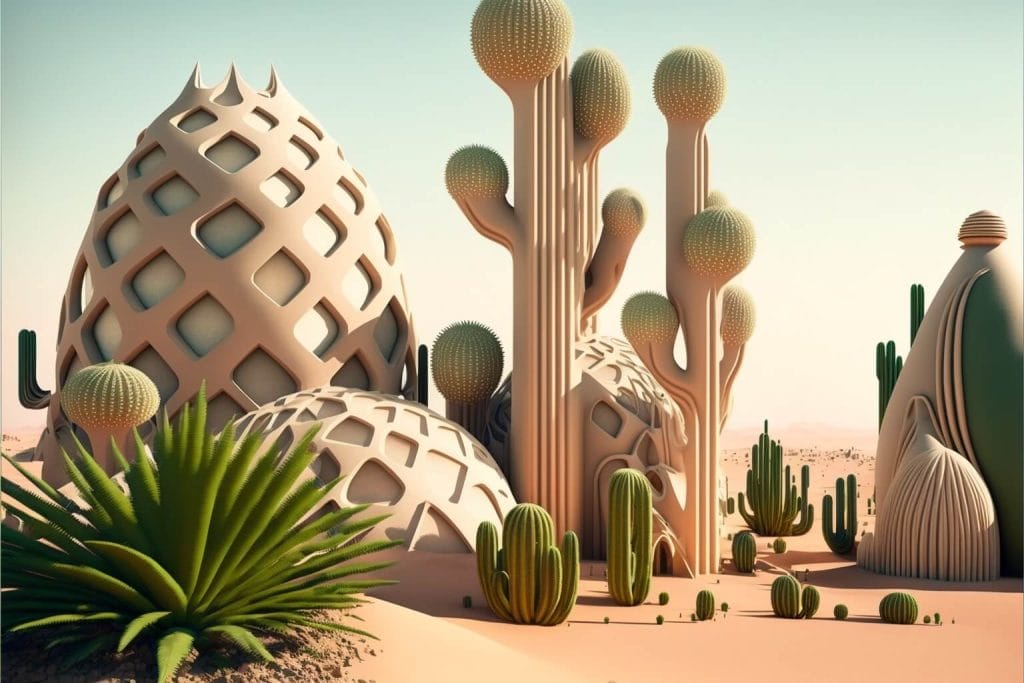
Mars demands habitats that are both protective and psychologically comforting. The cactus’s morphology offers unexpected solutions. Its columnar forms, like those of the saguaro, could inspire lightweight, modular structures that grow over time, adapting to the needs of the colony. Imagine inflatable habitats seeded with cactus-like fibers that harden into rigid walls as they absorb Martian moisture. The result? A habitat that doesn’t just shelter but evolves, mirroring the organic growth of the plants themselves.
Beyond structure, the cactus could redefine interior design in Martian habitats. Its spines, often seen as a deterrent, could be repurposed as natural filtration systems, trapping dust particles and purifying the air. Its flowers, when cultivated, could provide not just beauty but edible nectar or even medicinal compounds. In a world where every resource is scrutinized, the cactus becomes a multi-functional marvel—a living HVAC system, a water tower, and a source of food, all in one.
Psychological Resilience: The Cactus as a Beacon of Hope
Colonizing Mars isn’t just a technical challenge; it’s a psychological one. The isolation, the alien landscape, the constant reminder of Earth’s absence—these are burdens that weigh heavily on the human spirit. Here, the cactus shines as a symbol of perseverance. Its stark beauty, its defiance of harsh conditions, its slow but inevitable growth—all of these qualities resonate with the human experience of endurance. A colony dotted with thriving cacti isn’t just a functional outpost; it’s a testament to human ingenuity and the indomitable will to thrive.
Moreover, the act of tending to cacti could become a vital coping mechanism for settlers. Horticulture has long been a source of solace, a way to ground oneself in the familiar when surrounded by the unknown. On Mars, where the horizon is a rust-colored expanse and the sky is a perpetual twilight, the sight of a cactus unfurling its spines to greet the sun could be a daily reminder that life, in all its forms, is possible—even in the most inhospitable of places.
The Deeper Fascination: Why the Cactus Captivates Our Imagination
There’s something deeply poetic about the idea of cacti on Mars. It speaks to a fundamental human desire: to find harmony in chaos, to see beauty in barrenness, to believe that life can take root anywhere if given the chance. The cactus, with its paradoxical blend of fragility and fortitude, embodies this tension. It’s a plant that thrives where others wither, that stores life in its body to endure the longest droughts, that turns adversity into opportunity.
This fascination isn’t just about survival—it’s about identity. By bringing Earth’s most resilient plants to Mars, we’re not just exporting life; we’re exporting a piece of our planet’s soul. The cactus becomes a cultural artifact, a living link between two worlds. It challenges us to rethink what it means to be a colonizer—not as a conqueror, but as a collaborator with nature. In this light, the cactus isn’t just a tool; it’s a philosophy, a declaration that even in the void of space, we can create something wondrous.
Conclusion: A Green Revolution on the Red Planet
The path to a sustainable Martian colony is paved with innovation, but it’s also paved with humility—a recognition that some of Earth’s oldest solutions might hold the keys to our future. The cactus, with its unassuming strength and quiet adaptability, offers a blueprint for survival that is as poetic as it is practical. It reminds us that life doesn’t need to be flashy or high-tech to be revolutionary. Sometimes, the most profound breakthroughs come from the simplest organisms, if only we’re willing to look closely enough.
As we stand on the cusp of this new era, let’s not underestimate the power of a single spine, a single drop of stored water, a single moment of green against the rust. The cactus on Mars isn’t just a plant. It’s a promise—a promise that where there is life, there is hope, and where there is hope, there is a future worth fighting for.
FAQ
How can cacti survive on Mars?
Cacti can survive on Mars due to their unique adaptations such as water storage, efficient moisture harvesting, and symbiotic relationships with microbes.
What role do cacti play in Martian colonization?
Cacti could provide water, shelter, and psychological comfort to settlers, making them vital for sustainable living on Mars.



Leave a Reply