
Short Answer
Beneath the blazing sun of arid landscapes, where the earth cracks like parched lips, an unseen war rages. It is not fought with bullets or bombs, but with roots that strangle, stems that smother, and seeds that hitch rides on the wind—an invasion so subtle, so relentless, that entire ecosystems tremble. Invasive species, those ecological nomads uprooted from their native soils and deposited into foreign terrains, are reshaping the destiny of native cactus genera across the globe. What begins as a single rogue plant can burgeon into a botanical apocalypse, unraveling millennia of evolutionary harmony. This is not just a story of plants. It is a saga of survival, adaptation, and the fragile balance between nature’s order and humanity’s unintended disruption.
The Silent Invasion: How Foreign Flora Become Ecological Usurpers
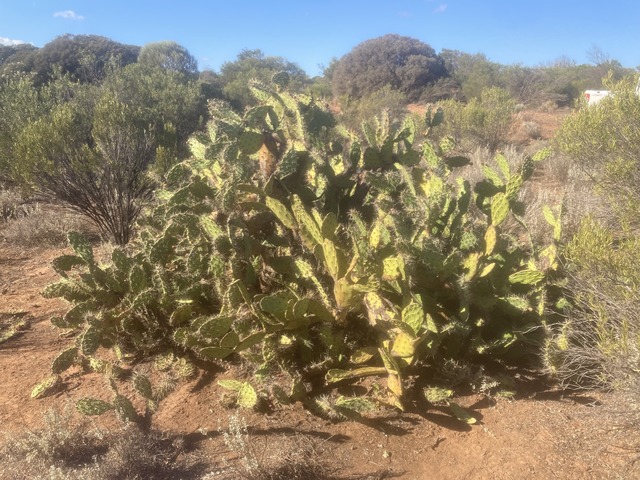
Picture a saguaro, its towering arms etched against the desert sky like ancient sentinels. Now imagine a prickly pear, not native to this land, creeping across the soil with relentless vigor. Invasive cacti often arrive as ornamental curiosities or accidental stowaways, their resilience honed in harsh native climates. Once transplanted, they find themselves in an environment devoid of their natural predators—beetles, fungi, or grazing mammals that once kept their growth in check. Without these checks, they proliferate unchecked, their pads forming dense mats that block sunlight, their roots siphoning water from the thirsty earth. The result? A silent coup d’état, where the invader doesn’t just coexist with native flora—it eradicates it.
This phenomenon is not confined to deserts. Coastal dunes, once home to delicate endemic cacti, now face encroachment by hardy invaders like Opuntia stricta, a species that thrives in disturbed soils and spreads through fragmentation. A single broken pad can root and grow, giving rise to a new colony. In South Africa, this cactus has transformed vast stretches of land into impenetrable thickets, rendering once-vibrant ecosystems barren. The invader doesn’t just compete—it monopolizes.
Ecosystem Disruption: When Cacti Become the Bullies of the Botanical World
Cacti are more than just spiny survivors; they are keystone species, their presence shaping entire ecological networks. Native cacti provide nectar for pollinators, shelter for reptiles, and food for herbivores. When invasive cacti muscle in, they don’t just occupy space—they dismantle these intricate relationships. Consider the cholla cactus, a native of the Sonoran Desert. Its dense clusters offer nesting sites for birds and refuge for small mammals. Introduce Cylindropuntia imbricata, a Eurasian invader, and suddenly, the cholla’s ecological role is diluted. The new arrival may not support the same suite of pollinators or provide the same structural complexity, leading to cascading declines in species that once depended on the native cactus.
Worse still, invasive cacti can alter soil chemistry. Their dense root systems exude allelopathic compounds—chemicals that inhibit the growth of neighboring plants. Over time, this creates a monoculture where only the invader thrives. In Australia, invasive prickly pear species have turned once-diverse grasslands into monotonous cactus fields, starving native grazers and reducing biodiversity to a shadow of its former self. The land, once a mosaic of life, becomes a fortress of spines.
Human Hands: The Unwitting Architects of Botanical Displacement
We often plant the seeds of ecological disaster without realizing it. Landscapers, gardeners, and even well-meaning conservationists have introduced cacti species far from their native ranges, unaware of their potential to wreak havoc. The Hylocereus cactus, prized for its dragon fruit, has escaped cultivation in regions like Florida and Hawaii, where it climbs trees and smothers native vegetation. Similarly, Consolea species, native to the Caribbean, have become invasive in parts of the Mediterranean, their sprawling growth choking out local flora.
Even climate change plays a role. As temperatures rise and rainfall patterns shift, invasive cacti find new territories hospitable. A species once limited to the arid Southwest may now thrive in once-cooler, wetter regions, its range expanding like a stain on a map. Human activity—through global trade, agriculture, and land development—has greased the wheels of this invasion, turning local ecosystems into battlegrounds of survival.
The Domino Effect: How One Invader Triggers a Chain Reaction
The impact of invasive cacti extends far beyond the plants themselves. When native cacti decline, so do the species that rely on them. The Gila woodpecker, for instance, depends on saguaros for nesting cavities. A decline in saguaros means fewer homes for woodpeckers, which in turn affects predators like the elf owl. This ripple effect can unravel entire food webs. Invasive cacti may also alter fire regimes. Dense stands of Opuntia species can act as fuel for wildfires, transforming landscapes into charred wastelands where native cacti struggle to regenerate.
In some cases, the invasion triggers a feedback loop. As native cacti disappear, soil erosion increases, further degrading the habitat. This creates ideal conditions for more invasive species to take hold, perpetuating a cycle of ecological degradation. It’s a downward spiral, where each loss begets more loss, and the landscape is forever altered.
Fighting Back: Strategies to Restore Balance
Yet, where there is destruction, there is also hope. Restoration ecologists are deploying innovative strategies to combat invasive cacti and revive native genera. Mechanical removal—using bulldozers, chainsaws, or even targeted herbicides—can curb the spread of invaders, though it requires persistence and precision. Biological control offers another avenue. In Australia, the cactus moth Cactoblastis cactorum was introduced to control invasive prickly pear, its larvae devouring the cactus pads from within. While effective, such methods demand rigorous testing to avoid unintended consequences.
Community engagement is equally vital. Indigenous knowledge, honed over generations, often holds the key to sustainable management. In Mexico, local communities have long used controlled burns and selective grazing to maintain cactus populations. By integrating traditional practices with modern science, we can develop holistic approaches to restoration. Education, too, plays a crucial role. By raising awareness about the risks of planting invasive species, we can prevent future ecological disasters before they begin.
The Future of the Desert: Can Native Cacti Survive the Onslaught?
The fate of native cacti hangs in a delicate balance. Some species, like the Echinocactus grusonii (golden barrel cactus), are critically endangered due to habitat loss and invasive competition. Others, such as the Ferocactus species, face genetic dilution as invasive cacti hybridize with their native kin. Yet, pockets of resilience remain. In protected reserves and carefully managed landscapes, native cacti continue to thrive, their spines standing defiant against the tide of invasion.
The story of invasive cacti is a cautionary tale, a reminder that nature’s equilibrium is fragile. It challenges us to rethink our relationship with the land—not as conquerors, but as stewards. The deserts, once thought indomitable, are now battlegrounds where the survival of native cacti hangs in the balance. Will we act in time to restore the balance, or will we stand by as silent witnesses to the silent invasion?
In the end, the fate of native cacti is not just a botanical concern—it is a reflection of our own choices. Every plant we introduce, every landscape we alter, carries consequences. The question is not whether invasive species will reshape our world, but whether we will let them do so unchecked. The deserts, with their silent sentinels of stone and spine, are watching. And they are waiting for us to decide: will we be the architects of their salvation, or the unwitting architects of their demise?
FAQ
What are invasive cactus species?
Invasive cactus species are non-native plants that disrupt local ecosystems, often outcompeting native species for resources.
How do invasive cacti affect native ecosystems?
They can monopolize resources, alter soil chemistry, and disrupt the relationships between native plants and the species that depend on them.
What can be done to manage invasive cactus species?
Strategies include mechanical removal, biological control, and community engagement in conservation practices.

Leave a Reply