
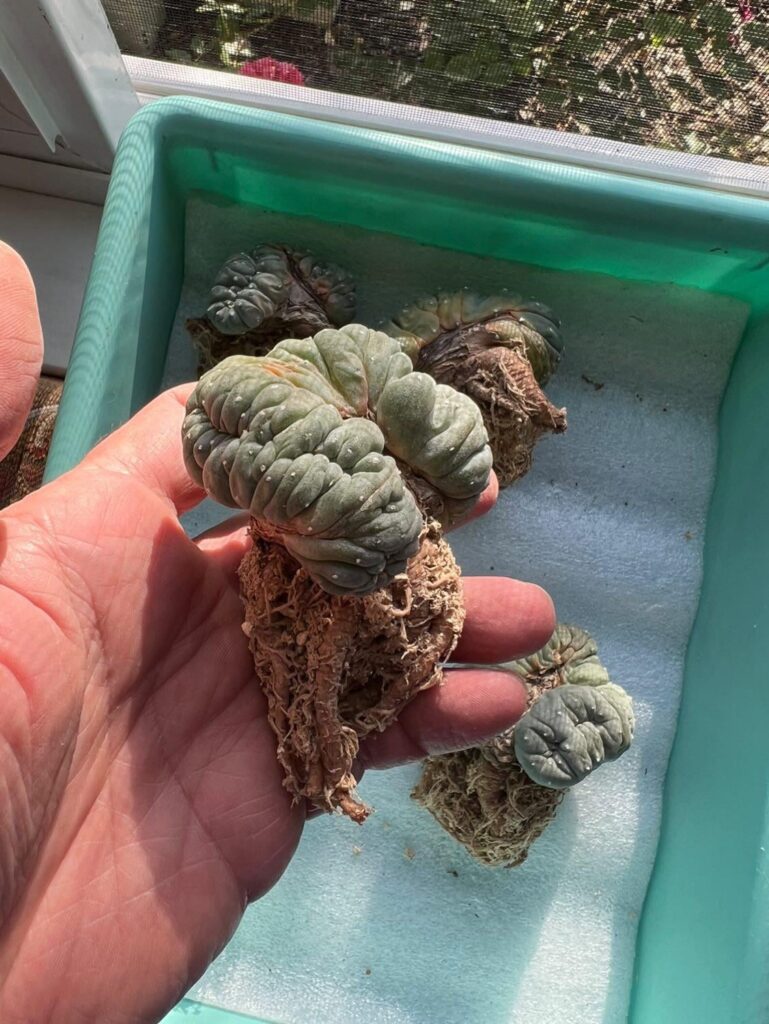
Short Answer
Imagine a world where tiny, unassuming seeds hold the power to unlock the secrets of ancient cacti, where patience and precision intertwine to coax life from the most unlikely of origins. This is the realm of Lophophora, a genus of slow-growing, sacred cacti whose propagation from seed is nothing short of alchemy. To embark on this journey is to step into a dance with time itself, where each careful gesture plants the seeds of a future lush with emerald rosettes and spiraling ribs. But why, you might ask, would one choose the arduous path of seed propagation over the simplicity of offsets or cuttings? The answer lies not just in the thrill of creation, but in the promise of a deeper connection to the natural world—a chance to witness the full arc of a plant’s life, from its first tentative unfurling to its mature, majestic form.
The Allure of Seed Propagation: Why It’s Worth the Wait
In an era where instant gratification often trumps the slow burn of nature’s rhythms, propagating Lophophora from seed is an act of defiance. It is a rebellion against the disposable culture that surrounds us, a commitment to the idea that some things—like the growth of a sacred cactus—cannot be rushed. When you start from seed, you are not just a gardener; you are a steward of a lineage, a participant in a millennia-old tradition of cultivation that stretches back to the indigenous peoples of the Americas.
The rewards are manifold. For one, seed-grown plants often exhibit more vigorous root systems and greater genetic diversity, making them hardier and more adaptable. There is also the sheer joy of watching a seed no larger than a grain of sand transform into a living sculpture over years. Each Lophophora seedling is a blank canvas, its future form shaped by the subtle interplay of light, soil, and care. And let’s not forget the intellectual satisfaction—mastering the art of seed propagation is akin to learning a new language, one where the vocabulary is patience and the grammar is meticulous observation.
Gathering Your Arsenal: The Tools of the Trade
Before you can coax life from the earth, you must arm yourself with the right tools. This is not a pursuit for the half-hearted; it demands precision, cleanliness, and a touch of obsessive-compulsive flair. Begin with a shallow, sterile container—plastic seed trays with drainage holes are ideal, their uniformity ensuring even moisture distribution. A fine misting bottle will become your best friend, dispensing water in delicate droplets rather than the brute force of a watering can. For soil, a mix of 50% inorganic material (such as perlite or pumice) and 50% organic matter (like coconut coir or peat moss) strikes the perfect balance between aeration and moisture retention.
You’ll also need a magnifying glass or jeweler’s loupe to inspect your seeds, a pair of tweezers for delicate handling, and a humidity dome to create a microclimate of tropical intensity. And do not underestimate the power of labels—each seed tray should be marked with the species, date of sowing, and any other pertinent details. In this endeavor, organization is not just practical; it is a form of self-respect.
The Art of Sowing: A Dance of Precision and Patience
Now comes the moment of truth: sowing the seeds. This is where the magic begins, where the inert becomes animate. Start by filling your container with the prepared soil mix, leaving a half-inch gap at the top to allow for watering. Gently tamp the soil down to create a firm, level surface—this prevents the seeds from sinking too deep, where they might suffocate before they can sprout. Using your tweezers, place each seed on the soil’s surface, spacing them at least an inch apart to minimize competition for resources.
Here’s where things get interesting. Lophophora seeds are photoblastic, meaning they require light to germinate. Do not bury them; instead, press them lightly into the soil so they make contact but remain visible. A light dusting of fine sand or vermiculite can help anchor them in place while still allowing light to penetrate. Once sown, mist the soil thoroughly until water beads on the surface, then place the container in a warm, bright location—ideally between 70°F and 80°F (21°C to 27°C). Cover the tray with your humidity dome to trap moisture, and resist the urge to peek. Germination can take anywhere from a few days to several weeks, and each day is a test of your resolve.
Nurturing the Sprouts: The Delicate Art of Early Care
As the first green specks emerge from the soil, a new phase begins—one of vigilance and tenderness. The seedlings are fragile, their roots still tentative, their bodies no larger than a pinhead. Watering must be done with the utmost care; a heavy hand can dislodge the seedlings or encourage damping-off, a fungal disease that turns them to mush overnight. Instead, use your misting bottle to create a fine rain, keeping the soil consistently moist but never soggy. If you’re using a humidity dome, crack it open slightly each day to prevent mold and allow the seedlings to acclimate to the outside world.
Light is the next critical factor. While Lophophora seedlings can tolerate lower light levels initially, they will need increasing exposure to bright, indirect light as they grow. A south-facing windowsill or a grow light set to 12 hours a day is ideal. Be mindful of temperature fluctuations, too—seedlings are sensitive to cold drafts and sudden drops in temperature. If you’re growing indoors, consider placing the tray on a heat mat to maintain a steady warmth.
And then there’s the matter of thinning. Not all seeds will germinate, and not all seedlings will thrive. Once the sprouts have developed their first pair of true leaves (distinct from the initial cotyledons), it’s time to cull the weaklings. Gently remove the smallest or most deformed seedlings with tweezers, leaving only the strongest to continue their journey. This is a ruthless but necessary step—overcrowding leads to stunted growth and increased susceptibility to disease.
The Long Game: Transplanting and Maturation
Months will pass. Seasons will change. The seedlings, once the size of a grain of rice, will grow into plump, thumb-sized rosettes. This is where many cultivators falter—impatient for visible progress, they overwater or over-fertilize, only to watch their charges wither. Resist the urge. Lophophora is a slow grower by design, and its needs remain simple: bright light, minimal water, and a soil mix that mimics its native desert habitats.
When the seedlings are large enough to handle (typically after 6 to 12 months), it’s time to transplant them into individual pots. Use the same soil mix as before, but consider adding a top dressing of coarse sand or grit to prevent moisture from pooling around the base. Water sparingly for the first week to reduce transplant shock, then resume your regular care routine. As the plants mature, you may notice the first hints of rib formation or the emergence of the characteristic cephalium—the woolly crown where flowers will one day bloom.
Patience is the final ingredient in this recipe for success. Some Lophophora species may take five years or more to reach flowering size, and even then, the blooms are fleeting—a testament to the ephemeral nature of beauty. But in that time, you will have done more than grow a plant. You will have cultivated a relationship with a living being, one that responds to your care with slow, steady growth and the occasional burst of floral magic.
Troubleshooting: When Things Go Awry
Even the most meticulous cultivator will encounter setbacks. Perhaps your seedlings have stretched thin and leggy, a sign of insufficient light. Maybe a fuzzy white mold has appeared, a symptom of overwatering or poor air circulation. The key is to diagnose the problem early and act decisively. Leggy seedlings can be saved by increasing light exposure or using a fan to strengthen their stems. Mold requires immediate removal of affected plants, a reduction in moisture, and a sprinkle of cinnamon (a natural fungicide) on the soil.
Pests, too, can be a nuisance. Mealybugs and spider mites may target your Lophophora, their presence betrayed by cottony webs or stippled leaves. Isolate affected plants and treat them with a solution of neem oil and water, repeating the application weekly until the pests are gone. And if your plants begin to yellow or wrinkle, it’s a cry for help—likely a sign of overwatering, underwatering, or a nutrient deficiency. Adjust your care accordingly, and remember: the plant is always speaking, if only you know how to listen.
The Reward: A Legacy in the Making
To propagate Lophophora from seed is to participate in a tradition that spans generations. It is to hold in your hands the potential for life, to shape a future where these sacred cacti thrive not just in the wild, but in the hearts of those who have nurtured them from the very beginning. There is no greater satisfaction than watching a seed you planted years ago burst into bloom, its flowers a fleeting but glorious reward for your dedication.
So go ahead. Order those seeds. Prepare your trays. Ready your tweezers. The journey is long, but the destination—a garden of your own making—is worth every moment of waiting.
FAQ
What is Lophophora?
Lophophora is a genus of slow-growing cacti, often known for their psychoactive properties and unique appearance.
How long does it take for Lophophora seeds to germinate?
Germination can take anywhere from a few days to several weeks, depending on conditions.
What soil mix is best for Lophophora seedlings?
A mix of 50% inorganic material like perlite or pumice and 50% organic matter such as coconut coir or peat moss is recommended.
FAQ
What is Lophophora?
Lophophora is a genus of slow-growing cacti, often referred to as peyote, known for their psychoactive properties and unique appearance.
How long does it take for Lophophora seeds to germinate?
Germination can take anywhere from a few days to several weeks, depending on the conditions provided.
What soil mix is best for propagating Lophophora?
A mix of 50% inorganic material (like perlite) and 50% organic matter (such as coconut coir) is ideal for Lophophora propagation.



Leave a Reply