
Short Answer
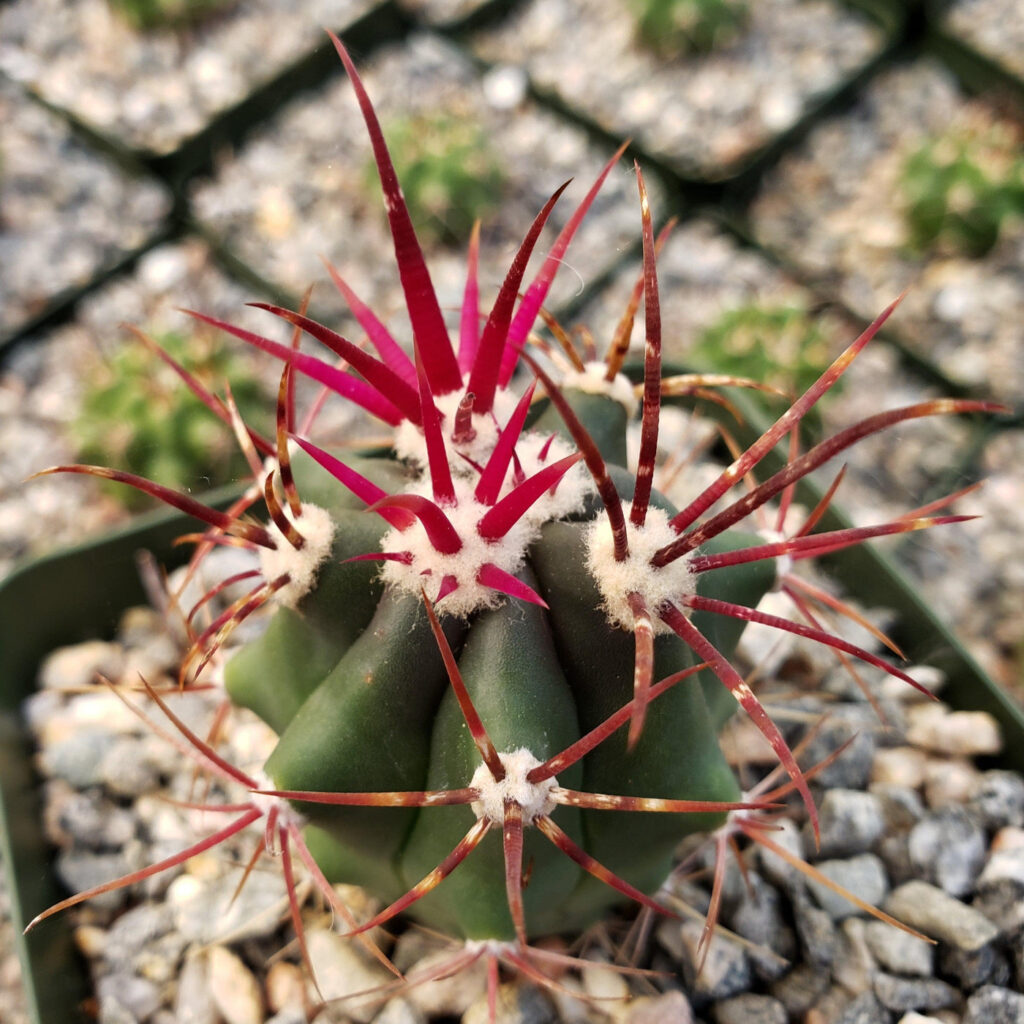
Imagine a desert monarch, a sentinel of arid grandeur, whose very survival hinges on the alchemy of earth and sky. The Ferocactus, with its bold ribs and defiant spines, is not merely a plant—it is a living paradox, thriving where most would wither. To nurture such a botanical sovereign, one must understand the sacred balance of soil: a medium that breathes, drains, and nourishes without suffocating. This is not just horticulture; it is an act of reverence for a species that has perfected the art of resilience.
The Alchemy of Drainage: The Ferocactus’s Lifeline
Picture soil as a fortress. For the Ferocactus, whose roots are as proud as its crown, the walls of this fortress must be porous, allowing excess water to flee like a thief in the night. A heavy, moisture-retentive soil is the equivalent of a slow, suffocating embrace—one that spells doom for these sun-worshipping titans. The ideal substrate is a blend of grit and grace: coarse sand, perlite, or pumice mingling with a whisper of organic matter, like a desert wind carrying the faintest hint of decaying leaves.
Why? Because the Ferocactus hails from landscapes where rain is a rare and fleeting guest. Its roots, thick and fibrous, are designed to gulp water in torrential gulps and then retreat into dormancy, waiting for the next celestial offering. A soil that clings to moisture is a betrayal—a false promise of abundance that leads only to rot. Instead, envision a soil that crumbles like ancient adobe underfoot, its particles coarse enough to let gravity do its work, yet fine enough to cradle the roots in a gentle, temporary embrace.
The Mineral Mandate: Coarse Sand and the Desert’s Wisdom
Not all sand is created equal. The Ferocactus demands the grittiness of a riverbed after a storm, where each grain is a tiny fortress against excess moisture. River sand, horticultural grit, or even decomposed granite—these are the unsung heroes of its subterranean world. They ensure that water slips through like a thief through a crowd, leaving the roots dry and dignified.
But here’s the twist: even in its thirst, the Ferocactus is discerning. It does not crave the sterility of pure mineral, nor the cloying richness of peat-heavy mixes. Instead, it seeks a middle path—a marriage of inorganic grit and the faintest whisper of organic humus. Think of it as a desert banquet: the sand is the table, the humus is the scattered crumbs of a long-past feast, and the Ferocactus is the guest who arrives only when the table is set just right.
The Nutrient Paradox: Less is a Feast
In the world of the Ferocactus, fertility is a double-edged sword. Too much, and the plant grows soft, its spines losing their ferocity, its ribs swelling with unchecked vigor. Too little, and it starves, its once-vibrant green fading to a dull, defeated gray. The solution? A diet of restraint. A lean soil, one that offers just enough sustenance to keep the cactus alive but not so much that it forgets its roots—or rather, its lack thereof.
Organic matter should be sparse, a mere seasoning rather than the main course. A handful of compost, a dusting of worm castings—these are the spices of its existence. The Ferocactus does not need the opulence of a tropical jungle floor; it thrives in the austerity of a sunbaked plain, where nutrients are hard-won and water is a luxury. This is not deprivation; it is discipline. And discipline, for the Ferocactus, is the path to grandeur.
The pH Enigma: Alkalinity as a Shield
Soil pH is the silent guardian of the Ferocactus’s domain. These cacti are born of alkaline soils, where the earth’s chemistry is as harsh as the sun above. A pH between 6.5 and 7.5 is ideal—neutral enough to avoid the toxicity of extreme acidity, yet alkaline enough to mimic the mineral-rich soils of their native habitats. Too acidic, and the roots wither, unable to absorb the nutrients they need. Too alkaline, and the soil becomes a prison, locking away essential minerals in a chemical fortress.
To test the soil’s temperament, one might use a simple pH strip, but the true test is in the cactus itself. A thriving Ferocactus is a living barometer, its vibrant color and sturdy form a testament to the harmony of its underground world. Adjust the pH with limestone to raise it, or sulfur to lower it—but do so with the precision of a sculptor, for the wrong touch can shatter the balance.
The Repotting Ritual: A Sacred Exchange
Repotting is not merely a chore; it is a rite of passage for both plant and gardener. Every two to three years, the Ferocactus demands a new home, a fresh start in a soil that has not yet been depleted by its own roots. This is the moment to inspect the plant’s subterranean life, to prune any rotting tendrils and replace the old medium with a blend that whispers of distant dunes and sun-scorched stones.
Choose a pot that is barely larger than the cactus itself—just enough room for growth, but not so much that the soil remains damp for too long. Terracotta is the vessel of choice, its porous walls allowing the soil to breathe, its earthy tones a nod to the cactus’s origins. As you nestle the plant into its new home, remember: you are not just transplanting a cactus. You are renewing a covenant between the plant and the earth, a pact that says, “You will not drown. You will not starve. You will flourish.”
The Long Game: Patience as the Ultimate Fertilizer
In a world obsessed with instant gratification, the Ferocactus teaches a different lesson: growth is not a sprint, but a slow, deliberate march. The best soil is not the one that yields immediate results, but the one that fosters a lifetime of resilience. It is the soil that does not pamper, but respects. It is the soil that does not coddle, but challenges.
So tend to your Ferocactus with reverence. Water it sparingly, fertilize it sparingly, and above all, observe. A healthy cactus is a storyteller, its ribs and spines a map of its journey. The soil is the foundation of that story—a silent partner in its defiance, its beauty, its unyielding spirit.
And when, one day, your Ferocactus unfurls its first bloom—a burst of pink or yellow or crimson—you will know that you have not just grown a plant. You have cultivated a legend.
FAQ
What type of soil is best for Ferocactus?
Ferocactus thrives in a well-draining soil mix that includes coarse sand, perlite, or pumice, with minimal organic matter.
How often should I repot my Ferocactus?
Repot your Ferocactus every two to three years to ensure it has fresh soil and enough space for growth.
What is the ideal pH level for Ferocactus soil?
The ideal pH level for Ferocactus is between 6.5 and 7.5, which mimics its natural alkaline habitat.


Leave a Reply