
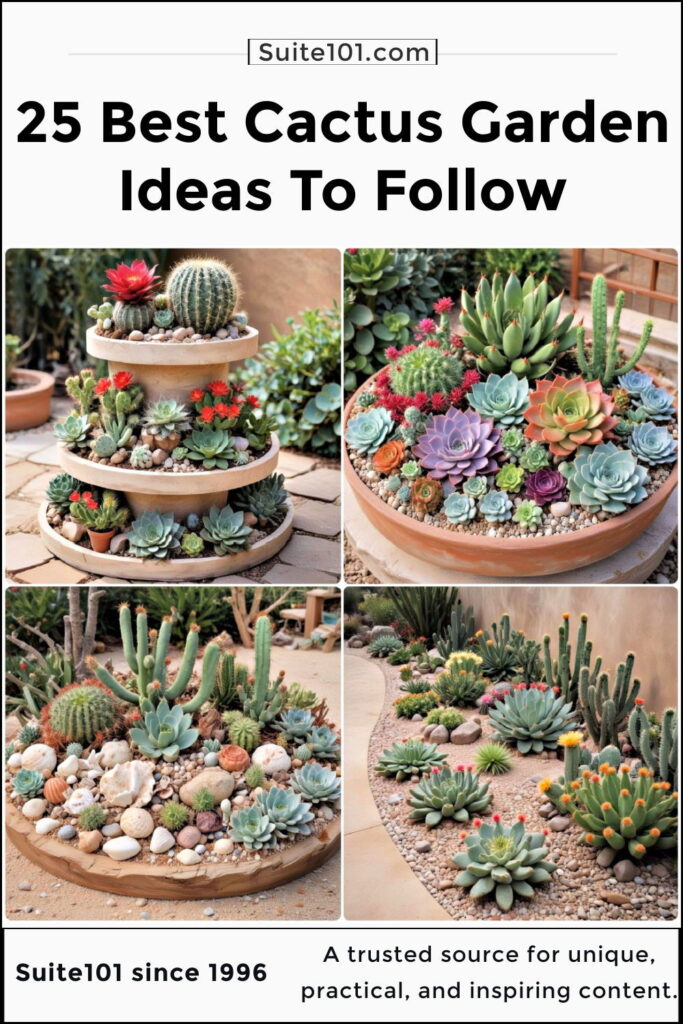
Short Answer
Ever stared at a cluster of spiky sentinels and wondered, “How can I turn these prickly personalities into a living masterpiece?” If so, you’re not alone. Cactus gardens aren’t just patches of desert charm—they’re bold declarations of style, resilience, and botanical audacity. But here’s the rub: not all cacti play well together. Some demand sun-baked solitude, while others thrive in communal harmony. So, how do you curate a garden where every genus feels at home without turning your backyard into a botanical battleground?
The Art of Genus Pairing: Where Contrast Meets Cohesion
Imagine a garden where the architectural drama of Ferocactus meets the delicate lacework of Mammillaria. It’s a visual symphony—one that requires a conductor’s touch. Start by grouping cacti with similar water needs. The Echeveria clan, for instance, thrives in arid conditions but detests soggy roots, while Opuntia species are drought-tolerant powerhouses that laugh in the face of neglect. Mix them carelessly, and you’ll soon be mourning a mushy demise.
Consider texture as your secret weapon. Pair the ribbed, towering Carnegiea gigantea (saguaro) with the soft, fuzzy Cephalocereus senilis (old man cactus), and suddenly, your garden feels like a desert safari meets a cozy cottage. But beware: some pairings are like oil and water. Lophophora (peyote) and Ariocarpus crave shade and humidity, while Gymnocalycium species bask in full sun. The key? Research. Or risk a botanical divorce.


Color Palettes That Pop: Beyond the Usual Green
Cacti aren’t just green—they’re a kaleidoscope of hues waiting to be unleashed. The Echinocactus grusonii (golden barrel) glows like a miniature sun, while Gymnocalycium mihanovichii (moon cactus) flaunts neon pink or orange tops grafted onto green bodies. For a monochromatic masterpiece, lean into the blues and silvers of Agave hybrids or the deep purples of Echeveria ‘Black Prince’.
But here’s where it gets tricky: color clashes can either electrify or overwhelm. A garden awash in reds and oranges might feel like a desert sunset, but pair it with too much yellow, and suddenly, it’s a traffic cone disaster. Instead, anchor bold hues with neutral tones—think the chalky white of Echeveria elegans or the muted gray of Echinopsis hybrids. And don’t forget the power of contrast: a cluster of Parodia in fiery red against a backdrop of Mammillaria elongata’s golden spines creates a visual punch that’s impossible to ignore.

Vertical Drama: Stacking Cacti Like Botanical Skyscrapers
Why settle for a flat landscape when you can create a three-dimensional cactus skyline? Vertical gardens aren’t just for ferns and fuchsias—they’re a cactus’s dream stage. Start with a sturdy trellis or a modular planter system, then layer your genera like a botanical lasagna. Place moisture-loving Rhipsalis at the base, where humidity lingers, and crown your structure with sun-worshipping Trichocereus species.
The challenge? Weight and drainage. A top-heavy Pachycereus pringlei (Mexican giant cardon) can topple a flimsy frame faster than you can say “prickly pear.” Reinforce your structure with lightweight soil mixes—think perlite, pumice, and coarse sand—to keep roots aerated and your garden upright. And remember: vertical gardens dry out faster than their ground-bound cousins. A drip irrigation system or a misting wand becomes your best friend.

Pathways and Borders: The Unsung Heroes of Cactus Design
A cactus garden without pathways is like a book without chapters—it lacks direction. But here’s the catch: not all cacti appreciate foot traffic. The delicate Mammillaria hahniana (old lady cactus) will wilt under the slightest pressure, while Ferocactus species are practically indestructible. The solution? Define your routes with materials that complement your genera. Smooth river stones cradle the roots of moisture-sensitive cacti, while decomposed granite pathways allow Opuntia to sprawl without obstruction.
For borders, think outside the terracotta pot. A low hedge of Euphorbia tirucalli (pencil bush) adds a sculptural edge, while a ring of Agave parryi creates a dramatic moat around your prized Ferocactus. And don’t underestimate the power of negative space. A winding gravel path through a sea of Echeveria forces the eye to slow down, savoring each rosette like a work of art.

Seasonal Surprises: Keeping Your Garden Fresh Year-Round
A cactus garden isn’t a static display—it’s a living, breathing entity that evolves with the seasons. Spring brings a riot of blooms from Echinopsis hybrids, their trumpet-shaped flowers unfurling like edible fireworks. Summer demands shade cloth for tender species, while autumn invites the rustic charm of Cleistocactus’s tubular flowers. But winter? That’s when the real magic happens. Many cacti, like Mammillaria winterae, burst into color when the temperatures drop, their spines dusted with frost like sugar on a holiday cake.
The challenge lies in planning for dormancy. Overwatering in winter is a death sentence for most cacti, while neglect can leave them shriveled and sad. Group your plants by their seasonal rhythms. Place Lobivia species, which bloom in early summer, near a sunny wall to maximize heat retention. Reserve the shadier spots for winter bloomers like Rebutia, ensuring every genus gets its moment in the spotlight.

Final Flourish: The Personal Touch
No two cactus gardens should ever look the same. Your space is a reflection of your personality—whether that’s the minimalist elegance of a single Ferocactus standing sentinel or the riotous chaos of a Mammillaria colony spilling over a rustic trough. Add whimsical touches: a mosaic of broken tiles around a Gymnocalycium, a wind chime made of hollowed-out Opuntia pads, or a bench crafted from reclaimed wood to invite contemplation.
And remember: cacti are survivors. They’ll thrive on neglect, forgive your design missteps, and reward you with years of quiet beauty. So go ahead—experiment. Mix the unexpected. Break the rules. After all, the most stunning cactus gardens aren’t planned; they’re discovered.
FAQ
What types of cacti can be used in a garden?
You can use various genera such as Echinopsis, Opuntia, and Ferocactus, each offering unique aesthetic and care requirements.
How do I pair different cacti in my garden?
Group cacti with similar water and light needs for harmony. Consider contrasting textures and colors to create visual interest.
What should I consider when designing a cactus garden?
Think about water drainage, sunlight exposure, and seasonal changes to ensure the health and beauty of your cacti.


Leave a Reply