
Short Answer
Have you ever stood before a cluster of cacti and succulents, their spiky silhouettes and plump leaves whispering tales of deserts and forgotten oases, only to feel a pang of uncertainty about how to arrange them into something truly breathtaking? The challenge isn’t just in choosing the right plants—it’s in orchestrating a living sculpture where each piece plays its part in harmony. Cactus and succulent combinations are more than just a collection; they’re a conversation between textures, colors, and forms, waiting to be curated with intention. Whether you’re a seasoned green thumb or a curious newcomer, mastering the art of these combinations can transform your space into a mesmerizing tableau of nature’s most resilient beauties.
The Alchemy of Texture: Crafting Contrast with Cacti and Succulents
Picture this: a velvety Echeveria nestled beside the jagged edges of a Ferocactus, their differences not clashing but complementing each other like a well-paired wine and cheese. Texture is the unsung hero of cactus and succulent displays, where the soft, spoon-shaped leaves of a Haworthia can soften the starkness of a Saguaro’s ribs. To harness this alchemy, start by grouping plants with contrasting surfaces—think the ribbed ribs of a Cleistocactus against the smooth, waxy leaves of a Crassula. The interplay of rough and smooth, spiky and rounded, creates a dynamic visual rhythm that draws the eye and invites touch.
But beware the pitfall of overcrowding. While contrast is key, too many textures in one arrangement can create visual chaos. Aim for a balance: three to five plants per container, ensuring each has room to breathe. A lone Agave with its bold, architectural form can anchor a composition, while smaller succulents like Sedum or Kalanchoe fill in the gaps like nature’s confetti. The result? A living mosaic where every element feels intentional, not accidental.

Color Palette Play: Painting with Nature’s Palette
Succulents are nature’s painters, their leaves and stems adorned in hues that range from the deepest emerald to the most unexpected blush pink. The secret to a stunning display lies in curating a color palette that feels cohesive yet surprising. Start with a dominant color—perhaps the deep burgundy of a Graptopetalum—and build around it with complementary tones. A pop of neon green from a Senecio or the fiery orange of a Kalanchoe luciae can elevate the arrangement from ordinary to extraordinary.
Monochromatic schemes, too, can be spellbinding. Imagine a sea of silvery-blue Echeveria varieties, their rosettes overlapping like scales on a dragon’s back. To add depth, introduce a single contrasting element, such as a Black Prince Echeveria with its dark, almost metallic leaves. The key is to think like an artist: use color to guide the viewer’s eye, creating focal points and pathways through your arrangement.
Don’t shy away from unexpected pairings. A Purple Heart (Tradescantia pallida) trailing over the edge of a pot can inject a burst of drama, while the muted tones of a Ghost Plant (Graptopetalum paraguayense) add a soft, ethereal contrast. The result is a living painting, ever-changing as the seasons shift and the plants mature.
Form and Function: Sculpting with Spines and Leaves
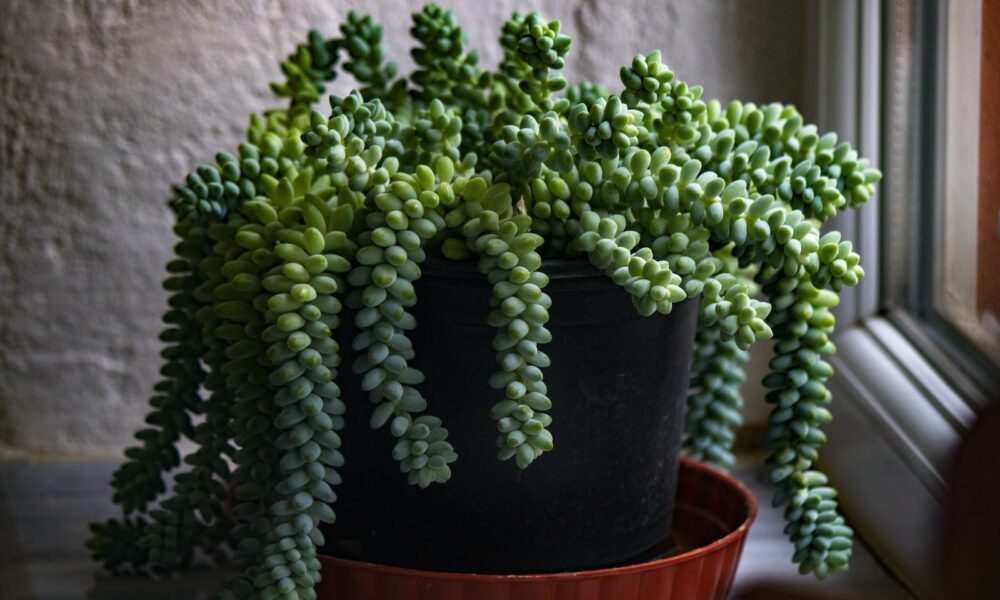
The shapes of cacti and succulents are as varied as the stars in the night sky. From the towering, columnar Euphorbia to the sprawling, trailing String of Pearls, each form brings its own personality to the arrangement. To create a cohesive display, consider the growth habits of your chosen plants. Upright forms, like Sansevieria or Aloe, can serve as vertical anchors, while cascading varieties like String of Bananas soften the edges of a container.
Layering is another technique to master. Place taller plants at the back of a display or in the center of a round pot, with medium-height varieties in the middle and trailing plants spilling over the sides. This creates a sense of depth and movement, as if the arrangement is alive and growing. For a modern twist, try an asymmetrical layout, where a single, striking plant like a Blue Chalksticks (Senecio serpens) takes center stage, flanked by smaller companions.
The Container Conundrum: Choosing the Right Vessel
A cactus or succulent arrangement is only as good as the container it calls home. The vessel should not only complement the plants but also serve their needs. Drainage is non-negotiable—no matter how stunning a pot may be, a lack of drainage holes will lead to root rot and a sad, soggy demise. Terracotta pots are a classic choice, their porous nature allowing excess moisture to evaporate, while glazed ceramic or concrete containers offer a sleek, modern aesthetic.
Size matters, too. A shallow dish is perfect for a low-growing Sedum mat, while a deep, narrow pot can accommodate the roots of a Saguaro or Barrel Cactus. For a whimsical touch, consider repurposing unexpected containers: a vintage teapot, a hollowed-out log, or even a stack of vintage books can become a quirky home for your succulent collection.
Color and material also play a role in the overall impact. A glossy black pot can make the greens and blues of succulents pop, while a rustic wooden trough adds a touch of countryside charm. The container should feel like an extension of the plants themselves, enhancing their beauty without stealing the spotlight.
Light and Placement: The Invisible Hand of the Grower
Even the most carefully curated cactus and succulent combination can falter without the right light. These plants are sun-worshippers by nature, and their colors and forms are shaped by the intensity of the light they receive. A Haworthia that thrives in bright, indirect light may etiolate (stretch out) in low light, losing its compact, rosette shape. Conversely, a Prickly Pear (Opuntia) that’s used to full sun may scorch if suddenly placed in a south-facing window without acclimation.
When arranging your display, consider the natural light in your space. South-facing windows provide the most intense light, ideal for sun-loving cacti like Echinocactus or Mammillaria. East or west-facing windows offer gentler light, perfect for varieties like Aloe or Gasteria. If natural light is scarce, supplement with a grow light, positioning it 6–12 inches above the plants for 12–14 hours a day.
Placement is equally crucial. Avoid drafty spots like near air conditioners or heaters, as sudden temperature fluctuations can stress the plants. Instead, opt for stable environments where the temperature hovers between 60–80°F (15–27°C). A well-lit windowsill, a sunroom, or even a bright bathroom with a skylight can become the perfect stage for your succulent masterpiece.
Maintenance: The Art of Keeping It Alive (and Thriving)
Here’s the truth: even the most stunning cactus and succulent combination requires a bit of TLC to maintain its allure. Watering is the most critical aspect. Overwatering is the number one killer of these plants, leading to mushy stems and root rot. The golden rule? Water only when the soil is completely dry. For most succulents, this means watering every 2–3 weeks in the growing season (spring and summer) and even less in the dormant months (fall and winter).
Fertilizing is another key player in the longevity of your display. Use a balanced, water-soluble fertilizer diluted to half strength, applying it every 4–6 weeks during the growing season. Avoid fertilizing in the winter, as the plants are resting. Pruning may also be necessary to keep your arrangement looking its best. Remove dead or leggy growth with clean scissors, and propagate cuttings to fill in gaps or create new displays.
Pests can also pose a threat, though they’re easily managed with vigilance. Mealybugs, scale, and spider mites are common culprits, often hitching a ride on new plants or lurking in the soil. Inspect your plants regularly, and treat infestations promptly with insecticidal soap or neem oil. With a little care, your cactus and succulent combination will flourish, becoming a living testament to your green thumb.
Beyond the Pot: Creative Displays for Every Space
Why limit yourself to traditional pots? Cacti and succulents are endlessly adaptable, thriving in unconventional containers and arrangements that reflect your personal style. A vertical garden, mounted on a wooden frame or metal grid, can turn a blank wall into a lush tapestry of greenery. For a touch of whimsy, create a “succulent wreath” using a wire frame and a mix of trailing and upright varieties.
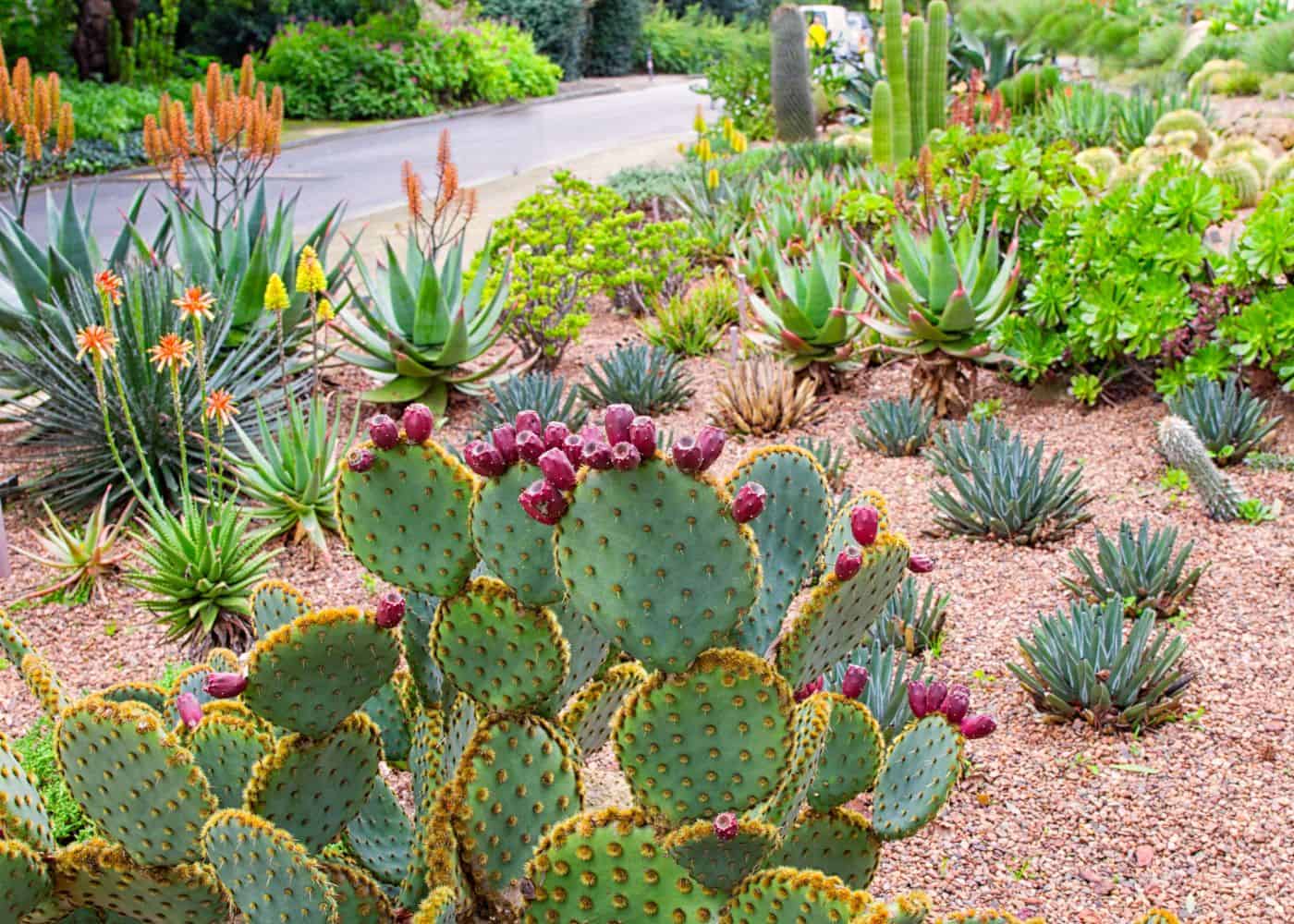
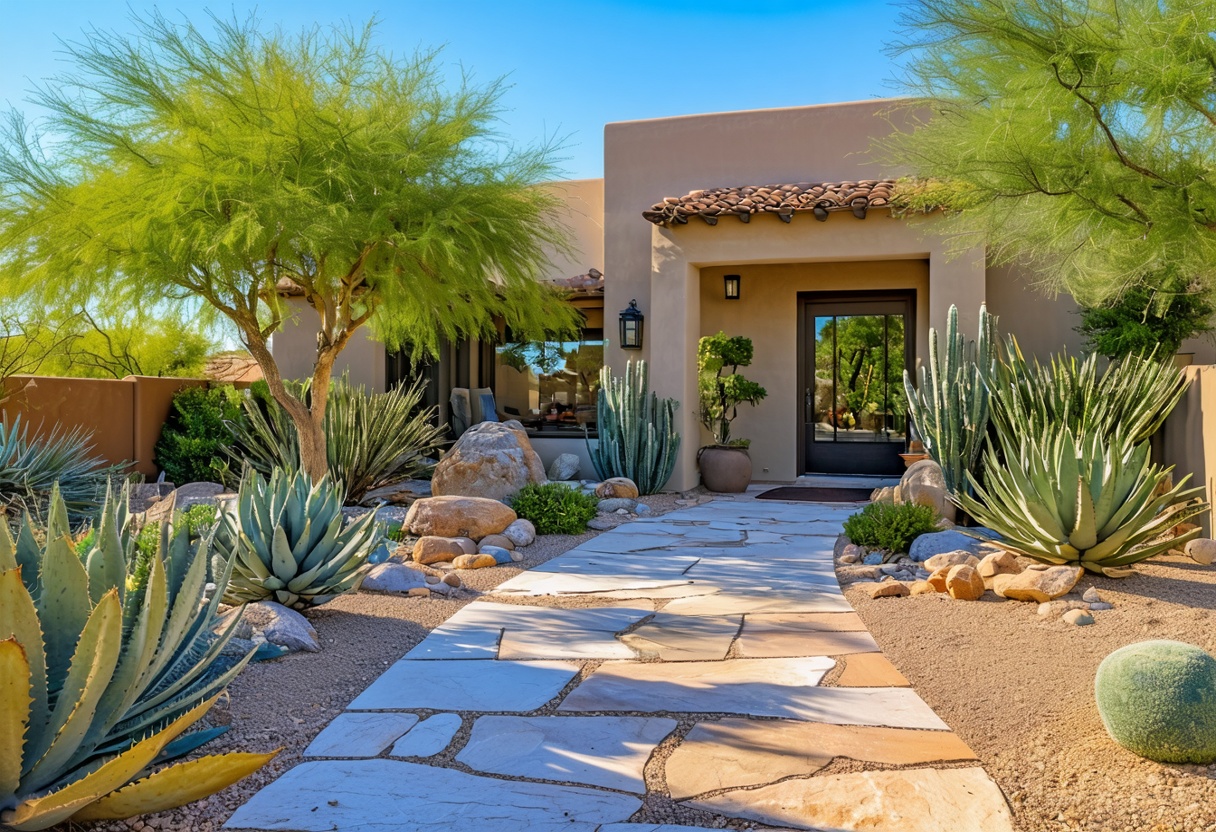
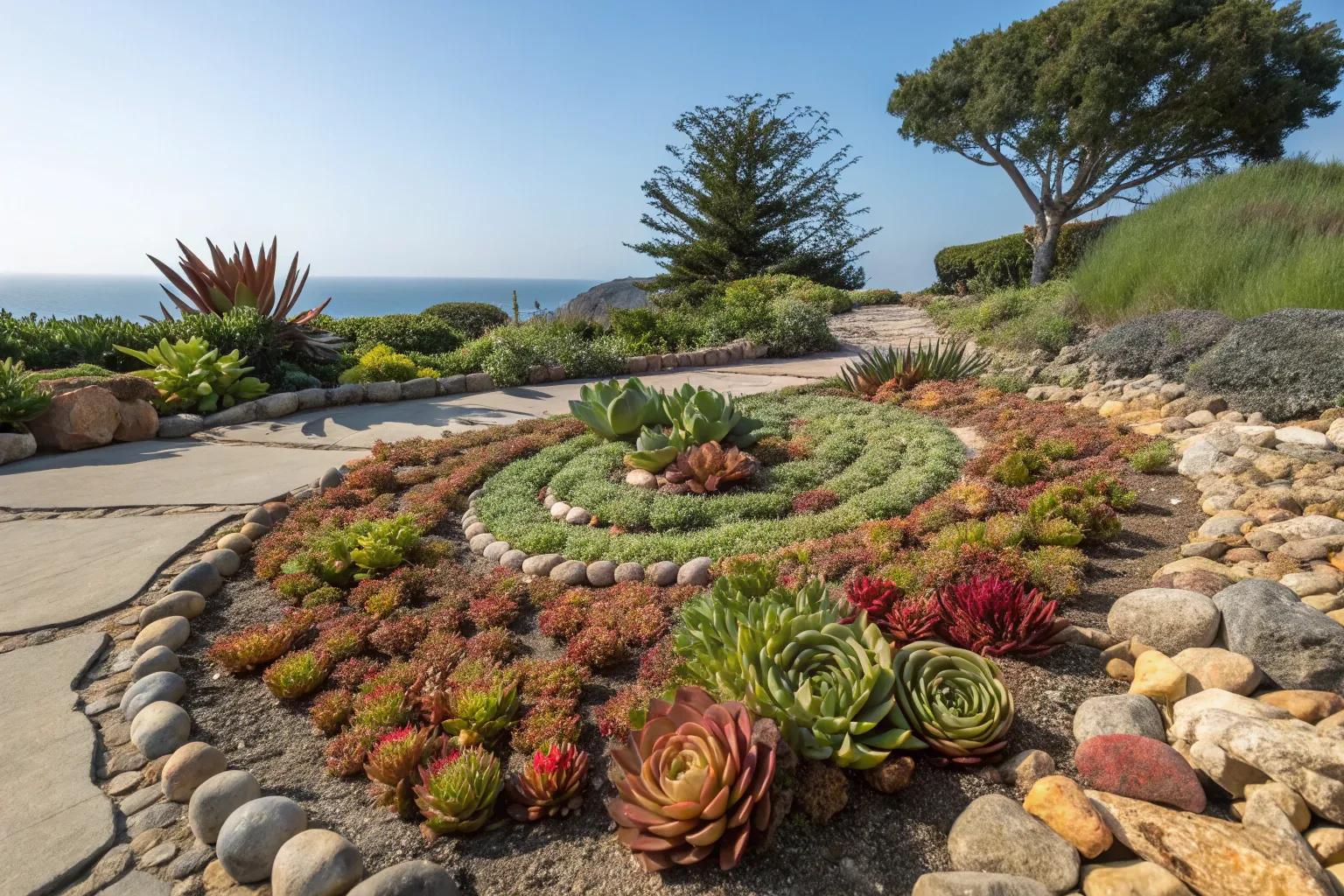
Outdoor displays are equally rewarding. A rock garden, with succulents tucked into the crevices of stones, mimics their natural habitat and creates a rugged, natural look. For a modern twist, arrange cacti and succulents in a geometric pattern within a raised bed or a series of matching troughs. The key is to play with scale and repetition, creating a cohesive yet dynamic outdoor oasis.
FAQ
How do I create contrast in a cactus and succulent arrangement?
Use a mix of plants with rough and smooth textures, spiky and rounded forms to create visual interest.
What colors work well together in succulent displays?
Complementary colors like burgundy and neon green or monochromatic schemes with a contrasting focal point are effective.
What are the best containers for succulents and cacti?
Terracotta pots are preferred for drainage, but glazed ceramic or concrete pots with drainage holes also work.
How important is light for cactus and succulent health?
Very important; most prefer bright light, and proper placement or grow lights help maintain plant form and color.
Can I combine cacti with succulents in the same container?
Yes, combining them using balanced design principles enhances visual appeal and plant health.
Leave a Reply