
Short Answer
Imagine a fortress of spines standing sentinel in a glass kingdom, where the sun’s golden gaze is filtered through the crystalline embrace of a terrarium. The Ferocactus, with its barrel-like silhouette and formidable armature of thorns, is not merely a plant—it is a living sculpture, a miniature desert titan that commands attention and whispers tales of resilience. These large specimens, when nestled within the confines of a terrarium, become the centerpiece of a botanical narrative, blending rugged wilderness with the delicate artistry of contained ecosystems. Their presence transforms a glass enclosure into a tableau of endurance, where every spine and shadow tells a story of survival against the odds.
The Allure of the Ferocactus: A Desert Monarch in Miniature
The Ferocactus is a botanical paradox—a paradox of softness and severity, of fragility and fortitude. Its ribbed body, often ribbed like the ancient columns of forgotten temples, swells with stored life, a testament to its ability to hoard water in the harshest of climates. When placed in a terrarium, it becomes a living relic, a piece of the Sonoran or Chihuahuan desert plucked from its arid expanse and rehoused in a glass sanctuary. The contrast is striking: the raw, untamed energy of the desert, tempered by the controlled environment of a terrarium, creates a dynamic interplay between chaos and order. The Ferocactus does not merely occupy space; it commands it, its presence reshaping the very atmosphere of the enclosure.
Consider the way light dances across its spines, turning each one into a prism that scatters sunlight into a constellation of golden flecks. The terrarium, with its transparent walls, acts as a lens, magnifying the Ferocactus’s innate drama. It is as if the plant has stepped out of a painting by a master of chiaroscuro, where light and shadow perform an eternal ballet. The spines, often overlooked in their natural habitat, become the stars of the show in this confined stage, their colors—ranging from fiery reds to muted grays—adding depth and texture to the composition. The Ferocactus is not just a plant; it is a living chandelier, dripping with the raw elegance of the wild.
Selecting the Right Terrarium: A Stage for the Desert Titan
Not all terrariums are equal, and the Ferocactus, with its commanding presence, demands a stage worthy of its grandeur. The ideal enclosure is one that balances openness with containment, allowing the plant to stretch its metaphorical limbs while ensuring it does not outgrow its glass home prematurely. A tall, cylindrical terrarium with ample vertical space is often the best choice, as it mimics the Ferocactus’s natural growth pattern—tall, proud, and unapologetically vertical. The glass should be thick enough to provide stability, yet transparent enough to allow the full spectrum of light to penetrate, ensuring the plant’s spines catch every ray of sunlight like a desert mirage.
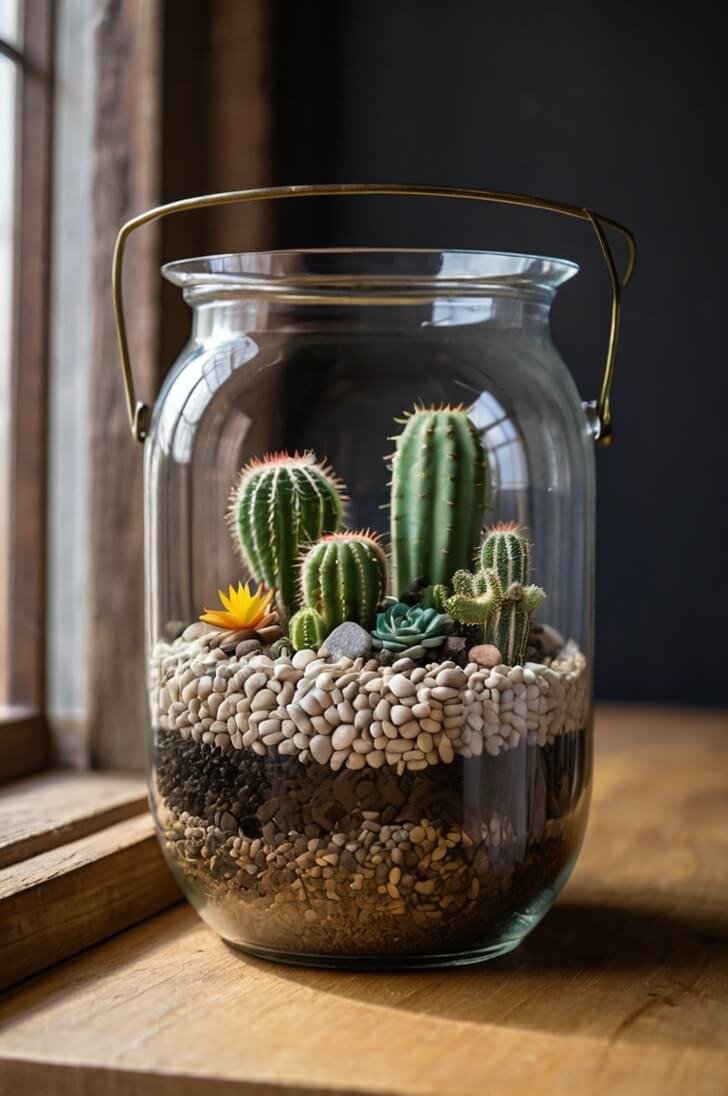
The substrate is another critical consideration. The Ferocactus thrives in well-draining soil, a blend of coarse sand, perlite, and a touch of organic matter to mimic the mineral-rich soils of its native habitat. Avoid heavy, moisture-retentive mixes, as these can lead to root rot and a slow, undignified demise for your desert monarch. Instead, think of the substrate as the foundation of a fortress—firm, reliable, and designed to support the plant’s weighty ambitions. A layer of small pebbles or crushed granite at the base can enhance drainage while adding a touch of rugged elegance to the terrarium’s interior.
Ventilation is the unsung hero of Ferocactus cultivation in terrariums. While these plants adore sunlight, they abhor stagnant air. A terrarium with a hinged or removable lid allows for periodic airing, preventing the buildup of excess humidity that can spell doom for a desert dweller. Think of ventilation as the gentle breeze that stirs the leaves of a palm in a tropical storm—it is not the main event, but without it, the entire ecosystem would suffocate. A well-ventilated terrarium ensures that your Ferocactus remains as vital and dynamic as the day it was introduced to its glass kingdom.
Light: The Elixir of Life for a Desert Sovereign
Light is the lifeblood of the Ferocactus, and in a terrarium, it is the difference between a thriving monarch and a withered relic. These plants are sun-worshippers, their spines evolved to maximize exposure to the sun’s rays. In a terrarium, natural light is ideal, but it must be abundant and unfiltered. A south-facing windowsill is the Ferocactus’s throne room, where it can bask in the glory of the sun’s daily procession. If natural light is scarce, supplement with a high-intensity grow light, ensuring the spectrum mimics the full range of sunlight. The goal is to replicate the intensity of a desert noon, where the sun’s rays are as sharp as a blade and as relentless as time itself.
Yet, light is a double-edged sword. Too little, and the Ferocactus will stretch and etiolate, its spines becoming thin and its body elongated in a desperate bid for sunlight. Too much, and its ribs may bleach, its colors fading like an old photograph left in the sun. The key is balance—a delicate dance between exposure and protection. Rotate the terrarium regularly to ensure even light distribution, and watch for signs of distress. A healthy Ferocactus will maintain its vibrant hues, its spines standing erect like the quills of an aroused porcupine, a clear sign that it is receiving the light it craves.
Water: The Delicate Art of Quenching a Desert King
Watering a Ferocactus is not a task to be taken lightly; it is a sacred ritual, a moment of communion between caretaker and plant. These are not thirsty creatures. In their natural habitat, they endure months of drought, their thick, fleshy bodies storing water like a camel’s hump. In a terrarium, the same principle applies. Water sparingly, allowing the soil to dry out completely between waterings. The temptation to overwater is strong, especially in the controlled environment of a terrarium, where moisture lingers longer than in the open air. Resist it. A Ferocactus does not want to swim; it wants to bask in the dry embrace of its desert origins.
The method of watering is just as important as the frequency. Bottom watering—placing the terrarium in a shallow tray of water and allowing the soil to absorb moisture from below—is ideal. This mimics the way rainwater seeps into the desert floor, nourishing the roots without drowning the plant. Alternatively, misting can be used sparingly, but avoid saturating the spines, as this can lead to rot or unsightly water spots. The goal is to provide just enough moisture to sustain life, not to drown the plant in kindness. Remember, the Ferocactus is a survivor, not a pampered houseplant. It thrives on neglect, not coddling.
Companions and Contrasts: Crafting a Desert Ecosystem
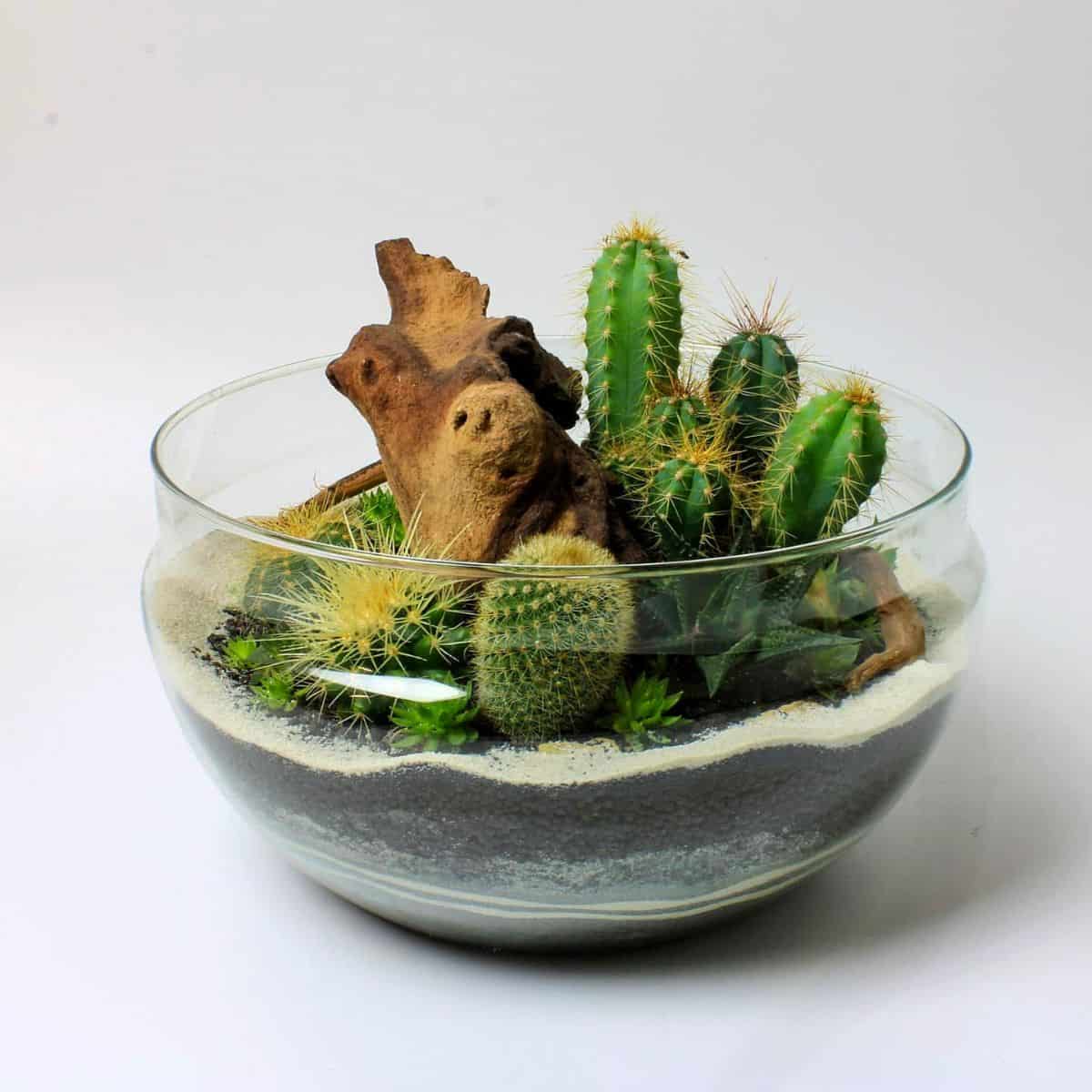
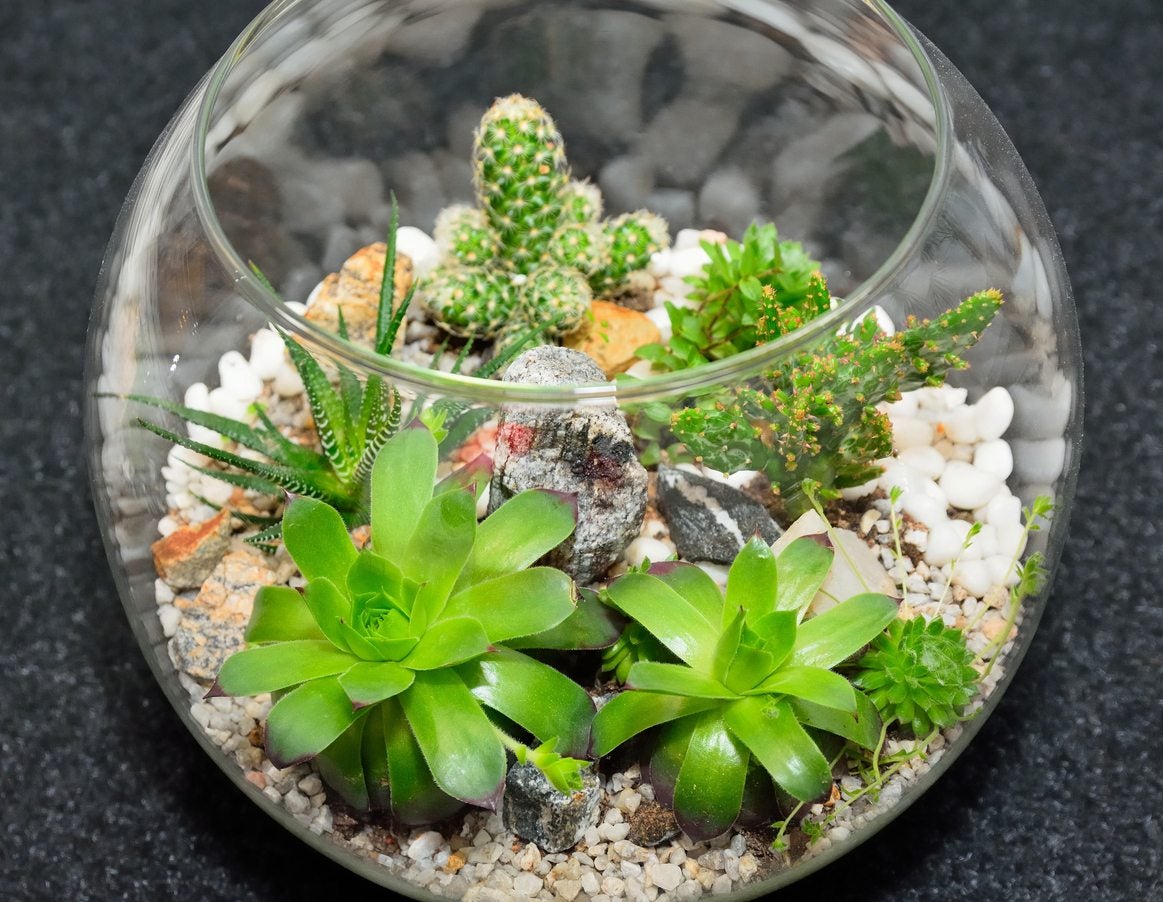
A Ferocactus in a terrarium does not have to stand alone. It can be the centerpiece of a miniature desert ecosystem, a tableau of contrasting textures and forms. Pair it with smaller cacti, such as the diminutive Mammillaria or the spiky Echeveria, to create a layered effect. The Ferocactus, with its imposing stature, will serve as the anchor, while the smaller plants add depth and variety. Avoid overcrowding, however. The Ferocactus is a solitary figure, a desert king who brooks no rivals in his domain. Give it space to breathe, and it will reward you with a presence that is as commanding as it is serene.
For a touch of whimsy, consider adding a few non-succulent elements, such as a small piece of driftwood or a smooth river stone. These elements soften the harsh lines of the Ferocactus, creating a more balanced composition. The stone, in particular, can serve as a pedestal, elevating the plant and drawing the eye to its intricate details. Think of it as a throne for your desert monarch, a place from which it can survey its kingdom with regal authority.
Maintenance: The Art of Preserving a Living Masterpiece
Maintaining a Ferocactus in a terrarium is less about constant intervention and more about observing and adjusting. Dust the spines regularly with a soft brush to keep them gleaming, and prune any dead or damaged ribs to maintain the plant’s elegant silhouette. Rotate the terrarium occasionally to ensure even growth, and watch for signs of pests, such as mealybugs or spider mites, which can infiltrate even the most carefully tended ecosystems. Early detection is key—these pests are the vultures of the plant world, waiting to pick at the carcass of a weakened Ferocactus.
Over time, you may find that your Ferocactus outgrows its terrarium. This is a bittersweet moment, a sign that your desert titan has thrived beyond its original confines. When this happens, consider upgrading to a larger enclosure or, if the plant is particularly large, transitioning it to a traditional pot where it can continue its reign as a botanical sovereign. Either way, the experience of nurturing a Ferocactus in a terrarium is one that will leave you with a deeper appreciation for the resilience and beauty of the natural world.
FAQ
What type of terrarium is best for Ferocactus?
A tall, cylindrical terrarium with ample vertical space is ideal.
How often should I water Ferocactus in a terrarium?
Water sparingly, allowing the soil to dry out completely between waterings.
What kind of light do Ferocactus need?
They thrive in full sunlight, ideally placed in a south-facing window.
Leave a Reply