
Short Answer
Imagine the arid landscapes of South America as an artist’s enigmatic canvas—its cacti are the brushes, each stroke imbued with nature’s ancient secrets. Among these botanical masterpieces, the genus Acanthocalycium emerges as a jewel radiating distinct allure, setting itself apart with an elegance that whispers tales of desert resilience and floral flamboyance. To truly appreciate its singular charm, one must journey through its defining traits and unravel how it stands in vibrant contrast to its other South American cactus kin.
Botanical Anatomy: The Spine Symphony of Acanthocalycium
The morphology of Acanthocalycium acts like an intricate musical score where every spine plays a unique note. Unlike many South American cacti that thrust forth stout, intimidating spines as if wielding nature’s barbs, Acanthocalycium showcases spines that often resemble the delicate quills of a hedgehog, arranged in articulate clusters that arc with refined grace. These spines, sometimes curved or hooked, are not merely defensive but perform a dual role—acting as micro-shade providers in the scorching sun and collectors of moisture from morning dew, a subtle ballet of survival technique.
In comparison, genera such as Echinopsis or Trichocereus, its South American relatives, display a more robust, sometimes chaotic—a spiny battalion. Their spines can be harsh, straight, and massively conspicuous, creating a landscape texture that feels fierce and unyielding. Acanthocalycium’s spines speak a softer language, hinting at a nuanced interplay between defense and elegance.
Floral Brilliance: Acanthocalycium’s Blooming Artistry
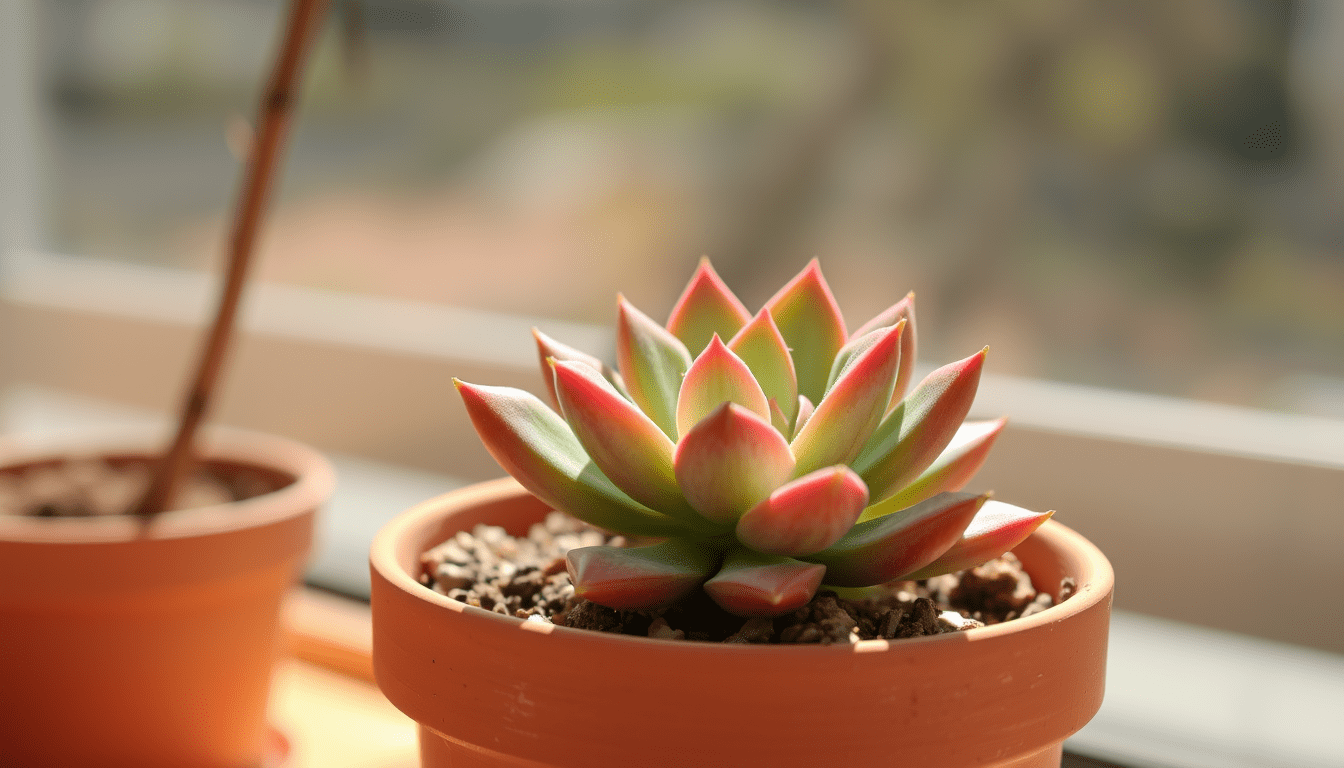
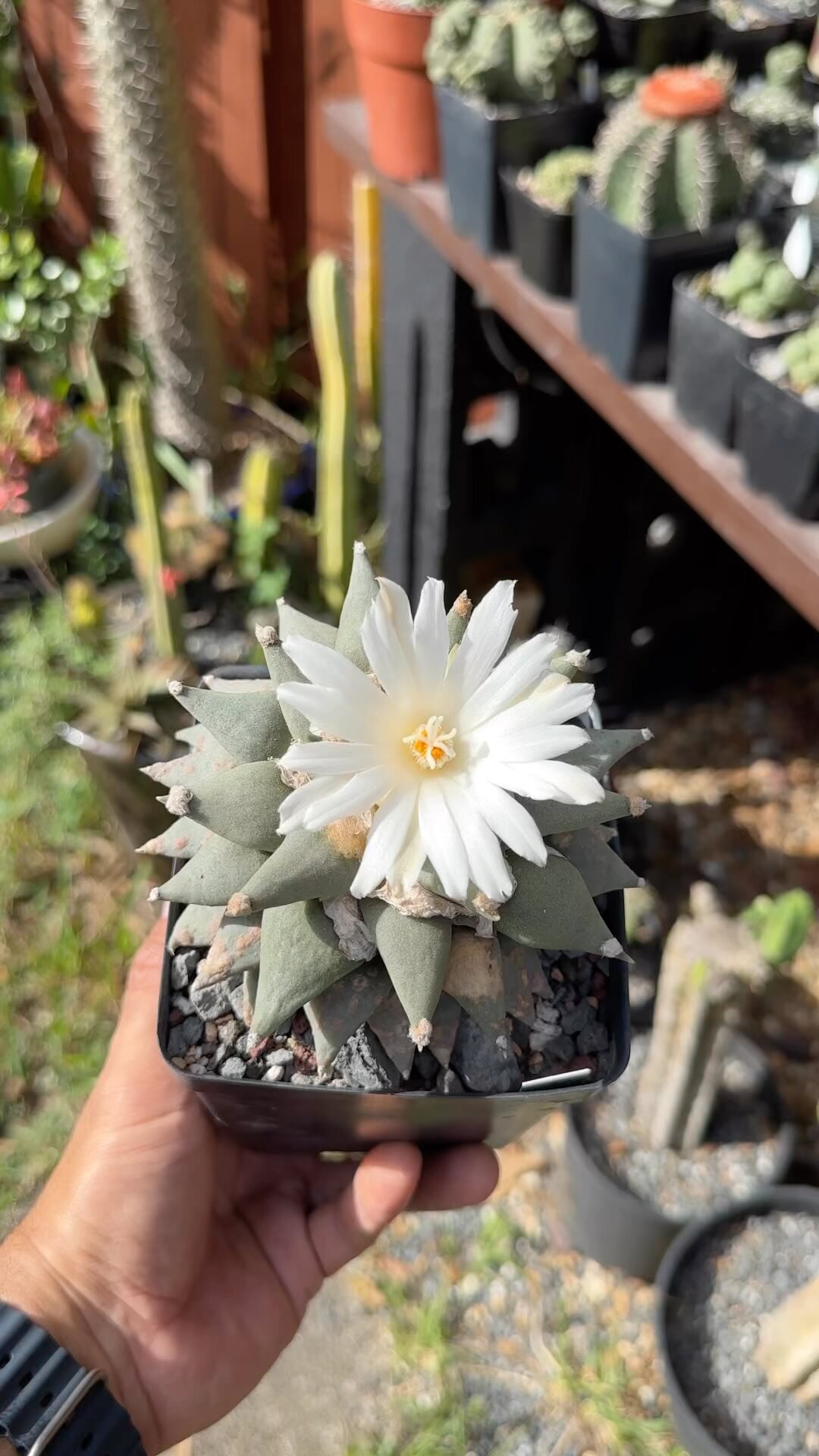
If cacti were poets, their flowers would be their verses—expressions of ephemeral beauty amid harsh environs. Here, Acanthocalycium composes some of the most lyrical blooms in the desert anthology. Its flowers burst forth in resplendent hues, typically encompassing shades of white, cream, pink, and vibrant orange, often adorned with a silky sheen that catches the desert light like liquid jewels.
Unlike the flamboyant, oversized flowers of Rebutia or the tightly clustered flowers of Mammillaria, Acanthocalycium’s blooms usually open wide and flat, resembling radiant parasols that beckon pollinators with an irresistible allure. The petals’ delicate texture and gradient coloration imbue the plant with a poetic sensibility—each flower a fleeting masterpiece.
This floral distinctiveness isn’t just aesthetic; it reflects pollination strategies uniquely tuned to the local fauna of its native habitats. These flowers often emerge nocturnally or at dawn, synchronizing their timing with key pollinators like moths or hummingbirds—nature’s covert rendezvous under desert skies.
Geographical Niche: The South American Sanctuary
Acanthocalycium inhabits a distinct ecological niche compared to many other cacti from South America. Primarily found in the Gran Chaco region of Argentina, Paraguay, and Bolivia, it thrives in subtropical dry forests and thorn scrub, where seasonal rains punctuate extended droughts. This contrasts with the Andean cacti that typically flourish in the higher altitude puna or paramo ecosystems of Bolivia and Peru, where cold nights and intense sunlight dominate.
This geographical divergence imparts unique physiological adaptations. Acanthocalycium tends towards a globular to short columnar form, balancing water retention and heat dissipation adeptly. Its relatively muted size allows it to nestle discreetly among thorny shrubs and grasses, a subtle player in a complex ecological theater. Other South American cacti, such as members of Oreocereus or Pachycereus, parades a more imposing stature suited to dominate their harsh mountain or desert habitats, towering like desert sentinels.
Growth Habits and Cultivation Nuances
For the attentive cultivator, Acanthocalycium offers both a challenge and a reward—a living riddle encapsulating the paradox of fragility and fortitude. Growth tends to be moderate; unlike the fast-expanding Trichocereus species that often demand vast sunlit spaces, Acanthocalycium enjoys a more reserved rhythm, flourishing when given a balance of filtered light and well-draining soil.
Its watering requirements echo the pulse of its native climate. Rather than lavish hydration, it favors a cautiously measured approach: soaking during growth seasons and virtually none during dormancy. This subtlety contrasts with other South American cacti that may tolerate more generous watering or faster growth. Patience here is a virtue; the slow unfurling of its flower buds is a reward for the patient caretaker.

Ecological Role and Cultural Significance
In its native territories, Acanthocalycium fulfills roles beyond aesthetics. It participates in intricate ecological networks: providing nectar for specialized pollinators and shelter for insects and small reptiles. Its seeds support localized fauna, forming a subtle but essential thread in the biodiversity web.
Culturally, hints of reverence appear within indigenous communities, where Acanthocalycium might be recognized for medicinal use or symbolic importance, though it remains more understated compared to the legendary Echinopsis pachanoi (San Pedro cactus). This quiet cultural imprint underscores its appeal as an exquisite botanical treasure—admired more for contemplative beauty than mythic grandeur.
Conclusion: The Singular Enchantment of Acanthocalycium
The diverse family of South American cacti reads like a vast anthology, spanning from towering columnar behemoths to tiny globular gems. Amidst this botanical diversity, Acanthocalycium strikes a poetic balance—its modest size cloaking a complexity of form, function, and floral spectacle.
It captivates through its graceful spines, its delicate yet vivid blooms, and its adaptation to subtropical dry forests—a living testament to resilience whispered in the language of desert elegance. To encounter Acanthocalycium is to glimpse a cactus not merely surviving in harsh climes but thriving with an understated splendor all its own—a true gem in the dazzling mosaic of South American succulents.
FAQ
What is Acanthocalycium?
Acanthocalycium is a genus of South American cacti characterized by its elegant spines and colorful flowers.
Where is Acanthocalycium found?
It is primarily found in the Gran Chaco region of Argentina, Paraguay, and Bolivia.
How do Acanthocalycium flowers differ from other cacti?
Acanthocalycium flowers are typically wide and flat, contrasting with the oversized blooms of other genera like Rebutia.



Leave a Reply