
Short Answer
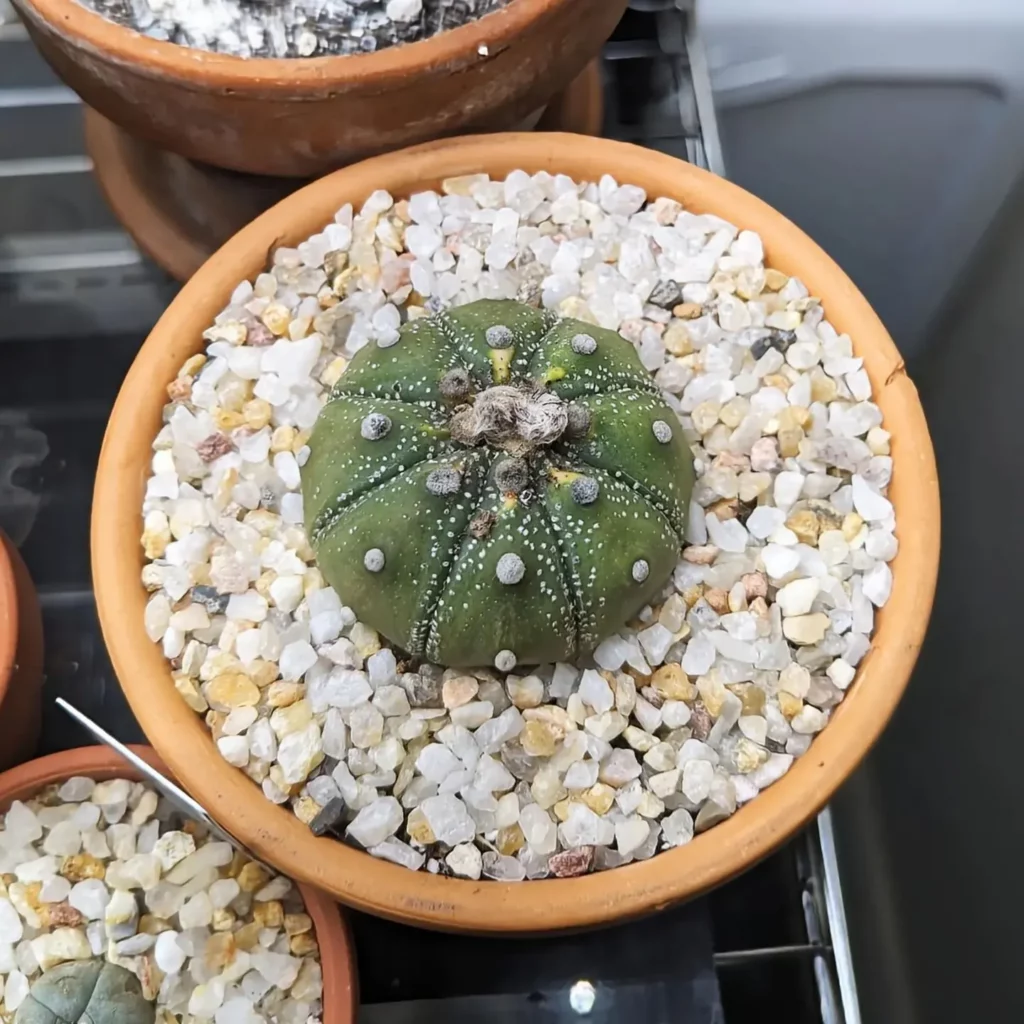
Few succulents command attention like the Astrophytum asterias, commonly known as the Star Cactus. Its geometric perfection—radiating from a central core into eight symmetrical ribs—evokes the quiet majesty of celestial bodies. This unassuming desert dweller, cloaked in a mosaic of white flecks, seems to distill the vastness of the cosmos into a single, tangible form. Yet beyond its striking appearance lies a deeper narrative, one woven into human culture, mythology, and even our subconscious fascination with the unknown. Why does this particular cactus captivate us so? The answer may lie not just in its beauty, but in the silent dialogue it conducts between earth and sky.
The Geometry of the Cosmos: Why the Star Cactus Resonates with Our Inner Universe
At first glance, the Star Cactus appears to be a living mandala, its ribbed structure mirroring the spiral arms of galaxies or the radial symmetry of snowflakes. This geometric harmony is no accident—it is a survival strategy honed over millennia in the harsh expanse of the Chihuahuan Desert. Each rib acts as a solar collector, maximizing light absorption while minimizing water loss. Yet, to the human eye, it transcends mere functionality. The cactus becomes a three-dimensional metaphor for cosmic order, a tangible expression of the Fibonacci sequence and sacred geometry that underpin the natural world.
Consider how the Star Cactus’s ribs converge toward a single point, much like the vanishing point in Renaissance perspective paintings. This convergence creates an optical illusion of depth, as if the plant is both rooted in the earth and reaching toward the heavens. Such visual trickery stirs something primal within us—a recognition of patterns that feel both ancient and universal. We are drawn to this symmetry because it reflects the structures we find in galaxies, hurricanes, and even our own DNA. The Star Cactus doesn’t just grow; it *orchestrates* its form in a silent symphony of adaptation and artistry.
The Alchemy of Flecks: How Spines and Spots Speak to Ancient Wisdom
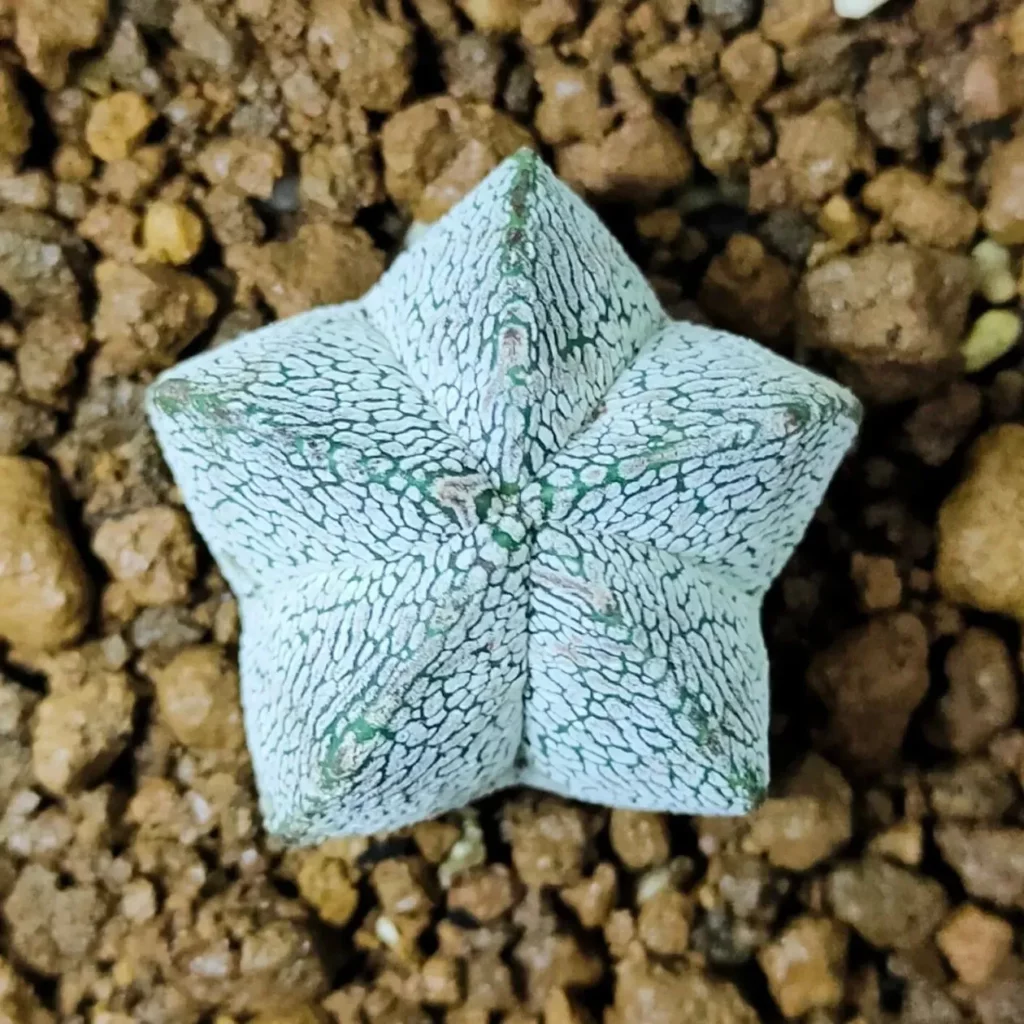
The Star Cactus’s surface is a canvas of white, woolly flecks—tiny clusters of trichomes that serve as natural sunscreen, reflecting intense desert sunlight. Yet these flecks do more than protect. They transform the cactus into a living constellation, its speckled pattern reminiscent of the Milky Way’s star fields. Indigenous cultures across the Americas have long associated such markings with celestial deities and the spirits of the night sky. The flecks, in their irregular yet deliberate arrangement, suggest a language older than written history—a language of symbols and omens.
In some traditions, the Star Cactus’s flecks are seen as the fingerprints of the gods, imprinted upon the plant as a sign of divine favor. To hold one in your hands is to touch a fragment of the cosmos, a tangible link between the terrestrial and the divine. The flecks also serve a practical purpose: they deter herbivores with their prickly texture while simultaneously camouflaging the cactus against the stony desert floor. This dual role—both shield and signature—elevates the Star Cactus from mere plant to a living talisman, a reminder that beauty and utility often dance in perfect harmony.
Survival in Silence: The Star Cactus as a Lesson in Resilience
To thrive in the Chihuahuan Desert, where temperatures swing from scorching days to freezing nights, the Star Cactus has evolved a repertoire of adaptations that read like a survival manual for the modern world. Its ribs expand and contract with moisture levels, a hydraulic system that allows it to store water without bursting. The thick, waxy cuticle of its skin minimizes evaporation, while its shallow but extensive root system captures even the slightest rainfall. These adaptations are not just biological marvels; they are a testament to the power of stillness and patience.
In an era of constant motion and instant gratification, the Star Cactus embodies the virtue of endurance. It grows at a glacial pace—sometimes taking decades to reach maturity—yet its presence is undeniable. This slow, deliberate growth invites contemplation. It asks us to consider the value of time, the importance of resilience, and the beauty of imperceptible progress. The Star Cactus does not rush. It waits. It adapts. It endures. And in doing so, it becomes a mirror for our own struggles and triumphs, a silent teacher in a noisy world.
Myth and Modernity: The Star Cactus in Folklore and Contemporary Culture
The Star Cactus has long been a fixture in the folklore of desert-dwelling peoples. In some legends, it is the last remnant of a fallen star, its flecks the embers of a celestial fire. Other tales describe it as a guardian of hidden oases, its presence a sign of life in the most barren of landscapes. These stories persist because they tap into a universal truth: we are drawn to symbols that bridge the mundane and the mystical. The Star Cactus, with its otherworldly appearance and earthly tenacity, is the perfect vessel for such narratives.
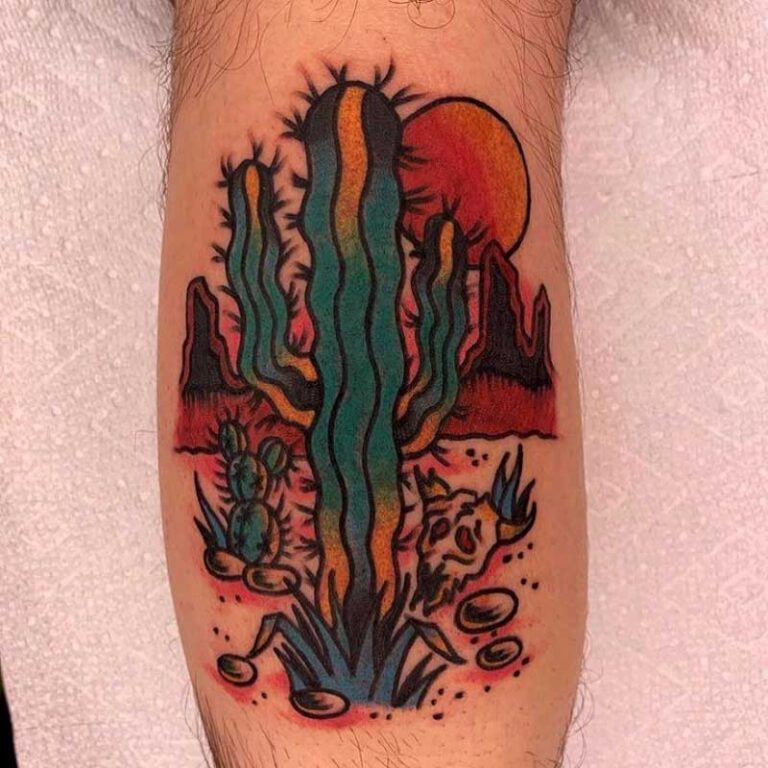
In contemporary culture, the Star Cactus has found a new home in the world of art and design. Its geometric form has inspired everything from tattoo motifs to architectural facades, a testament to its timeless appeal. Designers and artists are drawn to its clean lines and stark contrast, using it as a symbol of minimalism and purity. Yet, even in these modern interpretations, the cactus retains its mystical aura. It is not merely a decorative element; it is a talisman, a reminder of the wild and untamed beauty that persists even in the most curated of spaces.
The Cosmic Connection: How the Star Cactus Reflects Our Fascination with the Unknown
There is something deeply human about our fascination with the Star Cactus. It is a plant that seems to exist in two realms at once—both of this world and beyond it. Its name, *asterias*, is derived from the Greek word for “starry,” a nod to its celestial associations. To gaze upon it is to confront the vastness of the universe, to feel the smallness of our own existence while simultaneously recognizing our connection to it. The Star Cactus does not just grow; it *communicates*, sending silent signals across the desert sands and into the human psyche.
This duality—earthly and cosmic—resonates with our deepest existential questions. Are we merely the sum of our adaptations, or do we carry within us the echoes of the stars? The Star Cactus, with its ribbed structure and flecked surface, seems to answer both. It is a reminder that we are part of something greater, a living bridge between the terrestrial and the celestial. In its quiet, unassuming way, it teaches us that beauty is not just in the grand and the obvious, but in the intricate, the resilient, and the enduring.
Cultivating Wonder: How to Grow and Appreciate the Star Cactus
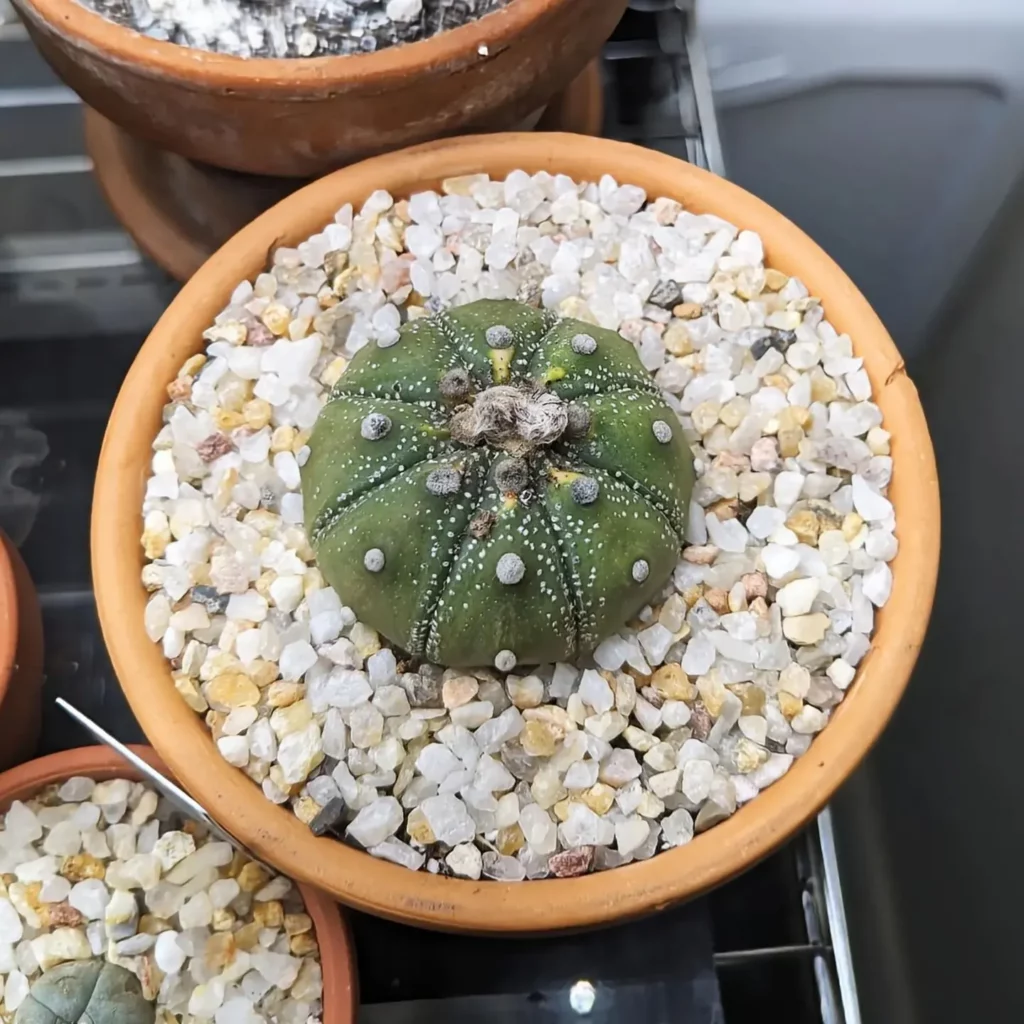
For those inspired to bring a piece of this cosmic wonder into their own lives, growing a Star Cactus is a study in patience and precision. It thrives in well-draining soil, preferably a mix of sand, perlite, and a touch of organic matter to mimic its native desert habitat. Water sparingly—only when the soil is completely dry—and provide ample sunlight, though it can tolerate partial shade in hotter climates. The key is to replicate the conditions of its natural environment: harsh, yet not without its own kind of abundance.
To truly appreciate the Star Cactus is to slow down and observe. Notice the way its ribs cast shadows at different times of day, how the flecks catch the light like distant stars. Place it in a spot where it can be seen from a distance, allowing its form to become a focal point in your space. Over time, as it grows and changes, it will become more than a plant—it will become a companion, a silent witness to the passage of time and the quiet unfolding of life.
Whether you encounter the Star Cactus in the wild, in a greenhouse, or as part of a carefully curated collection, take a moment to reflect on its story. It is a tale of adaptation, resilience, and the quiet power of stillness. It is a reminder that even in the most inhospitable of environments, life finds a way to flourish. And perhaps, in its geometric perfection and flecked surface, we see a reflection of our own search for meaning—a search that, like the Star Cactus, is both deeply personal and profoundly universal.
FAQ
What makes the Star Cactus unique among succulents?
Its symmetrical star shape and white flecked surface evoke cosmic imagery and sacred geometry, distinguishing it visually and symbolically.
How should I care for an Astrophytum asterias?
Use well-draining soil with sand and perlite, water sparingly only when dry, and provide bright sunlight with some shade in hotter climates.
What cultural meanings are associated with the Star Cactus?
It is linked to celestial deities, divine favor, and serves as a talisman in indigenous folklore and modern artistic symbolism.
Is the Star Cactus endangered or protected?
While not explicitly covered in the article, many cacti face threats; conservation status should be verified through authoritative sources.


Leave a Reply