
Short Answer
The cactus, with its stoic resilience and stark beauty, has long been a silent witness to the evolution of European gardens. Unlike the delicate blooms of roses or the lush foliage of hydrangeas, the cactus thrives in defiance of convention, its spiny silhouette a testament to nature’s unyielding spirit. From the sun-baked terraces of Monaco to the curated conservatories of grand estates, these desert denizens have carved a niche in the European horticultural landscape, not as mere novelties, but as symbols of endurance and exotic allure. Their journey across continents is a saga of adaptation, colonial ambition, and the human fascination with the unfamiliar.
The Allure of the Alien: How Cacti Conquered European Imaginations
There is something inherently rebellious about a cactus. While European gardens have long celebrated the orderly, the symmetrical, and the domesticated, the cactus arrived as a disruptor—a botanical outsider that refused to conform. Its arrival in Europe was not a quiet one; it was a cultural upheaval, a botanical revolution that challenged the very notion of what a garden should be. The 18th and 19th centuries saw European botanists and explorers embarking on perilous expeditions to the Americas, returning with not just spices or gold, but with these prickly emissaries of distant lands.
The cactus became a trophy of empire, a living relic of colonial conquest. Its presence in European gardens was not merely decorative; it was political. To cultivate a cactus was to assert dominance over nature, to tame the untamable. Yet, there was an undeniable magnetism to these plants. Their geometric precision, their ability to thrive in neglect, their sudden bursts of vibrant flowers—all spoke to a kind of alien elegance that captivated the European elite. The cactus was not just a plant; it was a statement.
From Greenhouses to Grandeur: The Rise of the Cactus in European Horticulture
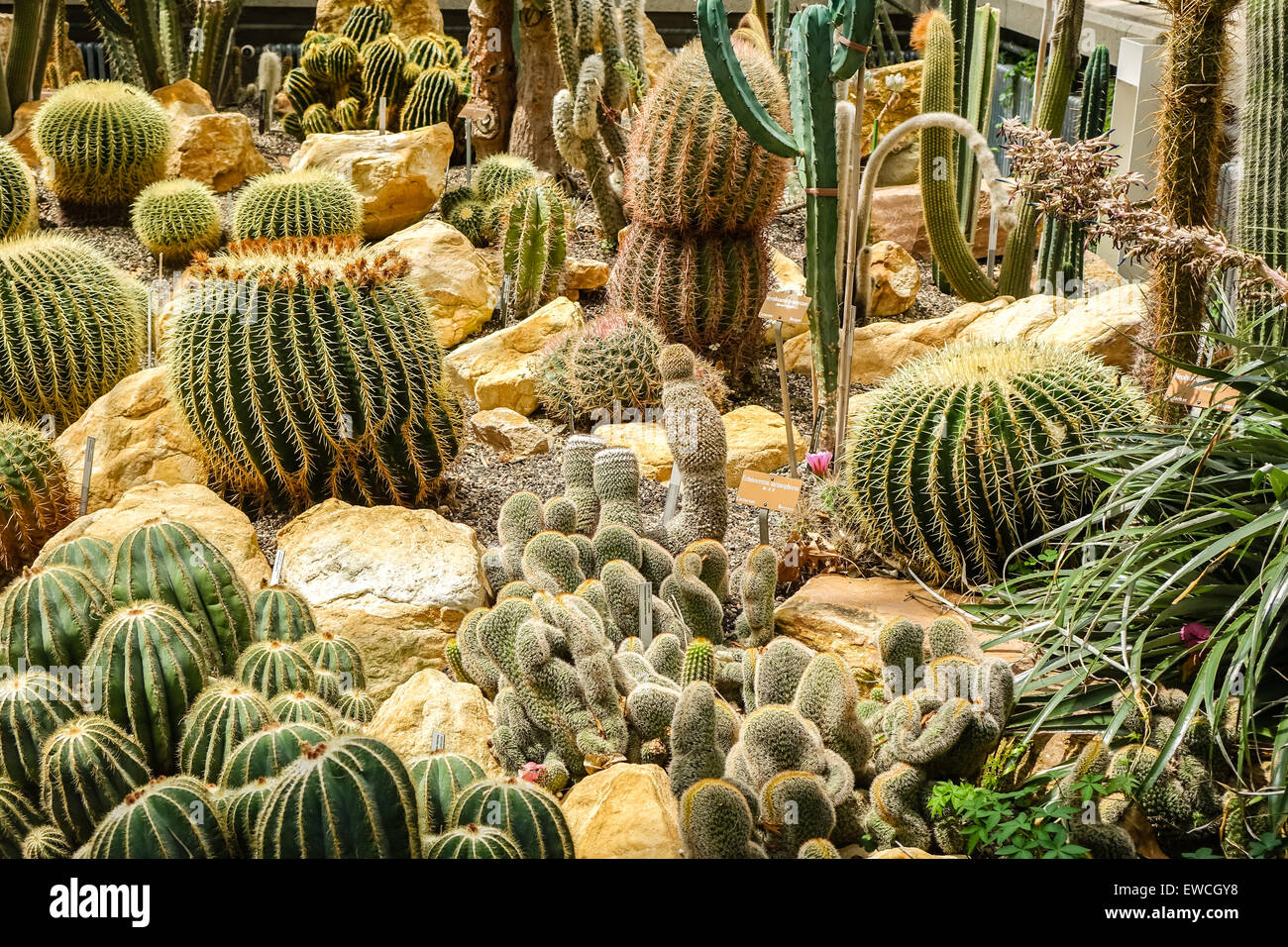
The first European cactus enthusiasts were not gardeners in the traditional sense; they were scientists, collectors, and aristocrats who saw these plants as objects of fascination rather than mere flora. The development of glasshouse technology in the 19th century was a turning point. Suddenly, it was possible to recreate the arid climates of the American Southwest and Mexico within the damp, temperate confines of Europe. Palaces and botanical gardens alike constructed elaborate conservatories, their iron and glass structures designed to mimic the harsh, sun-drenched environments these plants called home.
Monaco’s Exotic Garden, with its terraced cliffs and sun-warmed succulents, stands as a monument to this era. Here, cacti are not hidden away in some obscure corner; they are displayed with pride, their spiny forms silhouetted against the Mediterranean sky. The garden’s design is a deliberate inversion of the traditional European landscape, where water features and manicured lawns once reigned supreme. Instead, the focus is on the raw, the rugged, the unapologetically wild. It is a rebellion against the pastoral ideal, a celebration of the desert’s stark beauty.
The Spine as a Symbol: Cacti in Art, Literature, and Culture
The cactus has long transcended its role as a mere plant, embedding itself into the cultural consciousness of Europe. In art, it has been a recurring motif—a symbol of resilience, of solitude, of the exotic. The surrealist movement, with its love of the uncanny and the unexpected, embraced the cactus as a muse. Salvador Dalí, for instance, often incorporated its jagged forms into his dreamlike compositions, using it as a metaphor for the subconscious, for the hidden depths beneath the surface.
Literature, too, has been enchanted by the cactus. Writers like Colette and André Gide wove these plants into their narratives, using them to evoke themes of endurance and otherness. The cactus, with its ability to thrive in the most inhospitable conditions, became a metaphor for the human spirit itself. In a continent where gardens were often seen as extensions of order and control, the cactus was a defiant whisper of chaos, a reminder that nature could not be tamed.
Designing with Defiance: Modern European Gardens and the Cactus Aesthetic
Today, the cactus is no longer a novelty; it is a staple of modern European garden design. Landscape architects and homeowners alike have embraced its unique appeal, integrating it into everything from minimalist urban courtyards to sprawling rural estates. The key to its enduring popularity lies in its versatility. A cactus can be a statement piece, a solitary sentinel standing against a backdrop of muted gravel and concrete. It can also be part of a larger tapestry, its spiny forms contrasting with the softness of ornamental grasses or the bold hues of flowering perennials.
The modern European garden is no longer bound by the rigid rules of the past. There is a growing appreciation for the unconventional, for the plants that refuse to play by the old horticultural rules. The cactus, with its low water requirements and striking appearance, fits perfectly into this new paradigm. It is a plant for the 21st century—a symbol of sustainability, of resilience, of beauty that thrives in adversity.
The Future of the Fleshy: Cacti in a Changing Climate
As Europe grapples with the realities of climate change, the cactus is emerging as more than just a decorative element; it is a solution. Its ability to survive in drought conditions makes it an ideal candidate for water-wise gardening, a trend that is gaining momentum across the continent. The Mediterranean, with its long, dry summers, is particularly well-suited to cactus cultivation, and gardens from Spain to Greece are increasingly turning to these desert natives to create landscapes that are both beautiful and sustainable.
Yet, the cactus’s role in the future of European gardens is not without controversy. Some purists argue that its proliferation is a sign of the times—a surrender to the harsh realities of a warming planet. Others see it as a triumph of adaptation, a testament to human ingenuity in the face of environmental challenges. Whatever the perspective, one thing is clear: the cactus is here to stay. It has earned its place in the European horticultural canon, not as a fleeting trend, but as a permanent fixture in the ever-evolving story of garden design.
Conclusion: The Cactus as a Mirror of Human Desire
The cactus, in all its prickly glory, is more than just a plant. It is a mirror, reflecting humanity’s eternal fascination with the exotic, the resilient, and the unconventional. From the greenhouses of the 19th century to the drought-tolerant gardens of today, it has carved a path that is as much about defiance as it is about beauty. It challenges us to rethink our relationship with nature, to embrace the wild within the cultivated, the alien within the familiar.
In a world where gardens are often seen as places of escape, the cactus reminds us that escape is not always about leaving behind the harshness of life. Sometimes, it is about finding beauty in its most unexpected forms. The cactus does not ask for much. It does not need constant care, nor does it crave the spotlight. It simply exists, a silent sentinel of the desert, a living testament to the fact that even in the most inhospitable of places, life will find a way to flourish.
FAQ
What historical role did cacti play in European gardens?
Cacti represented a cultural upheaval in European gardening, symbolizing endurance and exotic allure during the colonial era.
How are cacti relevant in modern European garden design?
Cacti are embraced for their low water requirements and versatility, fitting into contemporary sustainable gardening practices.



Leave a Reply