
Short Answer
There’s something almost mystical about cacti—their stoic resilience, their sculptural forms, and the way they thrive where others wither. Yet, ask any seasoned grower what the secret to their success is, and they’ll likely point not to the sun or the water, but to the earth beneath. Soil, that unassuming foundation of life, is where the magic truly begins. For cacti, the right soil isn’t just a medium; it’s a lifeline, a carefully calibrated blend of grit and nourishment that mimics the harsh, mineral-rich landscapes of their native habitats. But here’s the twist: not all cacti are created equal. From the towering saguaros of the Sonoran Desert to the delicate, button-like mammillarias, each genus has evolved to flourish in specific soil conditions. The key to unlocking their full potential lies in understanding these nuances—and that’s where the art of soil mixing becomes a science worth mastering.
The Desert’s Crucible: Why Soil Matters More Than You Think
Picture the desert floor after a rare rainstorm. The water doesn’t linger; it’s swiftly absorbed or evaporated, leaving behind a parched, cracked surface. This is the crucible in which cacti have evolved, and their roots have adapted to seek out moisture in the most inhospitable of conditions. Standard potting soil, with its dense, moisture-retentive composition, is the antithesis of what these plants crave. It traps water, suffocates roots, and invites the fungal pathogens that spell doom for a cactus. The right soil, by contrast, is a breathable, fast-draining mosaic—a blend that mimics the loose, rocky terrain of their natural homes. It’s not just about avoiding rot; it’s about replicating the rhythm of life in a place where water is both a blessing and a curse.
Decoding the Genera: A Soil Map for Your Cactus Collection
Not all cacti are desert dwellers in the strictest sense. Some hail from high-altitude regions where temperatures plummet at night, while others thrive in the understory of tropical forests. Each genus has its own soil preferences, shaped by millennia of evolutionary pressure. Let’s break it down:
The Classic Desert Dwellers: Opuntia, Echinocactus, and Ferocactus
These are the titans of the cactus world—plants like the barrel cactus (Ferocactus) or the prickly pear (Opuntia) that dominate the arid landscapes of the Americas. Their soil needs are straightforward but non-negotiable: a mix that’s at least 50% inorganic material. Think coarse sand, perlite, or pumice, with just enough organic matter—like coconut coir or a sprinkle of compost—to provide a smidge of nutrients. The goal is to create a structure that mimics the rocky, mineral-rich soils of their native habitats. A 60/30/10 ratio of pumice, coconut coir, and a touch of worm castings works wonders for these genera. The pumice, with its sharp edges, ensures excellent drainage, while the coir retains just enough moisture to keep the roots hydrated without drowning them.
The High-Altitude Survivors: Rebutia, Lobivia, and Sulcorebutia
These cacti thrive in the thin air of the Andes or the Bolivian altiplano, where nights are frigid and days are warm. Their soil must strike a delicate balance between drainage and moisture retention, as they’re accustomed to brief but intense rainfall followed by prolonged dry spells. A mix of 40% perlite, 30% coconut coir, and 30% coarse sand or grit is ideal. The perlite provides aeration, while the coir holds onto moisture just long enough for the roots to absorb it before it evaporates. These cacti also appreciate a slightly acidic pH, around 5.5 to 6.5, which can be achieved by adding a small amount of peat moss or pine bark fines to the mix.
The Forest Floor Inhabitants: Epiphytic Cacti like Schlumbergera and Rhipsalis
Not all cacti are sun-worshipping desert plants. The epiphytic varieties, such as the Christmas cactus (Schlumbergera) or the mistletoe cactus (Rhipsalis), grow on trees or rocks in humid, shaded environments. Their soil needs are a far cry from their terrestrial cousins. Instead of gritty, mineral-heavy mixes, they thrive in a blend that’s airy, moisture-retentive, and rich in organic matter. A 50/30/20 mix of coconut coir, perlite, and orchid bark is perfect. The coir retains moisture, the perlite ensures aeration, and the orchid bark mimics the decaying wood or leaf litter they’d encounter in their natural habitats. These cacti also benefit from a higher humidity level, so misting or a pebble tray can be a game-changer.
The Alchemy of Ingredients: Crafting the Perfect Mix
Creating the ideal soil for your cacti is less about following a rigid recipe and more about understanding the role of each ingredient. Let’s dive into the components that make up a stellar cactus soil mix:
Inorganic Matter: The Backbone of Drainage
The inorganic components are the unsung heroes of cactus soil. They provide the structure that prevents compaction and ensures excess water can escape. Perlite, pumice, and coarse sand are the most common choices, but each has its own strengths. Perlite, a volcanic glass that expands when heated, is lightweight and excellent for aeration. Pumice, with its rough, porous texture, not only improves drainage but also retains some moisture, making it ideal for high-altitude cacti. Coarse sand, particularly horticultural sand, adds weight and prevents the mix from becoming too light and prone to toppling over. Avoid fine sand, as it can compact and suffocate roots.
Organic Matter: The Nutrient Reservoir
While cacti are often associated with barren landscapes, they still need a modicum of organic matter to thrive. Coconut coir, a byproduct of coconut husks, is a fantastic alternative to peat moss, as it’s renewable and holds moisture without becoming waterlogged. Composted pine bark fines add structure and a slow-release source of nutrients. Worm castings, though used sparingly, provide a gentle boost of nitrogen and beneficial microbes. The key is moderation—too much organic matter can lead to rot, while too little can leave your cacti starved for nutrients.
The pH Factor: Finding the Sweet Spot
Cacti are generally tolerant of a wide pH range, but they prefer slightly acidic to neutral soils, typically between 6.0 and 7.0. A pH outside this range can lock out essential nutrients, leaving your plants malnourished. If your tap water is alkaline, consider using a pH-adjusting amendment like sulfur or a commercial pH-lowering product. Alternatively, you can test your soil mix and adjust it accordingly. Remember, the pH of your soil can shift over time, so periodic testing is a wise practice.
Signs of Trouble: When Your Soil Isn’t Cutting It
Even the most carefully crafted soil mix can fail if it’s not tailored to your cactus’s specific needs. Here are some telltale signs that your soil isn’t up to snuff:
Root Rot: The Silent Killer
If your cactus’s roots are mushy, black, or emit a foul odor, you’re dealing with root rot—a sure sign of waterlogged soil. This is often the result of a mix that’s too dense or lacks sufficient inorganic matter. To save your plant, remove it from its pot, trim away the rotted roots with a sterilized knife, and repot it in fresh, well-draining soil. Be sure to let the soil dry out completely between waterings to prevent a recurrence.

Stunted Growth: A Cry for Nutrients
If your cactus is growing slower than molasses in January, it might be starving for nutrients. This is often a sign that your soil mix lacks organic matter or that the nutrients have been leached out over time. A top dressing of worm castings or a diluted liquid fertilizer can give your plant the boost it needs. Just be sure to fertilize during the growing season and avoid overdoing it, as cacti are sensitive to excess salts.
Yellowing or Etiolated Stems: A Cry for Light (or the Right Soil)
While yellowing or elongated stems are often a sign of insufficient light, they can also indicate that your soil isn’t providing the right balance of moisture and nutrients. If your cactus is stretching toward the light or its stems are losing their vibrant color, it might be time to reassess your soil mix. A grittier, more mineral-rich blend can help restore its vitality.
The Ritual of Repotting: When and How to Refresh Your Cactus’s Home
Cacti don’t need repotting as frequently as other houseplants, but when the time comes, it’s a ritual worth doing right. The best time to repot is in the early spring, just as the growing season begins. Here’s a step-by-step guide to ensure your cactus gets the fresh start it deserves:
Step 1: Choose the Right Pot
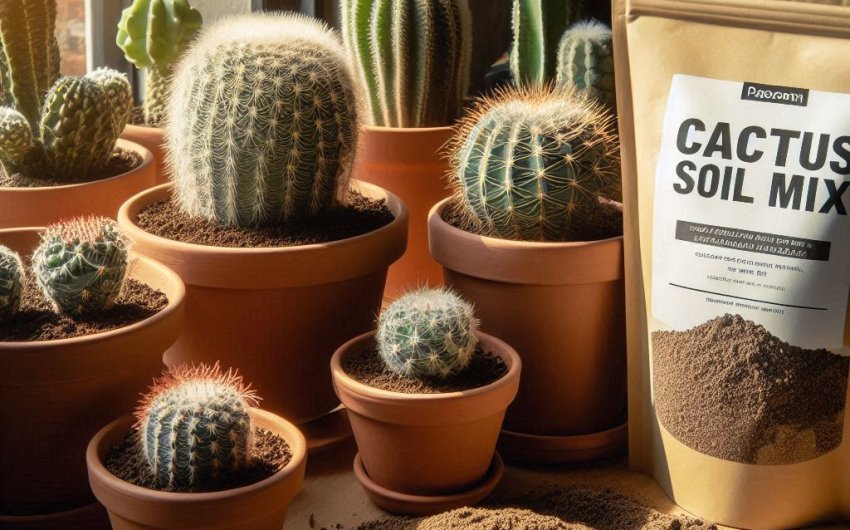
Select a pot that’s just slightly larger than the current one—cacti prefer to be snug in their containers. Terracotta pots are ideal, as they’re porous and allow excess moisture to evaporate. Ensure the pot has drainage holes to prevent water from pooling at the bottom.
Step 2: Prepare Your Soil Mix
Whisk up a fresh batch of your tailored soil mix, ensuring it’s dry and well-aerated. If you’re using coconut coir, soak it in water for a few minutes to hydrate it before mixing. Combine the ingredients in a large bucket or wheelbarrow, and give them a good stir to ensure even distribution.
Step 3: Remove the Cactus Gently
Wearing thick gloves or using tongs, carefully remove the cactus from its pot. If it’s stubborn, tap the sides of the pot to loosen the soil, or run a knife around the edges. Be patient—rushing can damage the roots or the plant itself.
Step 4: Inspect and Trim the Roots
Take a moment to inspect the roots. Healthy roots are firm and white or tan, while rotting roots are soft, black, or mushy. Trim away any dead or damaged roots with a sterilized knife or scissors. This is also a good time to tease apart any tightly bound roots to encourage outward growth.
Step 5: Pot It Up
Place a layer of your fresh soil mix at the bottom of the new pot. Position the cactus in the center, ensuring it’s at the same depth as it was in the old pot. Fill in around the roots with more soil mix, tapping the pot gently to settle the soil. Avoid pressing down too hard, as this can compact the mix and reduce aeration.
Step 6: Let It Rest
After repotting, give your cactus a week or two to acclimate before watering. This allows any damaged roots to heal and reduces the risk of rot. Place it in a bright, indirect light and resist the urge to fuss over it—cacti are resilient, and they’ll bounce back in no time.
The Deeper Fascination: Why Soil Matters Beyond the Pot
There’s a deeper allure to crafting the perfect soil mix for your cacti—one that transcends the practicalities of gardening. It’s a reminder that life, even in its most resilient forms, is a delicate balance of give and take. The soil beneath our feet is a living, breathing entity, a collaboration of minerals, microbes, and organic matter that sustains us all. By mimicking the conditions of a cactus’s natural habitat, we’re not just growing plants; we’re participating in a timeless dance of adaptation and survival. And in doing so, we gain a deeper appreciation for the tenacity of these desert sentinels—and the intricate web of life that supports them.
FAQ
Why is soil important for cacti?
Soil provides essential drainage, aeration, and nutrients, which are critical for cactus health.
Can I use regular potting soil for cacti?
No, regular potting soil retains too much moisture and can cause root rot.



Leave a Reply