
Short Answer
In the arid heartlands where the sun carves its signature into the earth, the Gymnocalycium cactus thrives—not as a conqueror, but as a whisper of resilience. This diminutive titan, often overlooked in the cacophony of flashier succulents, demands a soil so finely tuned to its essence that it borders on alchemy. To nurture a Gymnocalycium is to engage in a silent dialogue with the desert itself, where every grain of sand, every particle of grit, becomes a lifeline. The soil is not merely a medium; it is a sanctuary, a fortress, and a cradle of life, all woven into one. Understanding its needs is not just horticultural wisdom—it is an ode to the quiet tenacity of life in the most unforgiving of landscapes.
The Alchemy of Drainage: Crafting a Soil That Breathes
Imagine soil as a sieve, not a sponge. The Gymnocalycium, a denizen of the parched Patagonian steppes and Argentine badlands, has evolved to reject excess moisture with the same fervor it embraces sunlight. Its roots are not built for stagnation; they are sculpted for swift, decisive drainage, where water is a fleeting guest rather than a permanent resident. A soil that fails in this duty is akin to a prison—one where the cactus slowly drowns in its own survival.
To replicate this, one must blend the coarse and the porous like a master mixologist. Start with a base of coarse sand, not the fine, dusty variety that clings like a shroud, but the angular grains of riverbed or horticultural grit that interlock yet never compact. Add perlite or pumice, those volcanic confetti pieces that scatter light and air through the mix like stars in a midnight sky. A touch of coarse horticultural charcoal—no more than a whisper—can act as a sentinel, absorbing impurities and warding off rot. The result? A substrate that exhales moisture as swiftly as it inhales it, leaving the Gymnocalycium’s roots in a state of perpetual, arid bliss.

The Mineral Mandate: Nutrients That Mimic the Wild
If drainage is the skeleton of Gymnocalycium soil, then nutrients are its lifeblood—a carefully calibrated elixir drawn from the mineral-rich veins of its native habitat. In the wild, these cacti cling to rocky outcrops where the soil is a mosaic of decayed granite, limestone, and the occasional dusting of organic detritus. Their diet is sparse, their appetite for richness measured in milligrams rather than grams. Overfeeding is not just unnecessary; it is a betrayal of their evolutionary contract.
Begin with a lean foundation of mineral matter—perhaps a blend of cactus-specific mix and additional inorganic components like turface or expanded shale. These materials, inert yet porous, provide structure without smothering the roots. A whisper of organic matter—composted pine bark or coconut coir—can offer a fleeting feast, but it must be minimal, lest it invite the dreaded fungal interlopers. The key is balance: enough sustenance to sustain, but never so much that the soil becomes a banquet hall for pathogens. Think of it as a frugal feast, where every nutrient is savored, not devoured.
The pH Paradox: Alkalinity as an Ally
Here lies a secret often buried in the footnotes of cactus care: the Gymnocalycium thrives in soil that leans alkaline, a trait as distinctive as its ribbed, globular form. The pH of its native soils often hovers between 7.0 and 8.0, a range that would send most plants into a state of shock. Yet for this cactus, it is a balm. Alkaline conditions suppress the growth of harmful microbes while allowing the roots to absorb nutrients with the precision of a laser.
To achieve this, incorporate a dash of dolomitic limestone or crushed oyster shell into the mix. These amendments, slow to dissolve, will nudge the pH upward without the volatility of synthetic additives. Monitor the soil’s reaction with a pH test kit, but trust the Gymnocalycium’s instincts—it will guide you if the balance is true. The result is a soil that not only drains but also harmonizes, a living laboratory where chemistry and biology dance in perfect, if slightly eccentric, unison.
The Texture of Time: Ensuring Longevity in the Mix
Soil is not static; it is a dynamic entity, evolving with each watering, each season, each passing year. The Gymnocalycium’s ideal mix must account for this impermanence. Over time, even the finest grit can break down, compacting into a dense, suffocating mass. To forestall this, incorporate a portion of larger, more resilient materials—think of crushed lava rock or coarse perlite, those unyielding sentinels that resist decay. These particles act as spacers, maintaining the soil’s architecture like the keystones of an ancient arch.
Refresh the mix every two to three years, or whenever the cactus begins to protest—perhaps by yellowing or ceasing growth. This is not a chore, but a ritual, a chance to reconnect with the plant’s needs. As you sift through the old soil, separating the living from the spent, you are not just repotting; you are renewing a pact between you and the cactus, a silent vow to uphold the conditions of its wild, untamed origins.
The Aesthetic of Austerity: Why Less Is More
There is a certain elegance in restraint, and nowhere is this more evident than in the cultivation of the Gymnocalycium. Its soil should be a study in minimalism—a canvas of grit and stone, where the cactus itself is the sole masterpiece. Avoid the temptation to adorn the mix with colorful additives or decorative pebbles; these are distractions, not enhancements. The beauty of this cactus lies in its simplicity, and its soil should reflect that philosophy.
Consider the container as well. A shallow, wide pot mimics the cactus’s natural growing conditions, where roots spread laterally in search of moisture rather than plunging deep into the unknown. Terra cotta, with its porous nature, is an ideal choice—it breathes, it ages gracefully, and it never pretends to be anything other than what it is. The soil, the pot, and the plant become a triad of authenticity, each element honoring the others without pretense.
The Reward: A Cactus That Thrives, Not Merely Survives
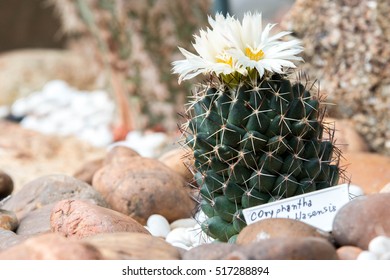
When the soil is right, the Gymnocalycium does more than survive—it flourishes. Its ribs swell with stored vitality. Its spines, once brittle and sparse, become a dense, almost velvety halo. It may even surprise you with a bloom, a sudden eruption of pink or white that seems to defy the very aridity of its environment. This is the payoff for your diligence: a plant that not only lives but sings, a testament to the power of understanding its needs.
To grow a Gymnocalycium is to engage in a dialogue with the earth itself. It is to recognize that life, even in its most resilient forms, is not a battle to be won but a harmony to be cultivated. The soil is your instrument, and the cactus, your muse. Get the mix right, and you will witness the quiet magic of a plant that has, against all odds, found its home in your care.
FAQ
What type of soil is best for Gymnocalycium?
A well-draining mix of coarse sand, perlite, and minimal organic matter is ideal.
How often should I refresh the soil for Gymnocalycium?
It's recommended to refresh the soil every two to three years or when the cactus shows signs of stress.

Leave a Reply